
Weekly Research Briefing: Looking For An Exit Ramp

While this weekend's US & Iran meeting did not conclude with a final peace agreement, the long meeting allowed the two sides to meet in person and state their positions. With both sides (and the rest of the world) wanting to end this conflict, the teams will work on their positions to see what can be traded to allow both the US and Iran a viable exit. According to Axios, the timeframe to ban nuclear enrichment is a top priority. The US wants a twenty-year ban and Iran wants a timeframe in the single digits. It is good that they are talking and bombs are not flying. So we are getting closer.
Global energy prices are still too high with little traffic going through the Strait of Hormuz. Any final deal will involve opening the Strait, but no idea if it will become a toll road for Iran and Oman. It will all be a function of the art of the deal. Supposedly another meeting in Islamabad is set to take place this week. Until a final deal is done and US ships are on their way home, the commodities markets will continue to be elevated and supply disruptions will continue. Product shortages are continuing to cause force majeures to manufacturers which will lengthen lead times for finished goods. (See the Toto Inc. announcement below.) Expect summer bumps in product availability and more expensive prices until this is all behind us.
Released economic data will also be impacted by the higher price difficulties as the US and Iran work toward an agreement. We saw energy prices hit the headline CPI last week and expect them to push the PPI higher this week. The Philly and New York Fed business surveys will also provide some raw comments from business owners this week. But the real fire hydrant of data will be opened up this week with the release of Q1 corporate earnings. The big banks and financials will overload the week with releases, but we will also hear from Johnson & Johnson, ASML, TSMC, Netflix, Pepsi and Alcoa among the large caps. The last two weeks of the month will have the bulk of the S&P 500's figures. There is much consensus that it should be a good reporting season with the market looking for low-mid teens percentage earnings growth over last year's numbers. But most of the focus on the earnings calls will be on what has happened to the business and execution since the conflict with Iran started. Let's hope that we don't have to talk about this again next quarter.
Stay cool and have a great week. Hat tips to Rory and the DU Pioneers. Now tell me more about this soccer match in Manchester that I must watch on Sunday.
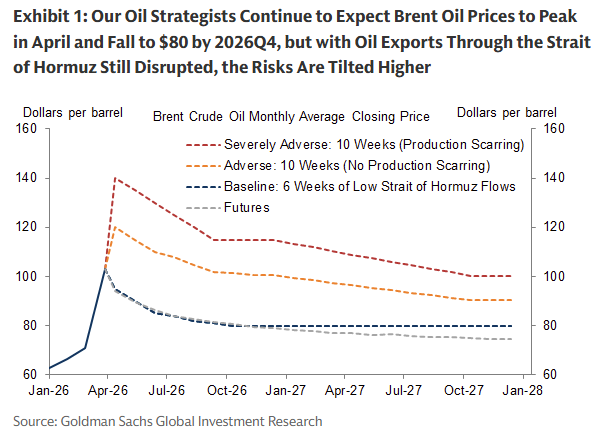
Fingers crossed that US/Iran talks this week push oil prices toward Goldman Sachs' blue baseline. Otherwise we prepare for the orange price line…
But oil flows remained depressed last week despite the ceasefire, and negotiations between the US and Iran have ended without an agreement. As a result, we continue to see the risks as tilted toward a longer disruption of Gulf exports and a higher path for oil prices. If the ceasefire does not hold and the reopening of the Strait is postponed for another month, we would expect Brent to remain at $100/bbl in 2026Q4 in an adverse scenario or $115 in a severely adverse scenario where later reopening is followed by persistent 2mb/d Mideast production losses (the orange and red lines in Exhibit 1, respectively).
Goldman Sachs
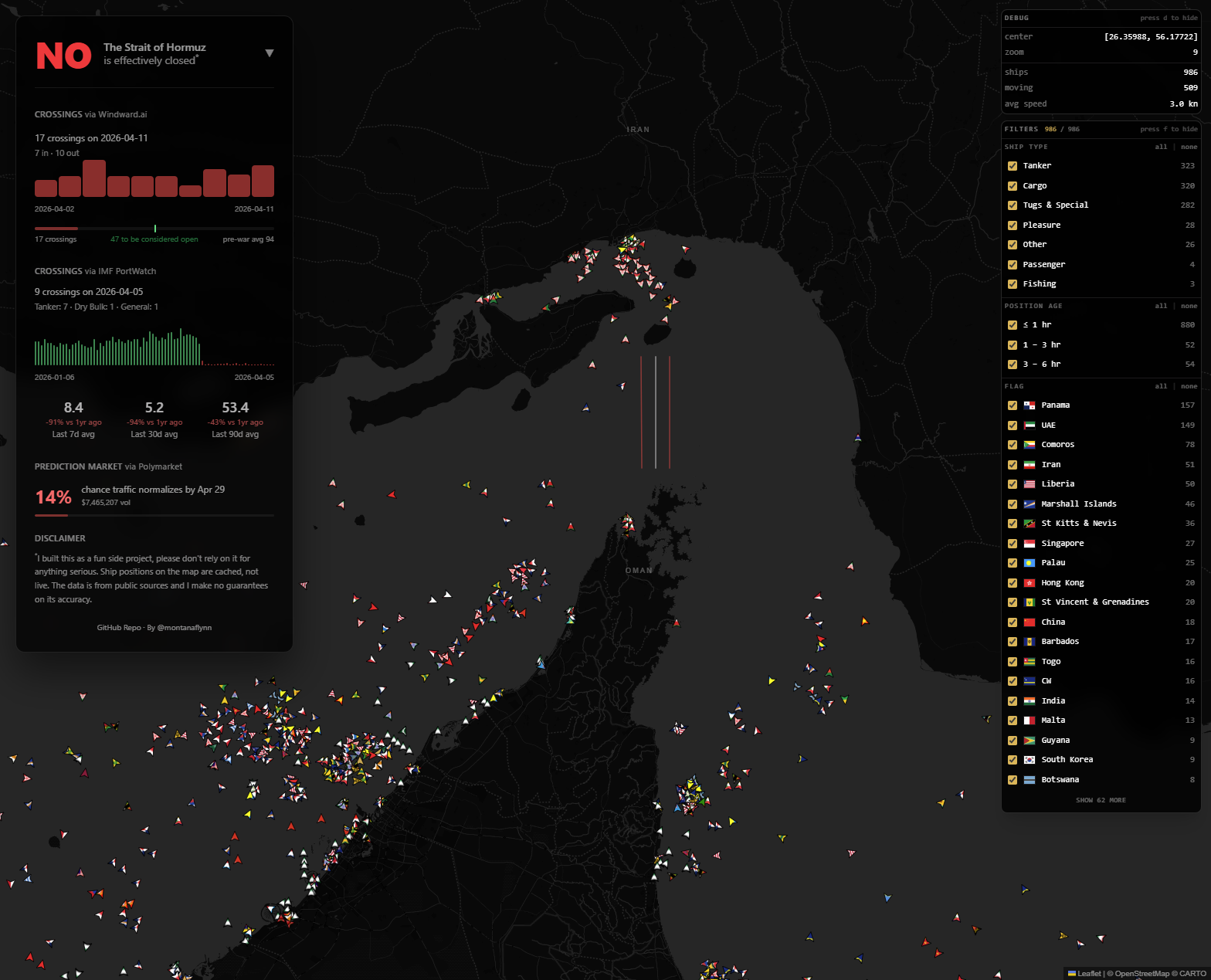
If you want to know when prices will return to more normal again…
“Is Hormuz Open Yet?” is a website for tracking the status of ship crossings in the Strait of Hormuz.
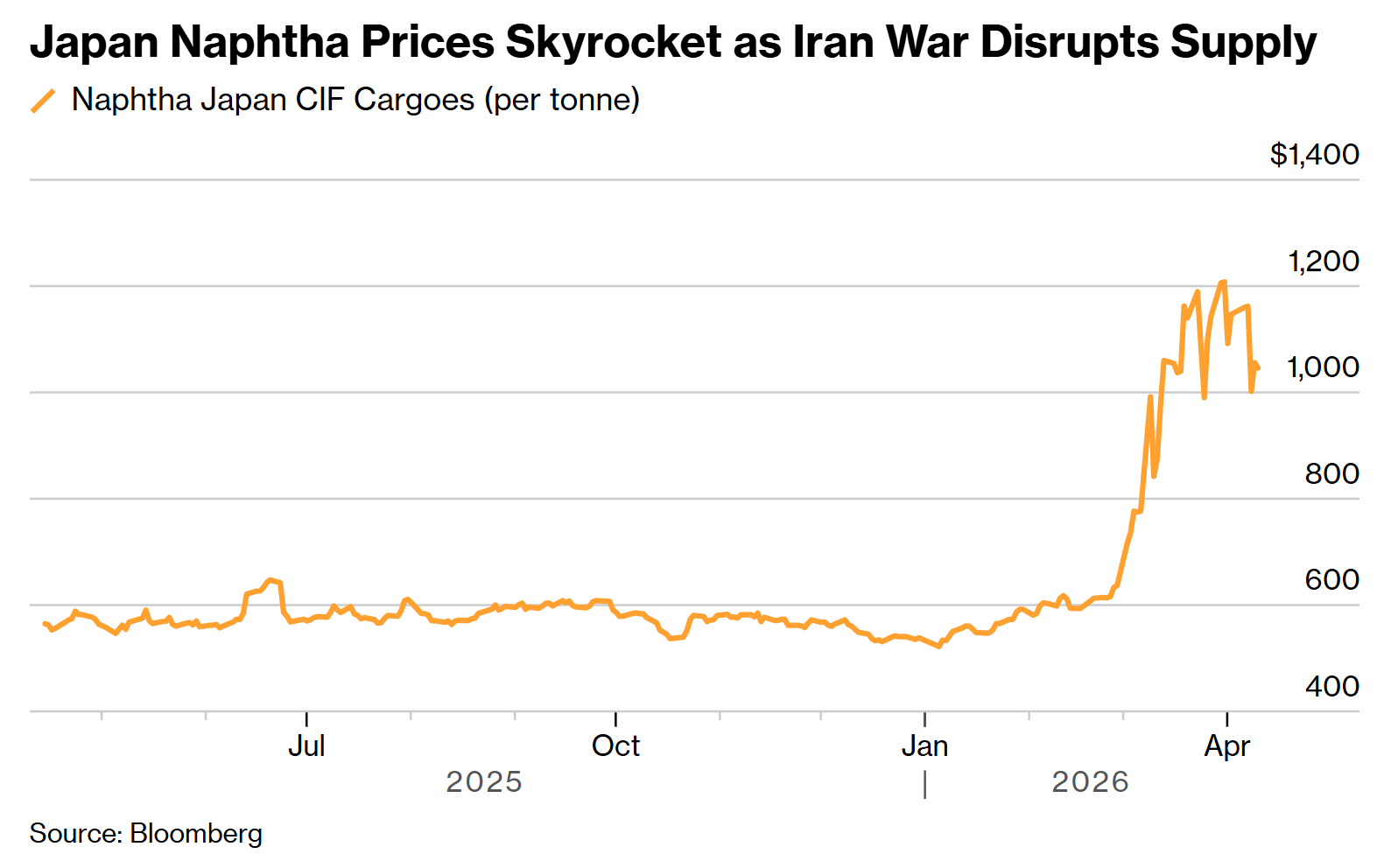
Crude oil refined product shortages now hitting the building products supply chain…
Japanese toilet maker Toto Ltd. has suspended new orders for its prefabricated bathrooms due to a material shortage as the Iran war squeezes the global oil supply chain.
Toto notified its business partners of the halt Monday, a representative told Bloomberg. The suspension applies to prefabricated and modular bathrooms and the company doesn’t know when orders will resume, the representative said. The firm’s shares fell 7.2% in Tokyo on Monday, the most in a year.
Toto’s troubles underscore the far-reaching supply chain impact of the Middle East conflict, which is hitting Asian manufacturers especially hard due to the region’s reliance on Gulf countries for oil products. Japan gets more than 90% of its crude oil from the Middle East and depends on the area for almost 45% of its naphtha, a feedstock crucial for plastic production, according to government data.
“The procurement of raw materials both domestically and internationally has become extremely unstable” as a result of the Middle East conflict, Toto said in a statement released Friday.
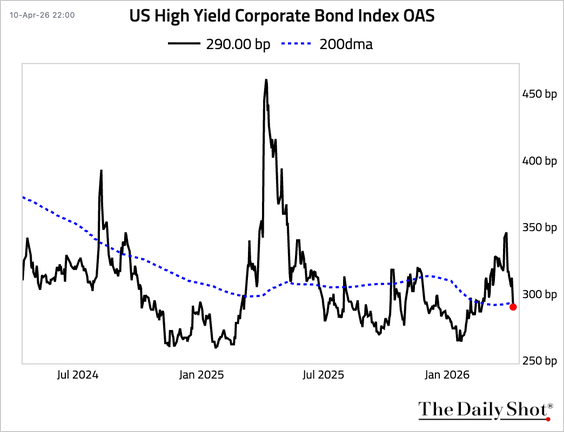
Good news: One of the more important market thermometers has cooled its hot run…
Even with everything happening in Iran and with Software company valuations, the US High Yield Corporate Bond Index OAS fell below its 200-day moving average on Friday. Less panic selling and more opportunistic buying can be a good thing.
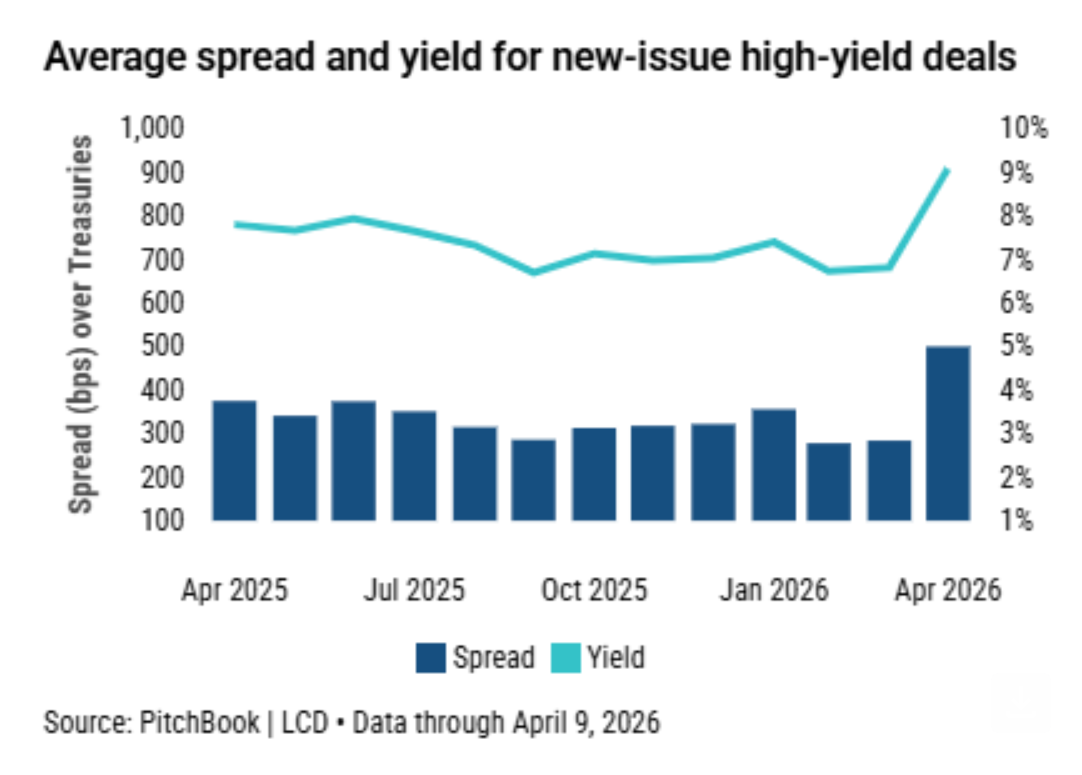
For investors looking to put money to work in the high yield credit markets, spreads are nicely wider…
High-yield bonds are not ideally suited for inflationary pressure that has built amid the constrained flow of goods through the Strait of Hormuz, and yet the riskier issues from the lower end of the high-yield credit spectrum, which generally offer higher spreads and yields for investors, have dominated April’s high-yield business. These deals include Sealed Air (the dollar tranches of its cross-border deal are rated B+/B1 and B/B3), Univision (B/B2), Skeena Resources (B-/Caa1), and Chobani (CCC+/B3), which this week placed bonds to support a dividend recapitalization.
And you can bet that Banking CFO's and their treasury teams are hunting for opportunities with all their excess capital…
"Loan growth at US commercial banks remains very strong, with no sign of a credit crunch emerging. We suspect banks may be stepping up to purchase private loans at attractive distressed prices."
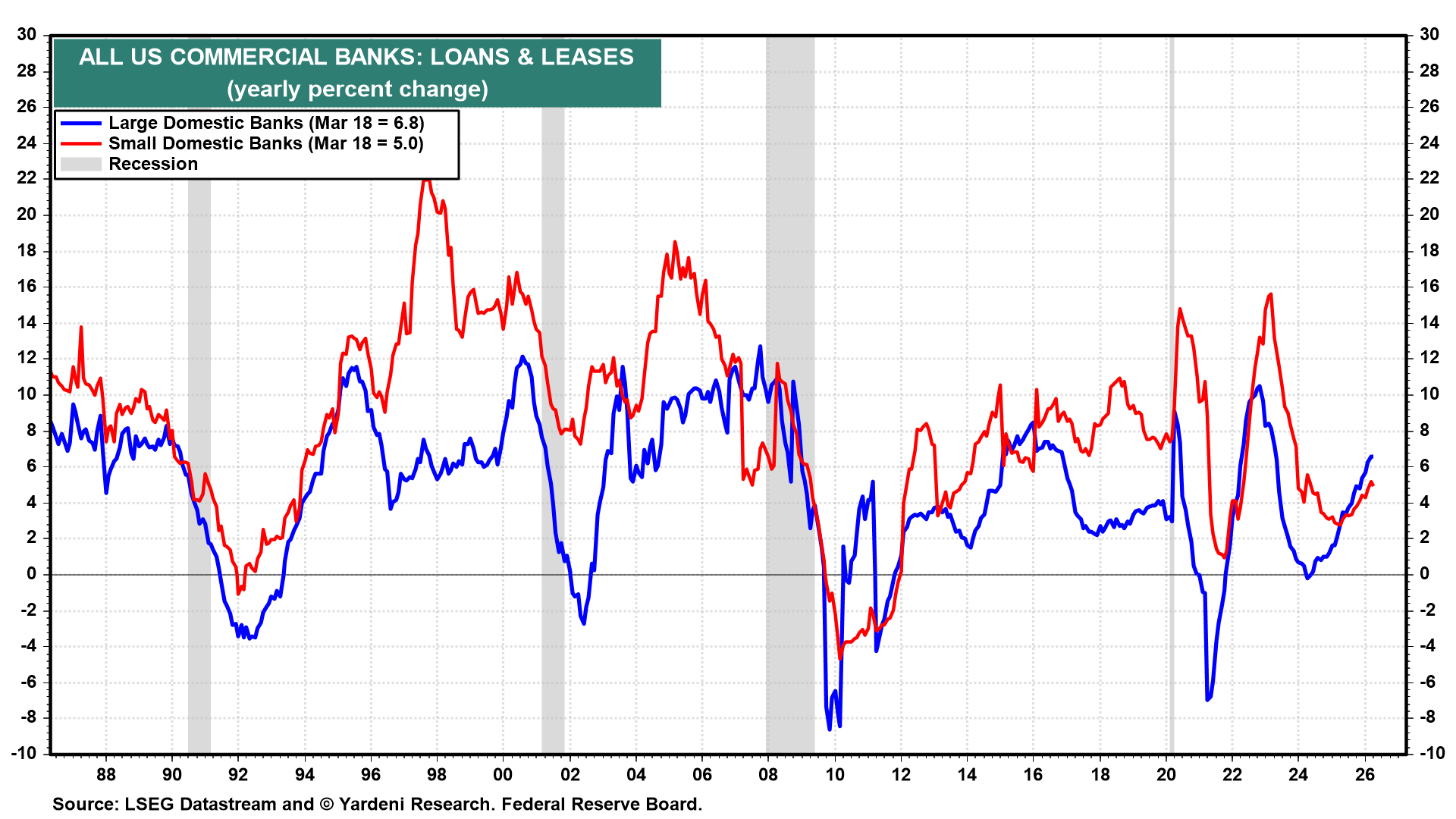
@yardeni
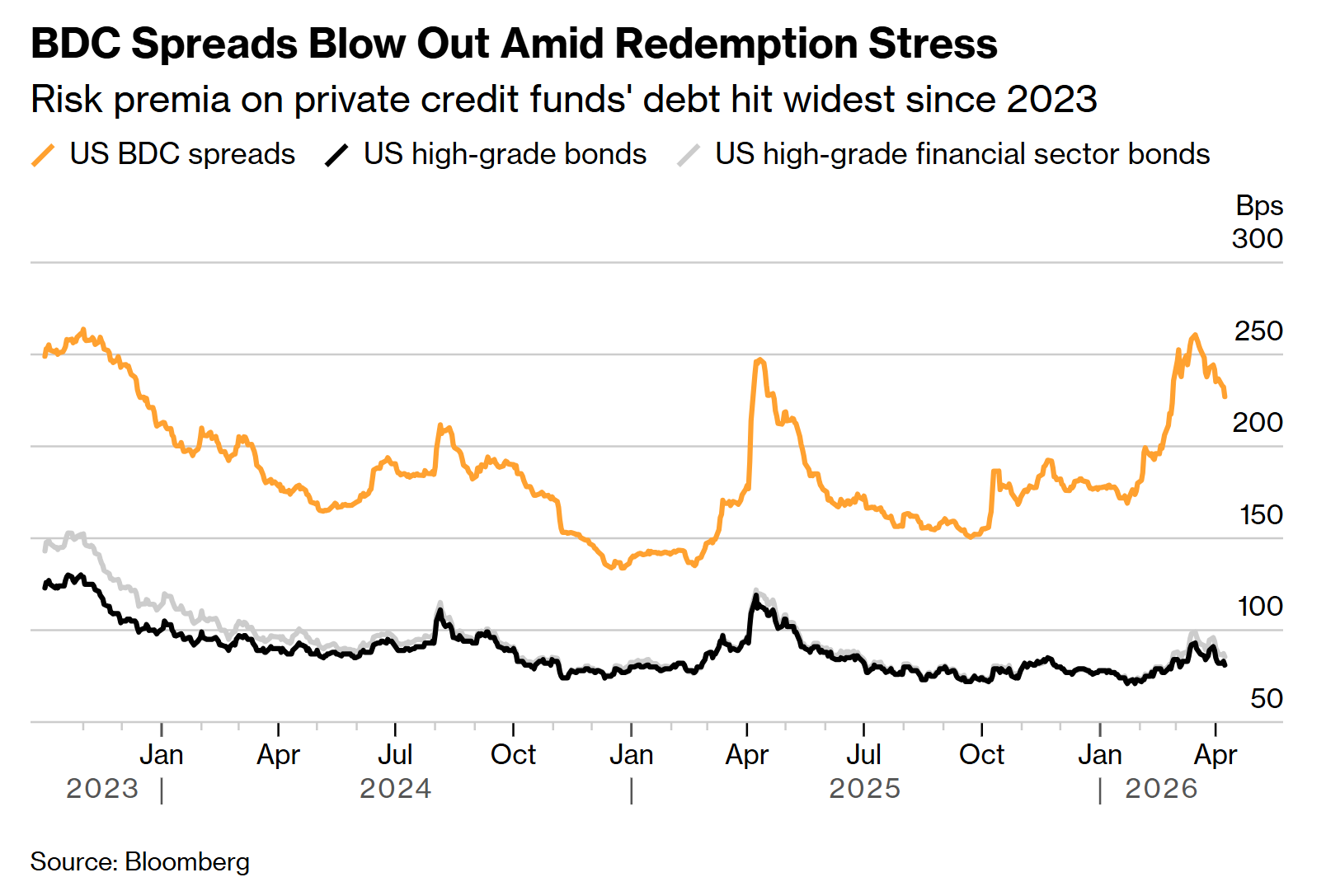
The fears in BDC withdrawals is creating an opportunity for others in the BDC debt as spreads jump…
The retail exodus from business development companies has dragged the vehicles’ debt to levels that are starting to look attractive, according to MFS Investment Management’s Alex Mackey.
“Pressure for redemptions that they’re facing likely ends up creating some opportunities within the public credit markets,” the co-chief investment officer for fixed income at the $622 billion asset manager said on the Bloomberg Intelligence Credit Edge podcast.
The century-old MFS is eyeing the debt after BDC investors raced for the exits, fearing losses driven by weak underwriting standards and outsized exposure to software firms at risk from artificial intelligence’s rapid advances. The flight from the investment vehicles that lend to mid-size companies has sent a chill through the private credit market, spurring a negative outlook revision on BDCs from Moody’s Ratings.
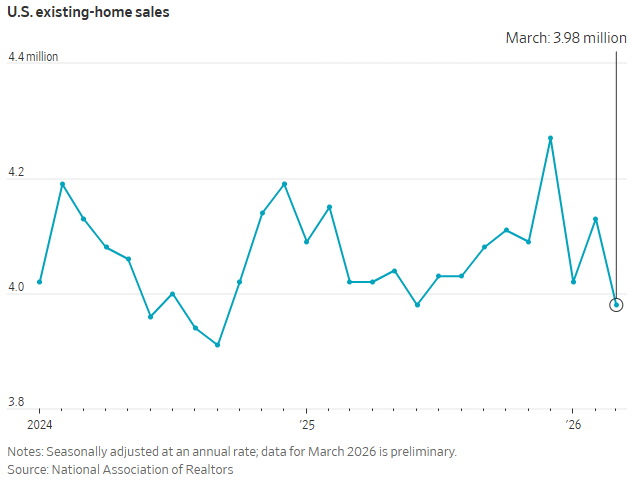
As for the recent US economic data, the spring home selling season started with no flowering beds. Only rocks…
Home sales declined 3.6% in March, getting the crucial spring selling season off to a poor start as the high cost of housing and economic uncertainty held buyers back… The 3.6% month over month decline was much worse than the 1% drop economists surveyed by The Wall Street Journal forecast. It was the second largest monthly decline in the past year… The market is more sluggish in the Southeast and Southwest, where the inventory of homes for sale is above prepandemic levels. In the Northeast and Midwest, many markets are still undersupplied. The national median existing-home price in March rose to $408,800, a 1.4% increase from a year earlier, NAR said.
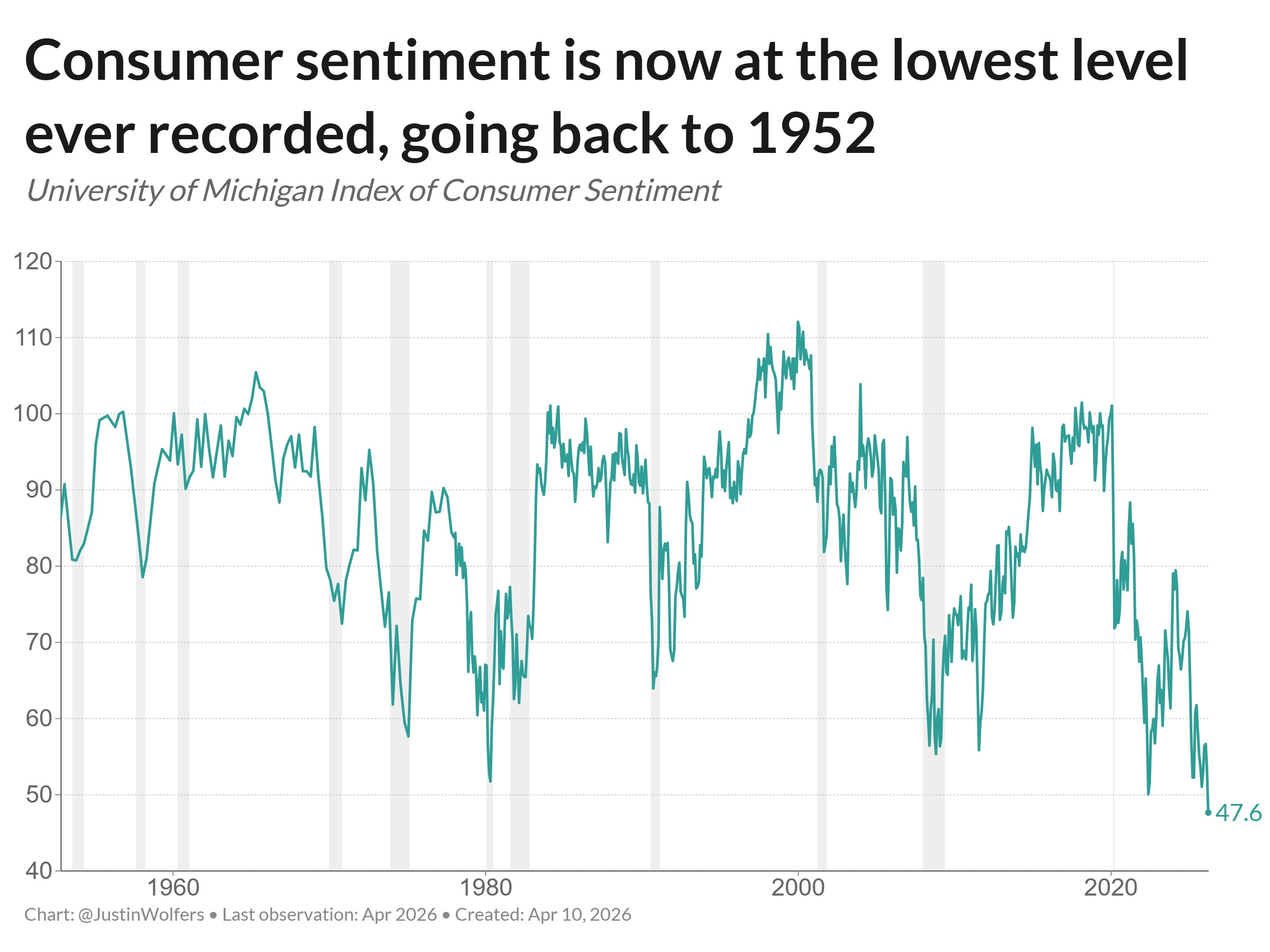
And the first University of Michigan consumer survey to include the Iran impact was not a pretty one…
@JustinWolfers: The University of Michigan has been measuring consumer sentiment since 1952. We just got the first Iran-afflicted measure for April, and it's at the lowest level ever recorded.
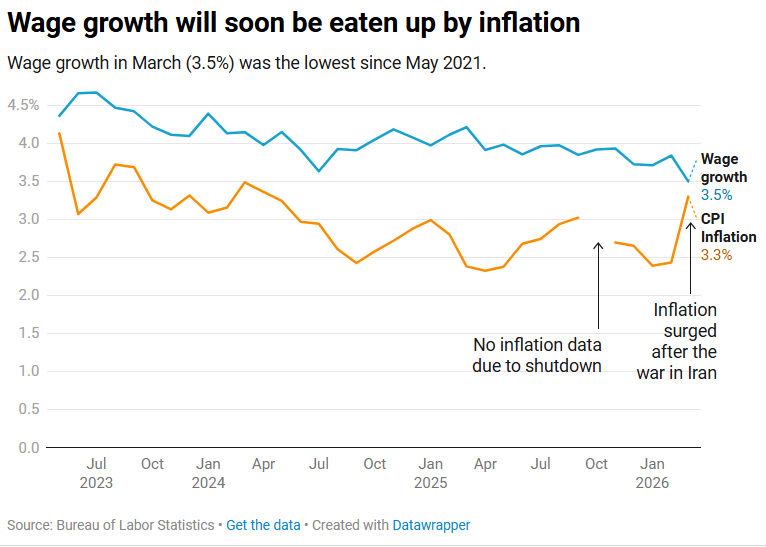
As you would expect, higher energy prices running through the CPI is going to test consumers' household finances…
Important: Wage growth is almost entirely eaten up by inflation now.
Wage growth was +3.5% in March for the past 12 months
Inflation was +3.3% in March for the past 12 months.
This is the **squeeze** many households are feeling. Their pay won't be able to keep up with this level of inflation. (And yes it was the same situation in 2022).
@byHeatherLong
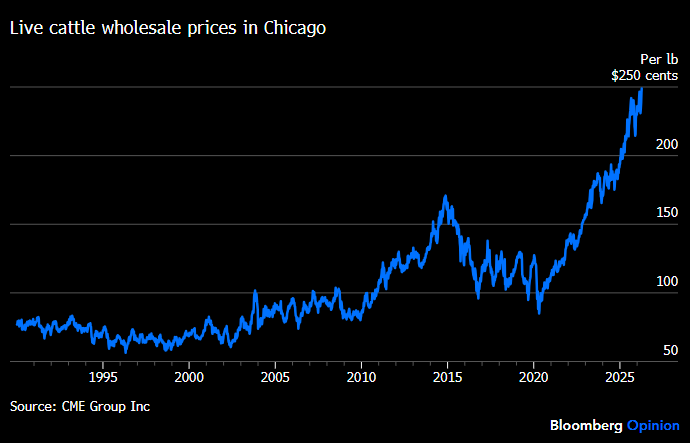
"Where's The Beef!": Average US beef consumption = 59 lbs per year x $8.50/lb = $500 per person…
@JavierBlas: President Trump's other inflation headache: beef.
While everyone is rightly focused on gasoline and oil amid US-Iran war, the meat market isn't giving a respite.
Live cattle wholesale prices in Chicago have reached a new all-time high, surpassing last October's peak.
Onto the growth areas: Some of my favorite tidbits out of Andy Jassy's Amazon Annual Shareholder Letter…
- Three years after AWS launched commercially, it had a $58 million revenue run rate. Three years into this AI wave, AWS’s AI revenue run rate is over $15 billion in Q1 2026 (nearly 260 times larger than AWS at that same point)— and ascending rapidly.
- AWS added 3.9 gigawatts (“GW”) of new power capacity in 2025, expects to double total power capacity by the end of 2027, and is monetizing that capacity as fast as it’s installed. In Q4 2025, AWS reported 24% YoY growth with a $142 billion dollar revenue run rate. That’s a lot of absolute growth. And yet, we still have capacity constraints that yield unserved demand.
- The way AWS’s cash cycle works is that the faster AWS grows, the more short-term capex we’ll spend. AWS has to lay out cash for land, power, buildings, chips, servers, and networking gear in advance of when we can monetize it (typically 6-24 months before we start billing customers, depending on the component). However, these capex investments fund assets with many-year useful lives (30+ years for datacenters; 5-6 years for chips, servers, and networking gear). The FCF and ROIC for these investments are cumulatively quite attractive a couple years after being in service; however, in times of very high growth (like now), where the capex growth meaningfully outpaces the revenue growth, the early-years FCF is challenged until these initial tranches of capacity are being monetized and revenue growth out-paces capex growth.
- Of the AWS capex we expect to spend in 2026, much of which will be monetized in 2027-2028, we already have customer commitments for a substantial portion of it. We are willing to make large capex investments and endure short-term FCF headwinds for the substantial medium to long-term FCF surplus. AI is a once-in-a-lifetime opportunity where the current growth is unprecedented and the future growth even bigger.
And you can't plan for AI and big new data centers without power which has capital commitments behind it…
New analysis from Wood Mackenzie shows that 220 gigawatts of additional power demand from data centers is in the pipeline in the US, and 183 GW of that is already backed by firm commercial commitments. That is a huge amount to add in just a few years: it’s equal to about 22% of US peak demand in 2025.
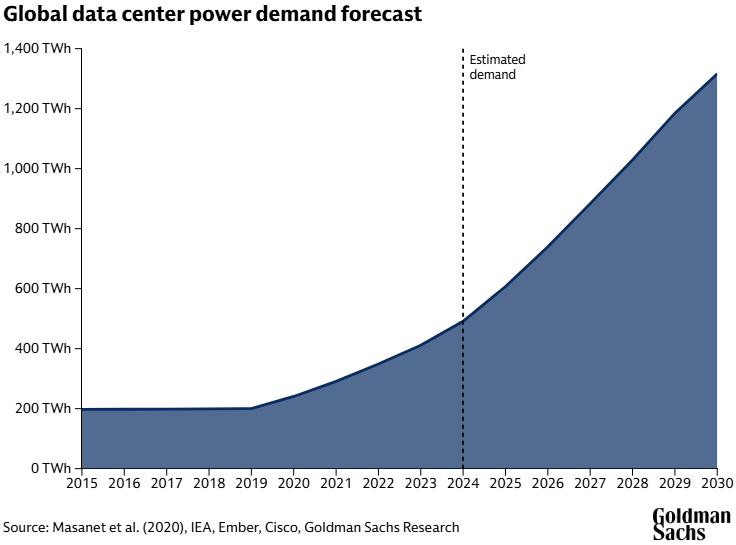
If you want a more global perspective of data center power demand…
Goldman Sachs "now projects global power demand from data centers to grow 220% by 2030 relative to 2023 levels, up from 175% previously."
@dailychartbook
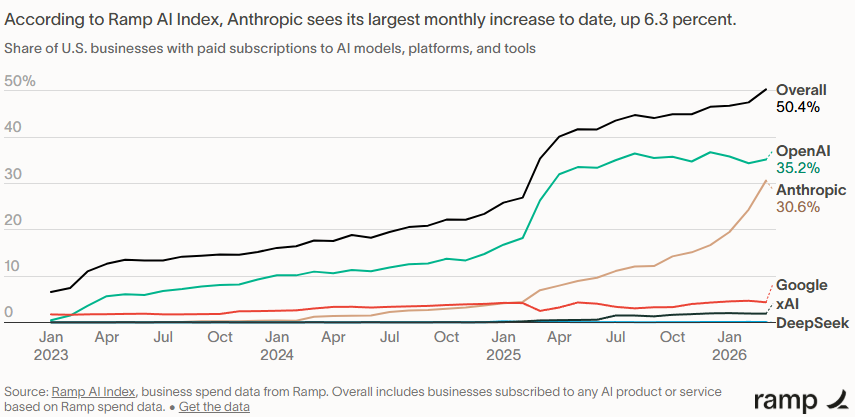
AI chart shows how the business is falling right now…
“Ramp AI Index shows business AI adoption crossed 50% for the first time in March, reaching 50.4% of businesses. A year ago, it was 35%. Half of businesses on Ramp now pay for AI. Anthropic continued its surge, growing from 24.4% to 30.6% of businesses — a 6.3-percentage-point gain, surpassing last month's record monthly gain., surpassing last month's record monthly gain. The gap between OpenAI (35.2%) and Anthropic is now just 4.6 points, down from 11 points in February. At this pace, Anthropic will overtake OpenAI within the next two months.”
Q1 2026 was the largest quarter for venture investment ever recorded…
Say thank you to that previous AI chart and its enveloping ecosystem.
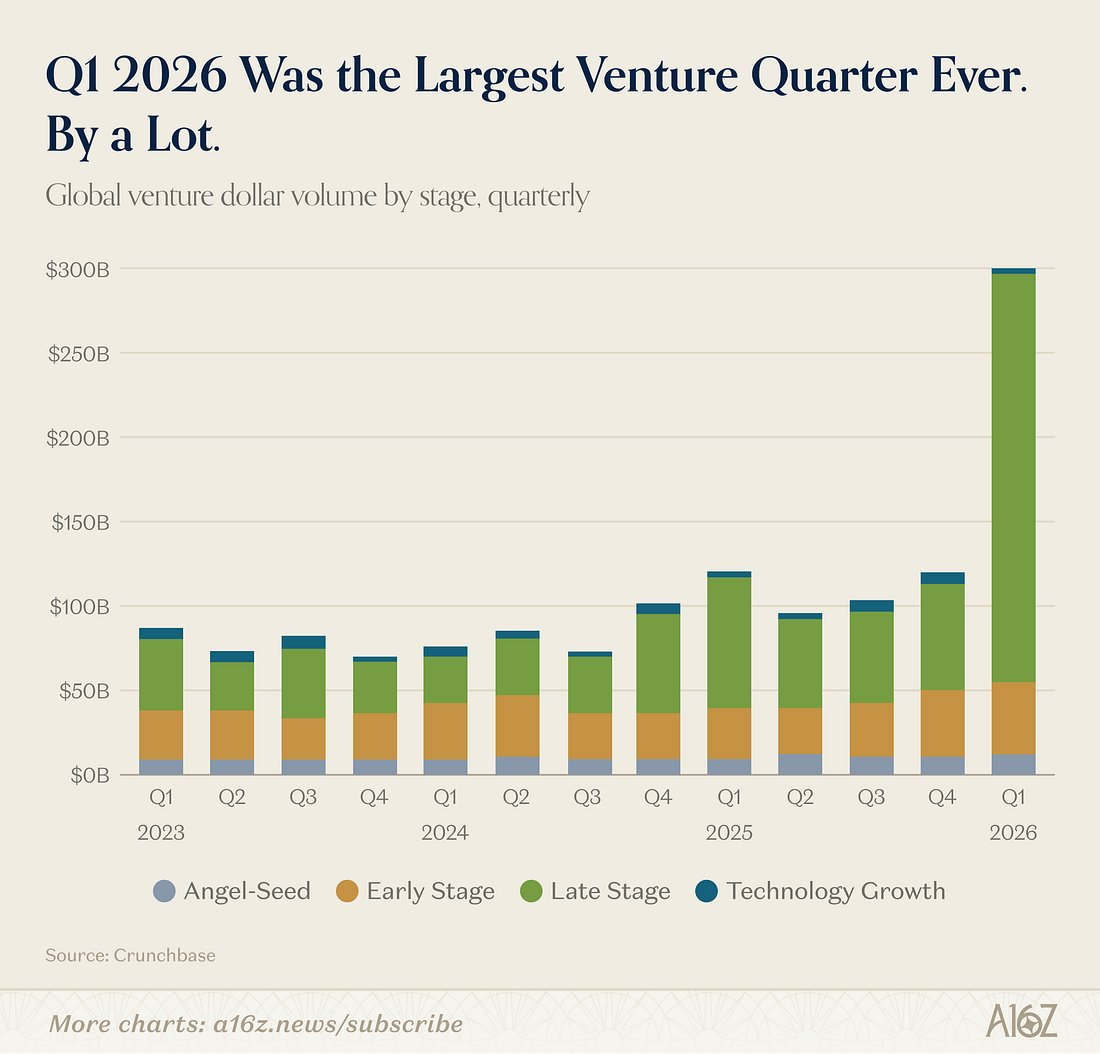
@a16z
This chart suggests that we should be seeing a big wave of industrial IPOs and M&A in the future…
With industrial valuations at all-time highs on both an absolute and relative valuation basis and with margins near record highs, the interest in selling by their owners must be high. Also interesting to see no red shading in the figures on the Info Tech line.
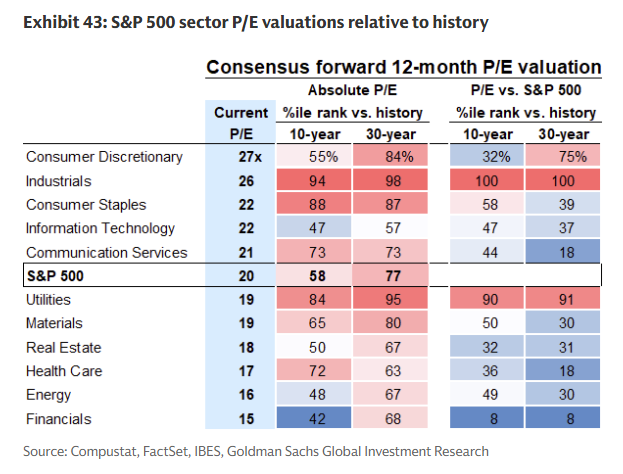
Goldman Sachs
Technologies underperformance has nothing to do with Semiconductor stocks which have broken out again to all-time new highs…
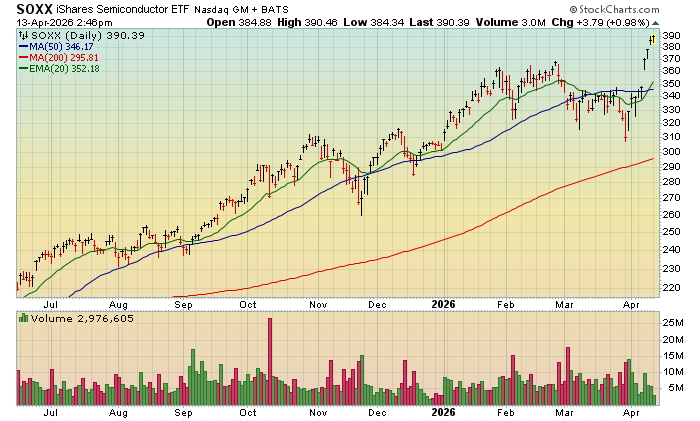
StockCharts
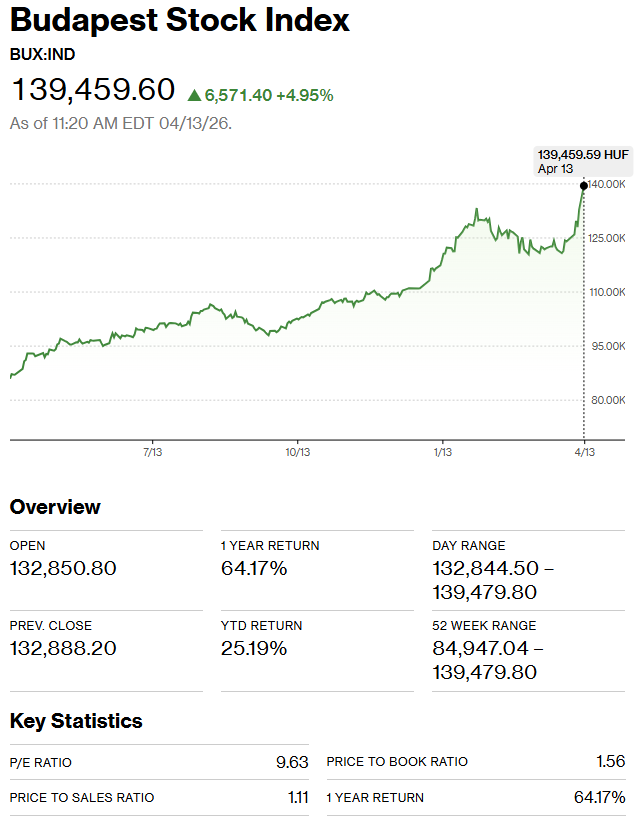
Speaking of all-time new highs: Election. Party. Then Buy, Buy, Buy!
And still trading at only 9.6x earnings. Time for a Budapest research visit.
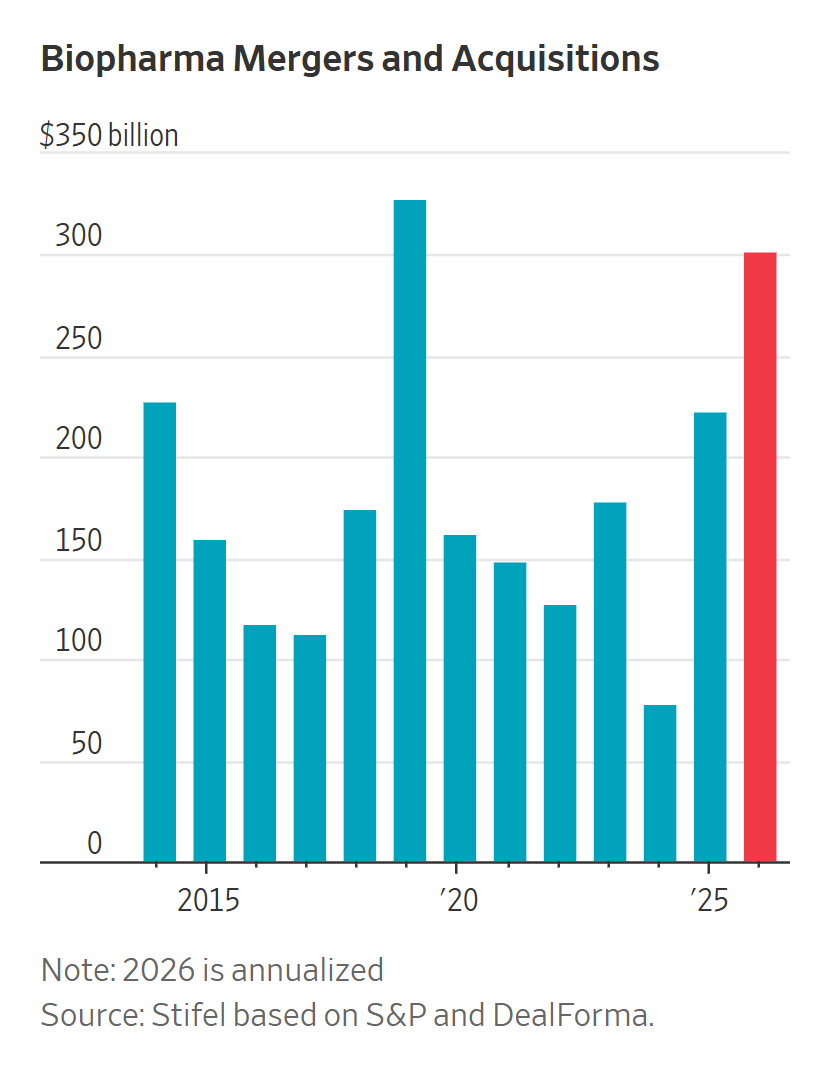
What a great year to be a biotech banker or investor…
Through April 7, 19 deals valued at $1 billion or more have been announced, according to Stifel. Yet none of those deals have been for more than $10 billion. The number of deals already rivals many full years and puts 2026 on pace for an annualized record of 72 such deals, more than double last year.
Total dollar volume is on pace to make this the second-most-active year for biopharma M&A in history, trailing only 2019, notes Stifel’s Tim Opler.
Notably, six of those 19 deals came from just two companies: Gilead Sciences and Eli Lilly, spanning cancer, autoimmune diseases and sleep disorders.
Both happen to be among the least exposed to near-term patent expirations. This frees them to think longer term, placing smaller bets on companies whose payoff might not arrive immediately. That is instead of trying to replace revenue that is disappearing now.
Two forces suggest the dealmaking has further to run. Pharma needs to keep buying. Of the roughly $700 billion in annual revenue generated by the world’s 14 largest drug companies, nearly half of it will face patent expiration by 2031, according to investment-bank Needham.
And the industry can afford to: It has more than $650 billion in what Stifel calls “comfortable” M&A firepower. This represents the debt capacity available while keeping balance sheets on solid footing.
Even four of the 10 M&A deals below were biotech acquisitions…
And another 6 stock tickers head to the recycle bin.
- Unilever (UL) agreed to combine its food business with McCormick (MKC) in a deal that creates a new sauces-to-spices behemoth valued at more than $65 billion, including debt. Under the terms of the deal, Unilever and its shareholders are expected to own about 65% of the new, combined foods business. Unilever will also receive a one-time $15.7 billion cash payment.
- GFL Environmental (GFL/Can) has agreed to acquire SECURE Waste Infrastructure Corp. (SES/Can) at $24.75 per share in cash and stock. A 23% premium to SECURE's 60-day VWAP in a deal with a 6.4 billion Canadian dollar ($4.62 billion) enterprise value.
- Eli Lilly (LLY) will acquire Centessa (CNTA) for $7.8bn (including upfront cash of $6.3 billion and a CVR representing an additional potential equity value of $1.5 billion). The deal value reflects a valuation of 10x 2030E sales and represents a premium to last close of 38% based on the $38 upfront and 70% based on total potential consideration of $47 including the CVR.
- Biogen (BIIB) agreed to acquire Apellis Pharmaceuticals (APLS) for approximately $5.6 billion in cash representing a premium of about 140% to the stock's last close.
- Gilead Sciences Inc. (GILD) agreed to buy private German biotech Tubulis GmbH in a deal worth up to $5 billion as it looks to boost its portfolio in a hot new area of cancer drug development. Gilead will pay $3.15 billion upfront in cash, and as much as $1.85 billion more if certain milestones are met.
- Neurocrine Biosciences (NBIX) agreed to buy Soleno Therapeutics (SLNO) for $2.9 billion, giving it the first approved treatment for a rare genetic disorder that causes relentless, life-threatening hunger. Neurocrine agreed to pay $53 a share in cash, a roughly 34% premium to Soleno’s closing share price.
- MAI Capital Management said on Tuesday that Carlyle Group (CG) will buy a majority stake in a deal valuing the wealth management firm at more than $2.8 billion. Galway Holdings, funds managed by Harvest Partners, and private equity firm Oak Hill Capital will exit their positions in MAI.
- Somnigroup (SGI) to acquire Leggett & Platt (LEG) in a stock deal valued at $2.5b which is a +13% premium to its last close.
- Whitestone REIT (WSR) to be acquired by Ares for $1.7 Billion in cash for a premium of 12% premium to its last close a 26% premium to its pre-news affected price.
- U.S. oil-field services provider Baker Hughes (BKR) agreed to sell its Waygate Technologies business to Swedish industrial technology company Hexagon (HEXA/Swe) for around $1.45 billion in cash.
Various News Sources
Forget 'Dual Authentication'. It's time for 'Triple Authentication'…
New AI models are getting so advanced, that if you aren't yet using dual authentication for all of your financial websites, then you probably should not use the website at all. Layer up your security settings or just go back to visiting the bank or brokerage in person.
Treasury Secretary Scott Bessent and Federal Reserve Chair Jerome Powell summoned Wall Street leaders to an urgent meeting on concerns that the latest artificial intelligence model from Anthropic PBC will usher in an era of greater cyber risk.
Bessent and Powell assembled the group at Treasury’s headquarters in Washington on Tuesday to make sure banks are aware of possible future risks raised by Anthropic’s Mythos and potential similar models, and are taking precautions to defend their systems, according to people familiar with the matter who asked not to be identified citing the private discussions…
Anthropic’s Mythos is a more powerful system that the AI firm has said is capable of identifying and then exploiting vulnerabilities in every major operating system and web browser when directed by a user to do so…
In releasing Mythos to a very limited set of companies, Anthropic pointed to several vulnerabilities that the AI system was capable of both identifying and potentially exploiting during testing. None of the examples related specifically to financial institutions, but in one instance, the firm’s security team said it was able to compromise a web browser so that a website set up by a hacker could read data from another website “e.g., the victim’s bank.”
Mythos Preview “fully autonomously discovered” a way of reading information stored in “multiple different web browsers” and then used that ability to find ways to exploit them, according to a post from Anthropic’s security team.
Finally, welcome back to earth and thanks for the incredible new images…
“While spacewalking I realized something, I used to think I was scared of heights but now I know I was just scared of gravity.”
― Artemis II Astronaut Reid Wiseman

@LensScientific
Learn more about the Hamilton Lane Strategies
DISCLOSURES
The information presented here is for informational purposes only, and this document is not to be construed as an offer to sell, or the solicitation of an offer to buy, securities. Some investments are not suitable for all investors, and there can be no assurance that any investment strategy will be successful. The hyperlinks included in this message provide direct access to other Internet resources, including Web sites. While we believe this information to be from reliable sources, Hamilton Lane is not responsible for the accuracy or content of information contained in these sites. Although we make every effort to ensure these links are accurate, up to date and relevant, we cannot take responsibility for pages maintained by external providers. The views expressed by these external providers on their own Web pages or on external sites they link to are not necessarily those of Hamilton Lane.