
Weekly Research Briefing: Well Below The Rim

If you attended last week's AI pre-Halloween party, you would have noticed that the punch bowl in the room was either three-quarters empty or one-quarter full. After last week's great earnings report from SK Hynix, the positive update from Oracle's analyst day, and the filing of Anthropic's S-1, a fresh punch bowl of festive drink should have appeared. Instead, investors increasingly turned their attention toward the ROIs of AI as the biggest hyperscalers reported their earnings. While investors were rewarded with accelerating growth in the big three AI cloud revenue figures, they still had difficulty grasping the capital intensity needed to deliver returns. As a result, AI equities sold off and their credit spreads widened. So for now, the only AI companies allowed to drink from the punch bowl are the most senior and mature members at the party. Any neocloud or LLM with a junk rating and negative cash flows will have lost its ability to raise capital in the public markets. The private markets may offer you a cup, but it will likely be a small and expensive container.
As AI capex plans continued to move up and to the right, all companies with negative free cash flow quickly hit the market with plans to sell debt, equity or both. Meta set plans for a $95b equity raise and is exploring a $20b debt sale. Google took €6 billion in debt to Europe on Monday. Amazon tapped a supplier loan facility for $80b. And even Oracle decided to raise the last $20b they will need through the end of the decade with a debt and equity raise. The Bank of Microsoft didn't need to sell anything given its very positive cash flow generation. Many smaller AI companies would like to sell equity or debt but doing so now could be painful to their balance sheets. Watch how the market absorbs the flood of current offerings. And keep an eye on the stocks of the AI leaders as new high prices would cure many ills. The biggest next AI events will be Nvidia's earnings in two weeks and the reception to Anthropic's IPO process during November. If both go well, maybe the host will fill the punch bowl a few inches. If not, we will probably need an AI Large Language Model to cure a form of cancer or identify a new way to produce energy just to remind everyone why we are building out AI.
So where is the good news if AI loses its party music? First of all, less overbuilding of AI data centers will keep the ramp more manageable and the remaining players healthier. And while the newer neoclouds may be shut off from the public financing markets, those that did go public still have significant market capitalization they might use to their advantage. And without AI financings sucking all of the oxygen out of the room, non-AI companies will have a much easier time getting attention in the capital markets to issue paper. This includes the many companies involved in financing buyouts and other M&A activities who have had to compete against all of the AI cloud capex paper being issued in the last 24 months. In the equity market, you have already seen the broadening out of interest in non-technology spaces and this should only continue as money shuffles away from the past AI cloud beneficiaries.
The aftereffects of AI's depleted punch bowl continued to affect the earnings of other technology companies last week. Intel fell 35% after warning that the PC growth outlook would continue to slow due to memory chip shortages and higher prices. Samsung made similar comments when discussing the outlook for smartphone demand. While core memory semiconductor manufacturers are making a killing selling higher volumes at significantly inflated prices, no company is currently willing to accelerate production fearing a future cyclical slowdown once AI purchasing ebbs. So while AI might save you hours daily in your work and personal life, the cost of your electronic devices will continue to be much more expensive. Make certain that you have a hardened cell phone case going into 2028.
A big week for news and data in the markets. Apple is reporting as I type and AMD will release numbers on Tuesday. Election Day is also on Tuesday which means that your phone and email spam will fall 90% by week's end. It is also jobs week with the October payroll report on Friday. Have a great week.
A well written article in the WSJ regarding the seizing up in the AI funding markets...
For years, the companies behind America’s artificial-intelligence boom have raised hundreds of billions of dollars with ease. Wall Street eagerly ponied up capital and asked few questions.
Now, the balance of power is shifting.
Lenders and investors are getting choosier about where to place their bets and are demanding tougher terms, signaling a new phase in the AI build-out. Among their concerns: the prospect of delays in big projects as a grassroots political backlash to data centers gains traction, and the threat that AI-related profits from hyperscalers and startups such as Anthropic and OpenAI won’t materialize as fast as promised.
Plus, a flood of stock and bond offerings is compounding concerns that investors are getting overexposed to AI.
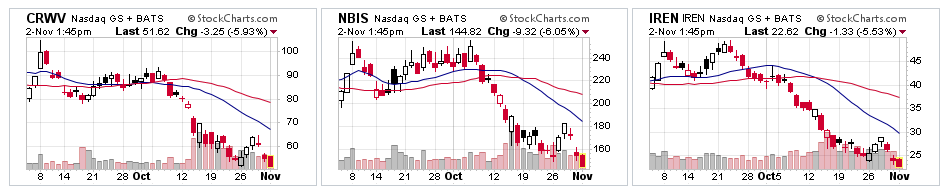
The new terms of trade are visible in every corner of markets. Bonds issued even by big tech companies such as SpaceX and Meta are trading at steep discounts. AI cloud companies such as CoreWeave, Nebius and Nscale that borrow big to build and sell capacity have effectively been shut out of the bond market in recent weeks, people familiar with the matter said.
Taken together, it all amounts to a buyer’s market for Wall Street. Even powerful players such as Broadcom are having to sweeten the terms offered to banks to secure loans. “The bar is going higher and higher in terms of proving to lenders that this investment will turn into sufficient revenue,” said Dan Ivascyn, chief investment officer at Pimco. “The weak links are going to suffer first.”
A quick check on the neo-clouds shows that they are still broken…
StockCharts
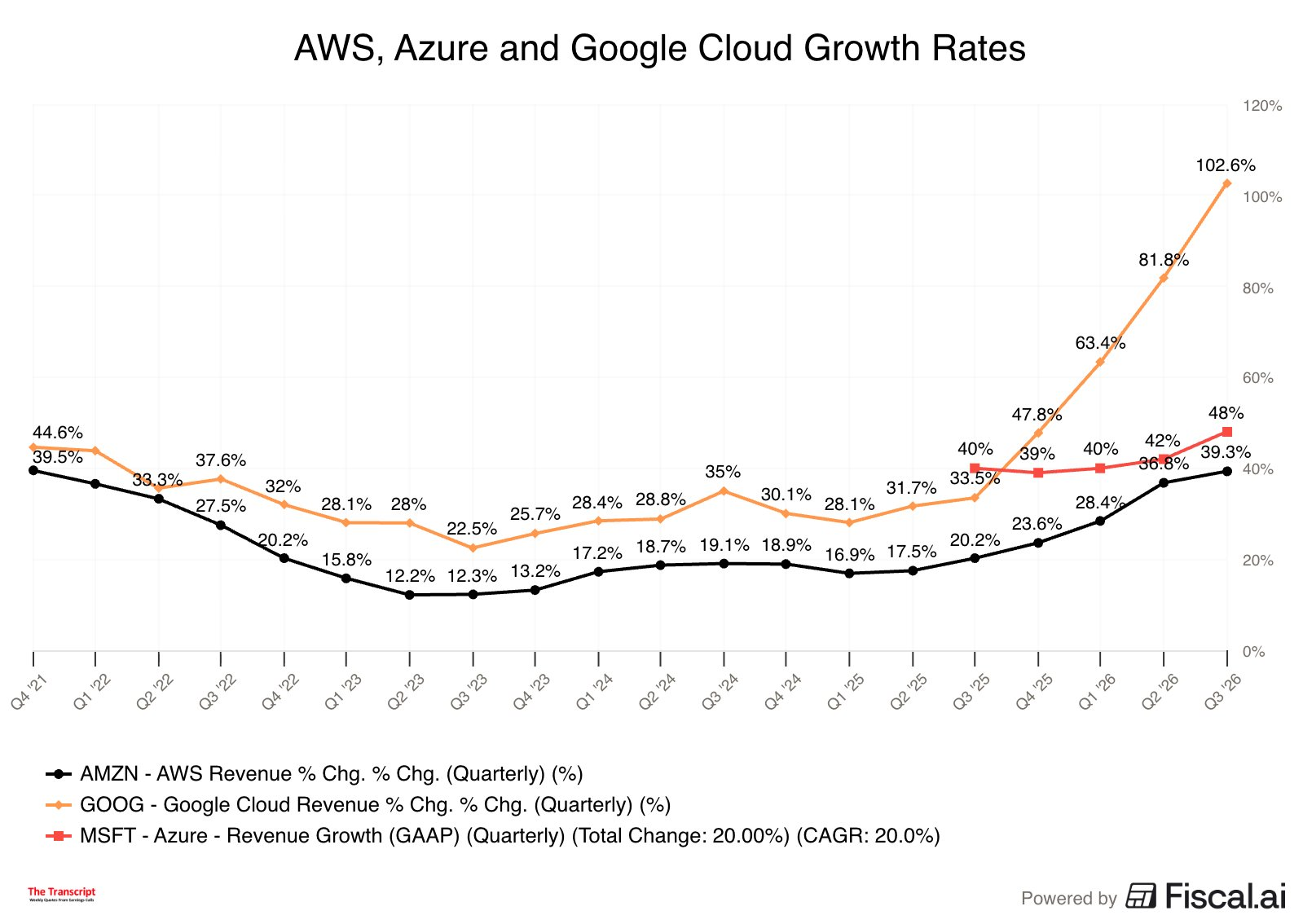
No problems with AI top line growth last week at the big three…
Cloud growth is accelerating across Big Tech:
$AMZN CEO: "AWS grew 39.3% year-over-year, accelerating for the sixth straight quarter, our fastest growth in nearly 5 years. Backlog is $578 billion, growing triple digits year-over-year and well diversified."
$MSFT CFO: "Azure revenue was ahead of expectations and increased 48%, even with the 3P capacity delays noted earlier, driven by Foundry and improved CPU monetization."
$GOOGL CFO: "Cloud revenues were up 103% to $30.7 billion, driven by strong growth in GCP, with strength in AI, including both AI infrastructure and AI solutions, and core GCP"
@TheTranscript_
But the rewards for the three companies sure were different…
The hyperscalers split into two camps last week. The winning camp included Microsoft and Amazon, which pay for AI out of operating profits. Over the past four quarters, Microsoft’s cloud revenues totaled $229.2 billion and AWS’s $161.4 billion. Azure grew 48% y/y in the latest quarter, and AWS grew 39%.
Alphabet is in the second camp. Google Cloud generated $93.3 billion over the same period, but Alphabet’s Q3 revenues of $127.6 billion fell short of the $128.2 billion consensus on a miss in Search, and its free cash flow disappointed. The stock dropped 12.3% on Thursday.
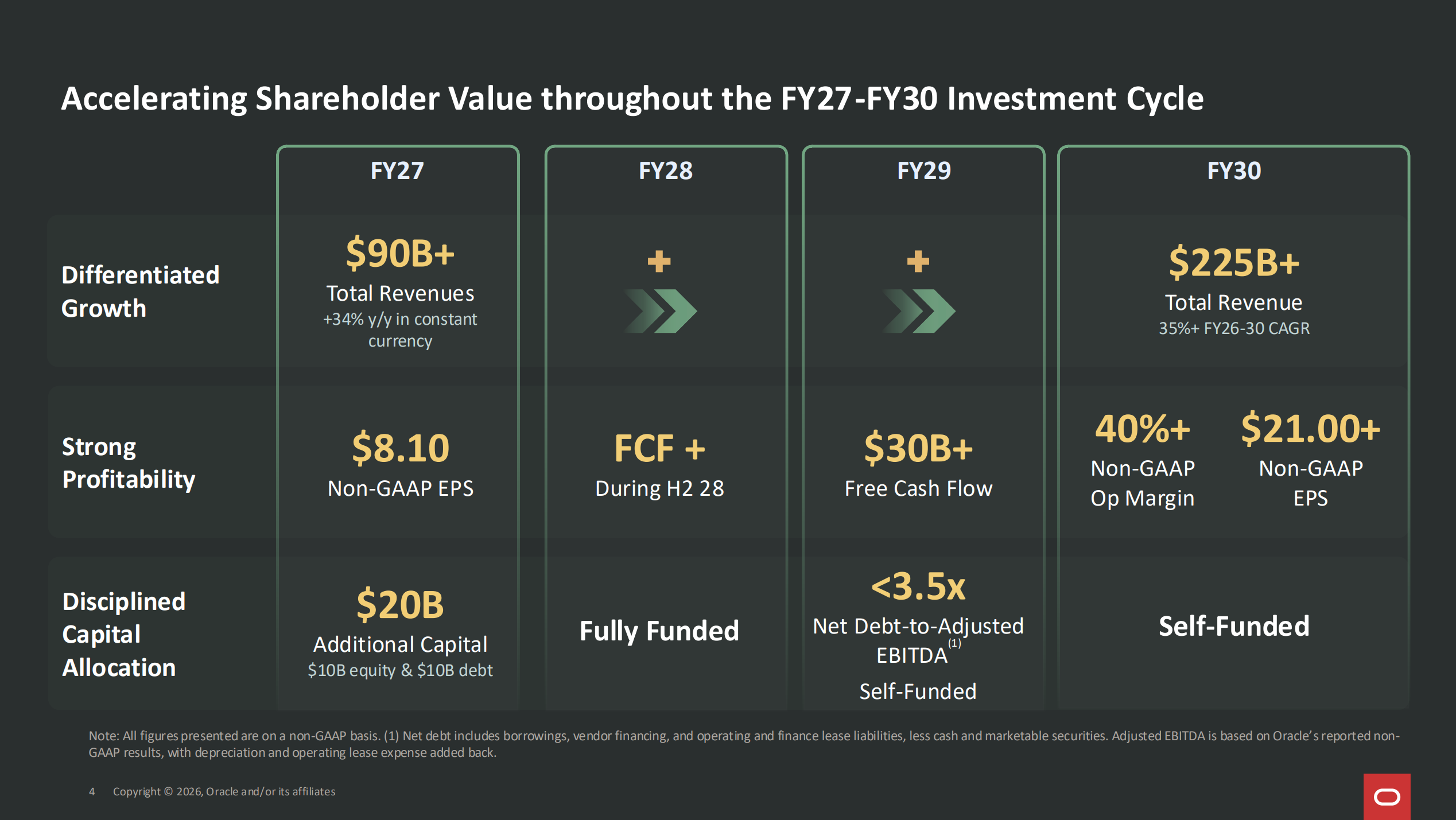
Oracle is working its way into the first camp. At its Investor Day on October 28, management guidance included revenue growth of more than 35% a year through fiscal year 2030. The stock rose 10.6%, but has since given back almost all of the gain.
Demand is not the problem. The four largest cloud providers now report a combined $2.5 trillion in remaining performance obligations. Microsoft leads with $677 billion, up 73% y/y. Oracle follows at $664 billion, and Amazon’s backlog doubled to $578 billion. Alphabet’s reached $567.7 billion. The constraint is funding and delivering the AI infrastructure buildout necessary to monetize that backlog. Alphabet’s selloff showed how quickly investors punish spending that fails to convert into cash.
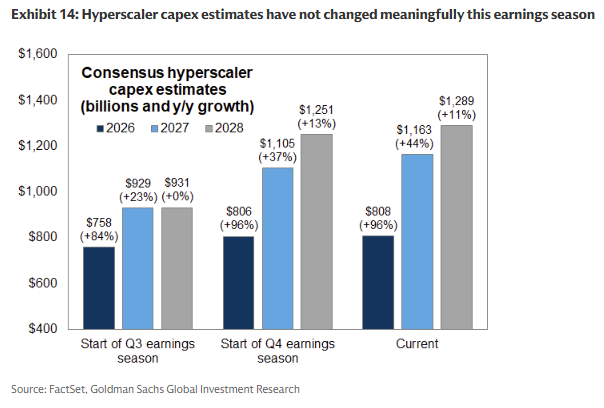
A bit of an upward movement in the capex figures at the AI hyperscalers but year-end revisions should be more meaningful than last week's figures…
In contrast with the last few quarters, the outlook for hyperscaler capex spending has remained fairly stable this reporting season. Analysts continue to expect roughly $800 billion in capex in 2026. Estimates for 2027 spending now stand at $1.2 trillion, only slightly above the estimate prior to the hyperscaler earnings reports. The lack of revisions is consistent with our expectation that hyperscaler capex spending will increase substantially in 2027 but that we are moving past the peaks of both capex growth and upside surprises to consensus estimates.
Goldman Sachs
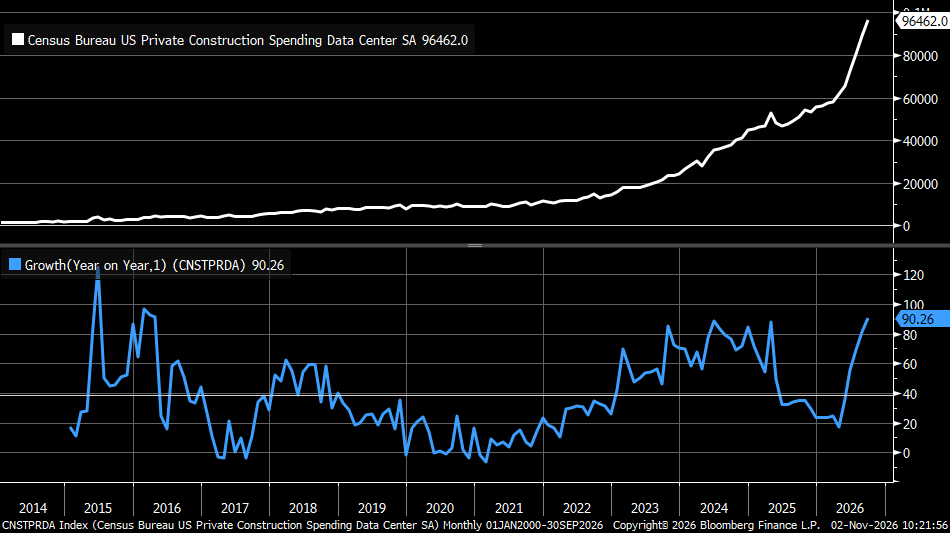
How that capex shows up in the government statistics…
@KevRGordon: Data center construction spending +90.3% y/y in September
Of course the stocks hit a bump right when free cash flow goes negative…
Hyperscaler capex spending now exceeds cash flow from operations, and analysts expect free cash flow for the group will continue to decline in 2027 before turning positive again in 2028.
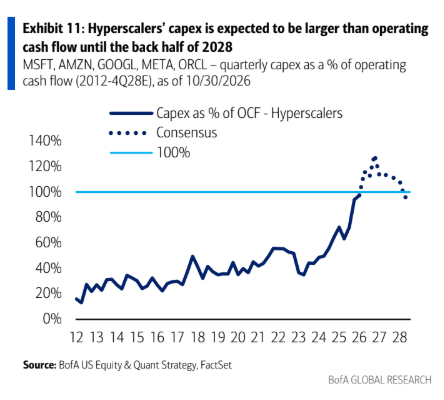
BofA Global
Oracle's analyst meeting last week seemed to set out a new punch bowl last week for the AI industry…
Solid revenue growth of 35%+. Good operating margins. Positive free cash flow in 2028. And declining capital intensity with only $20b of projected funding need thru 2030.
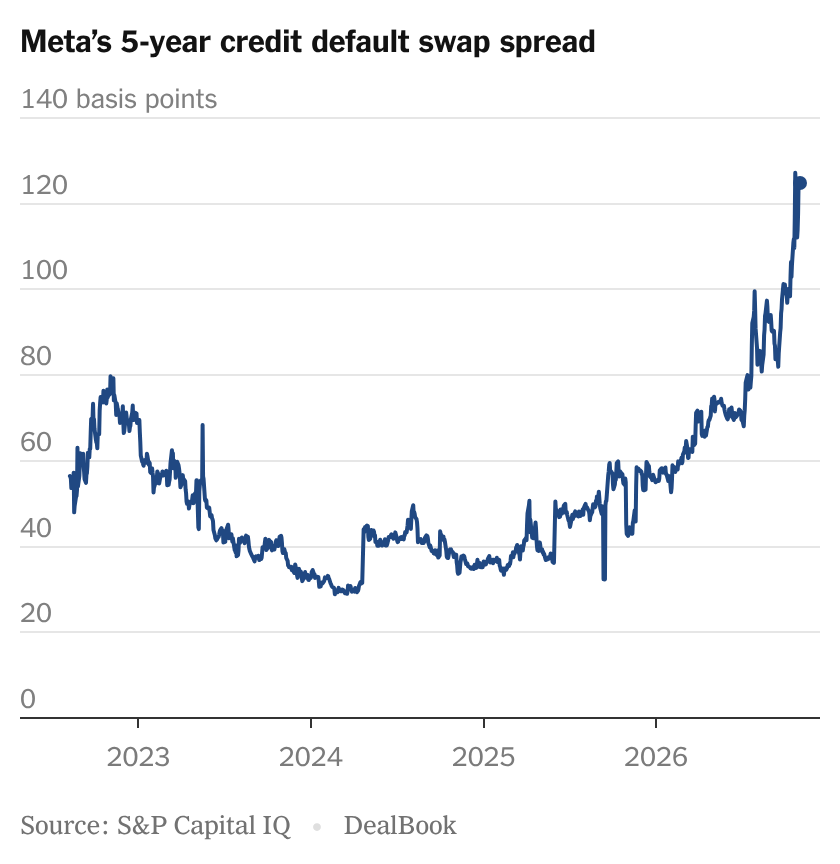
Meta has a AA- credit rating which is very good, but even the CDS market is beating them up on all that capex spending…
Watch Meta’s C.D.S. contracts. They imply that it now costs about $125,000 a year to insure $10 million in Meta debt, according to S&P Capital IQ. That suggests a low probability of default, but shows that investors don’t consider the tech giant’s bonds as ironclad as they were not long ago.
Maybe the Fed Chairman was right. Interest rates do matter to tech…
“Since early September, what we’ve seen inside of the technology complex, outside of the technology complex...Interest rates have had an effect. You’ve seen market participants that are discriminating between the kinds of investments they want to make. You’ve seen credit spreads for certain assets widen out, gap out. For others you’ve seen some tightening in financial conditions, but not significantly. So on the thrust of your question of -- with respect to the new technology and this investment surge, do interest rates matter? I believe they do. And I don’t believe that they’re somehow divorced from the rest of the economy” - Federal Reserve Chair Kevin Warsh
But stock investors, don't despair. While technology was weak in October, there were plenty of ways to make positive returns…
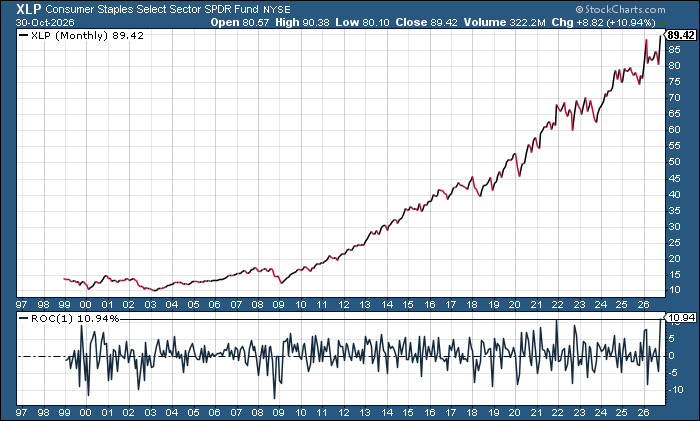
Talk about extremes. Had you just taken the Tech and Communication sector off you’re your screen and picked blindfolded you would have beaten the S&P 500. Growth was down 5.5%, while Value rallied 5%. Energy and Staples were up 10%+ while Technology and Communication Services fell 8%+.
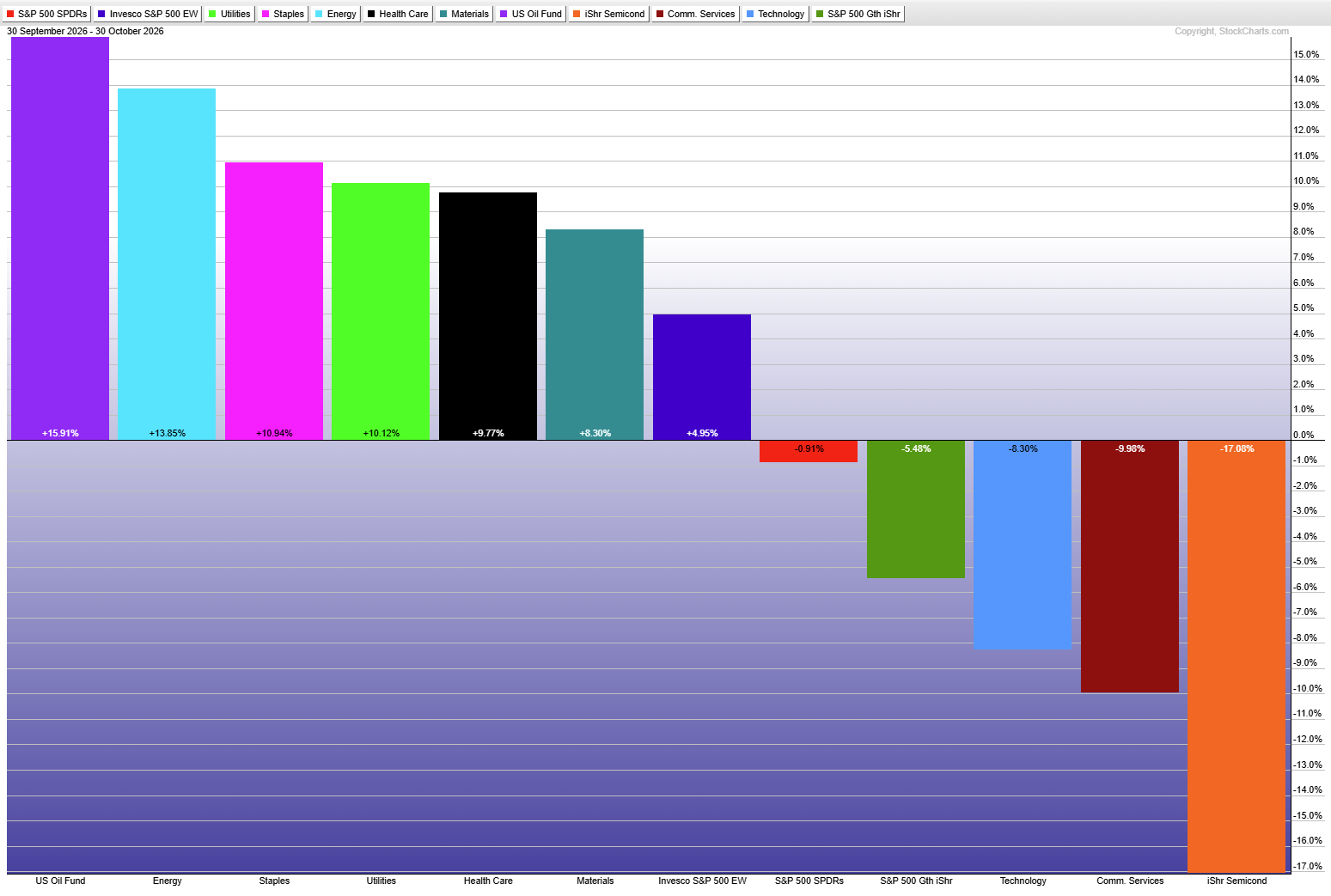
StockCharts
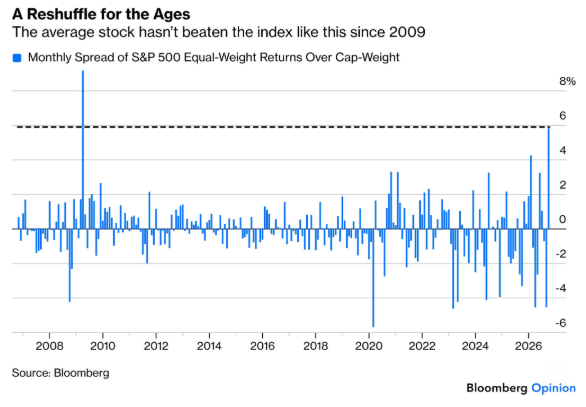
Just an epic spread between the S&P 500 index and its average component…
The spread between returns on the equal-weighted and cap-weighted versions of the S&P 500 was wider in October than in any month since April 2009, when stocks rebounded after the Global Financial Crisis.
Consumer Staples hits a record high and posts its best monthly performance as an ETF…
StockCharts
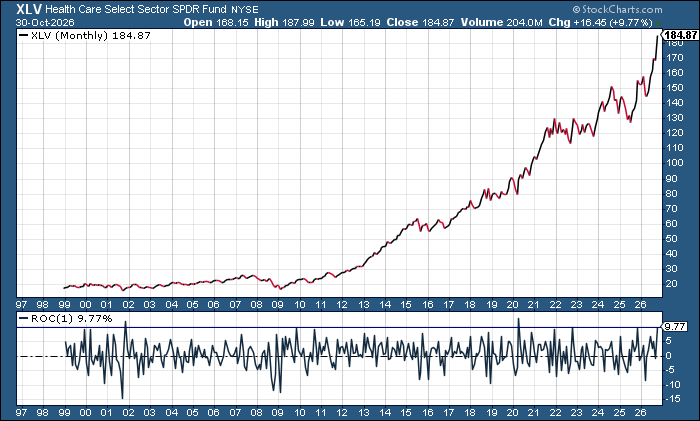
The Healthcare sector also hit a record high and notched a top 5 monthly ETF performance…
StockCharts
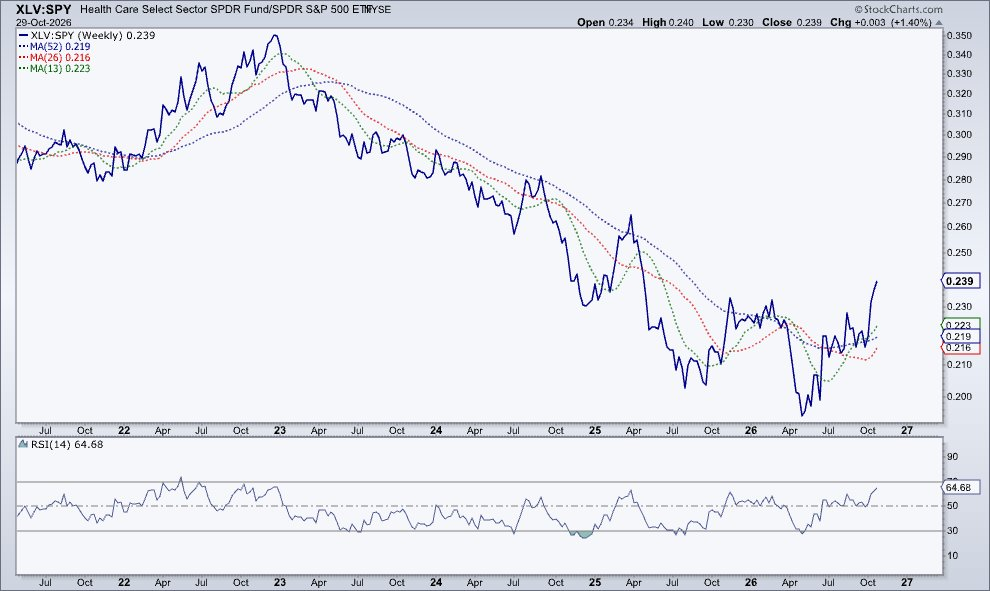
The Healthcare sector is also breaking out of its four years of underperformance…
Plenty of growth money in technology names looking for a new home and healthcare traditionally is the receiver of the switch.
@G_krupins
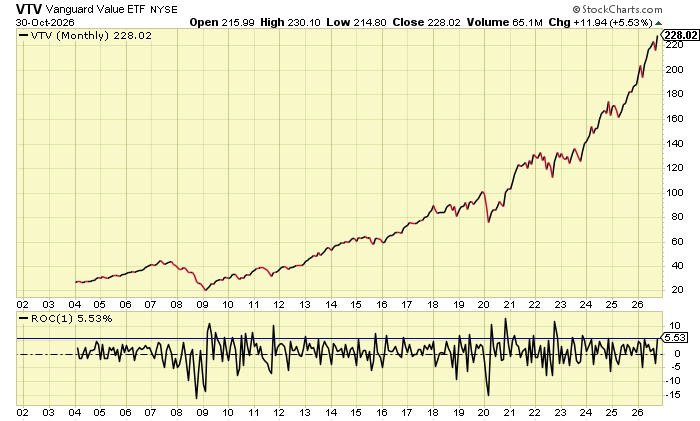
Large Cap Value factor also posts a big month and moves to new all-time highs…
StockCharts
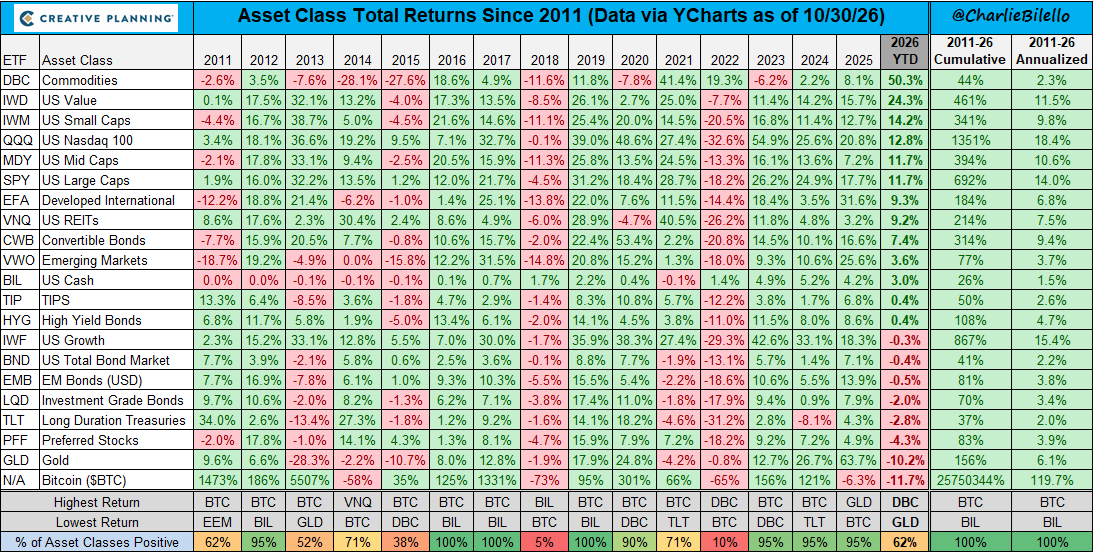
Who picked Gold and Bitcoin to be the worst performers for 2026?
Bitcoin (-11.7%) and Gold (-10.2%) are the two worst performing major assets so far in 2026. This is something we haven't seen before in any calendar year.
@charliebilello:
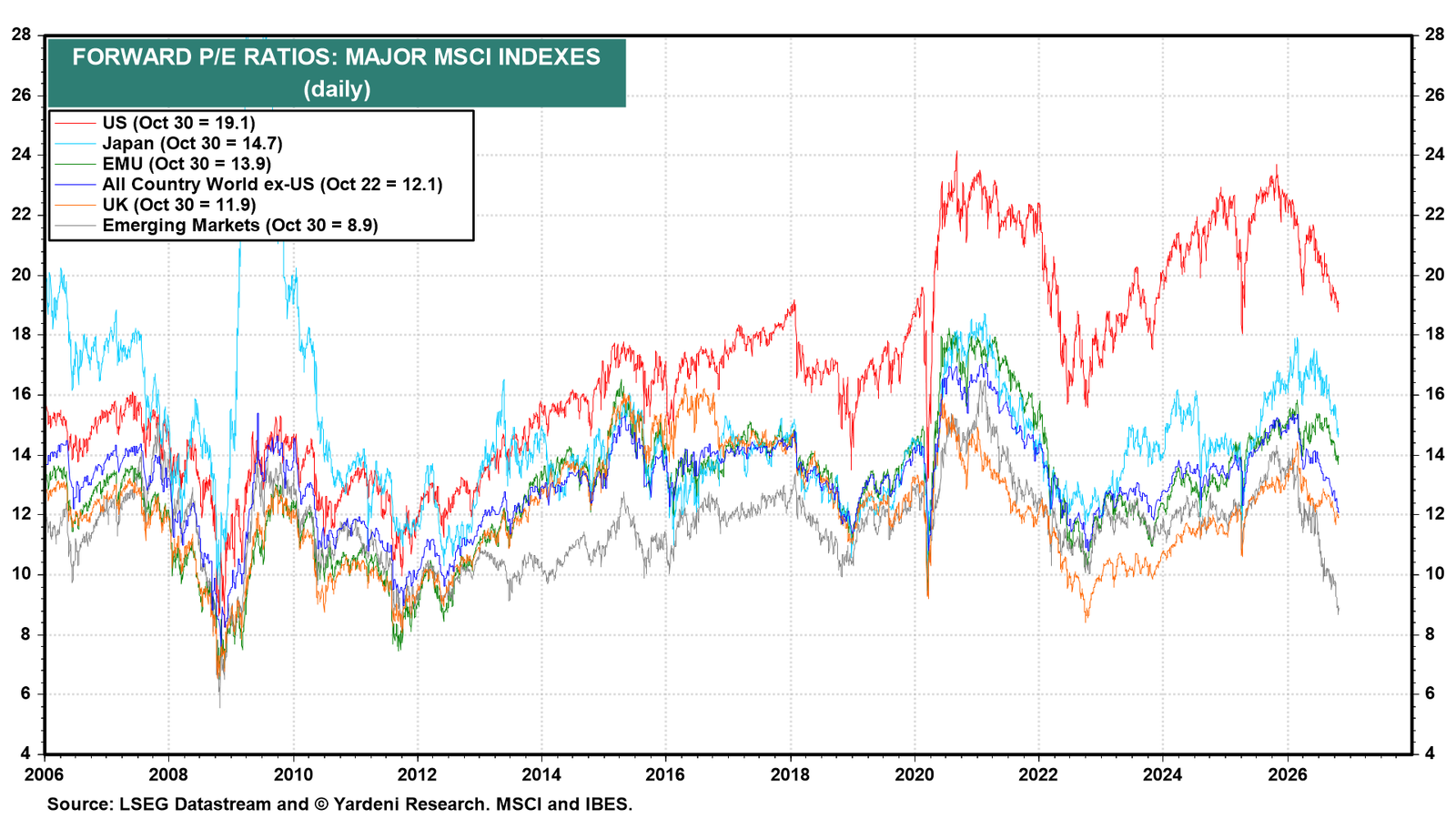
Earnings have been strong. As stocks have fallen, P/Es have plunged. EM down to GFC levels? Whoa.
Valuation multiples are falling even as earnings soar. The US MSCI’s forward P/E has dropped to 19.1 from 23.7 a year ago. Japan’s is 14.7, and the EMU’s is 13.9. The UK trades at 11.9. EM trades at 8.9, its lowest since the 2008 financial crisis.
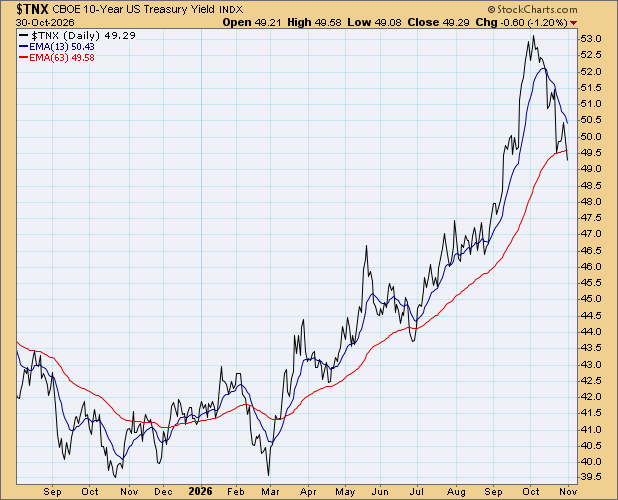
So AI Tech money to Treasuries?
StockCharts
Don't expect too many trucking industry participants to drive to their polling stations tomorrow…
Justin Stoneman has been in the trucking industry for 27 years, operating out of central Michigan’s agricultural heartland. Hauling grain and fertilizer around the Midwest, his 12-odd tractor trailers generated more than $3 million in annual revenue during their best times.
Those days are over. In the past year, Stoneman’s business has been squeezed by a range of pressures, from war-fueled spikes in diesel prices to rising insurance costs and onerous debts — all of which have pushed him to the brink. In May, his company, Stoneman Trucking LLC, filed for bankruptcy protection, but he has since lost hope and is shifting to chapter 7, to fully shut down operations.
“I’m so frustrated,” Stoneman said. “It’s like, what about all this ‘Drill, baby, drill’?”
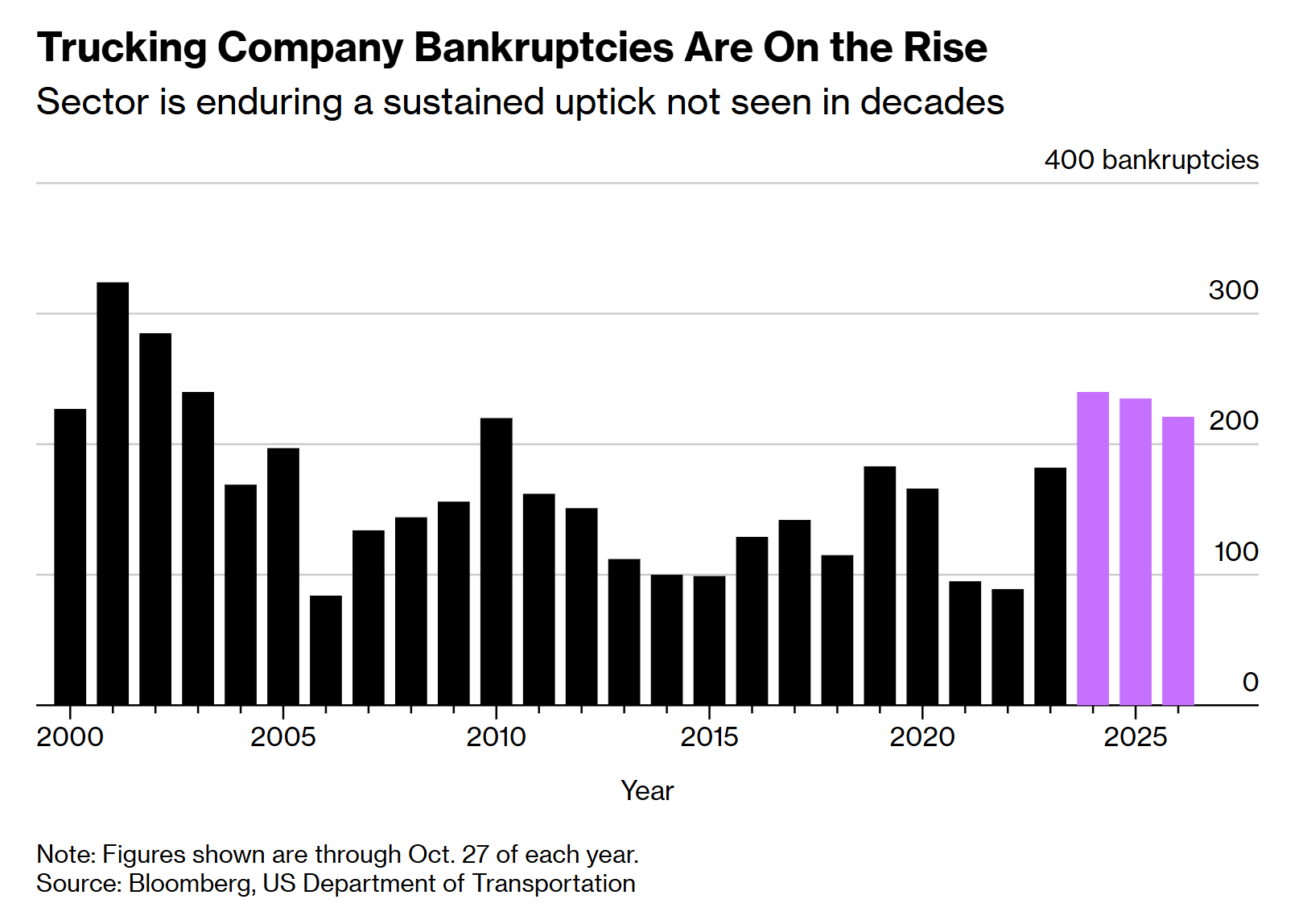
Stoneman isn’t alone. At a time when affordability issues are at the center of US voters’ concerns heading into next week’s midterm elections, America’s smaller trucking operators are feeling the pinch. Some 221 trucking companies have filed for bankruptcy so far this year, according to data compiled by Bloomberg, extending a three-year spike at sustained levels not seen in decades.
Who would have thought that you would need to travel to Mexico City to see the future of North American automobiles…
I went to Mexico City this spring to test-drive the future.
What I saw was a split screen between a familiar past and a future of luxurious, space-age cars that cost far less than comparable models at home.
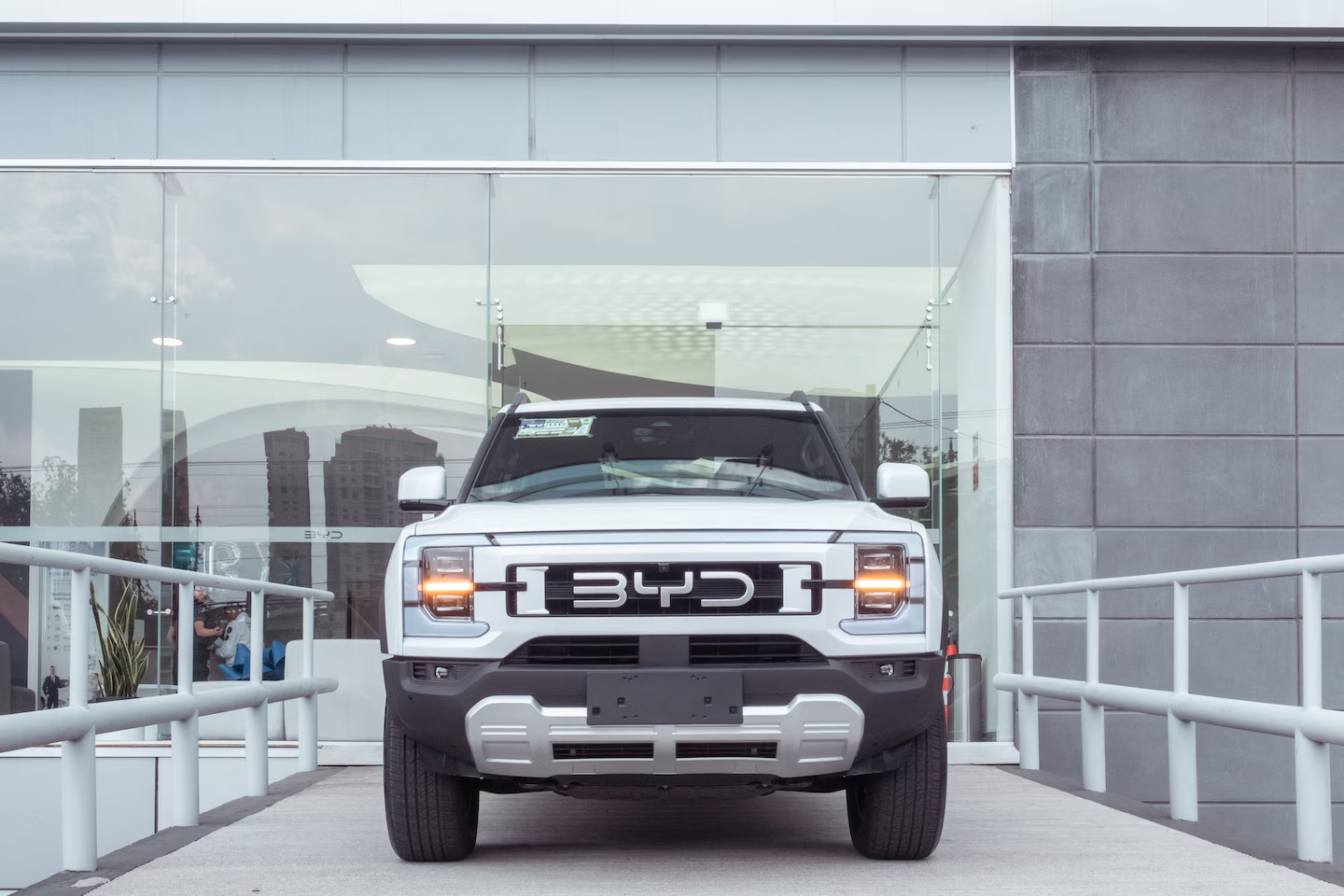
Mexico has become a showroom for the electric cars you can’t buy in the United States. Amid aging fleets of American Chevys and Fords is a growing stream of sleek new vehicles from Chinese EV brands you’ve never heard of, such as Zeekr, JAC and BYD.
A wall of tariffs, trade barriers and software restrictions effectively bans Chinese EVs from entering the U.S.
Many features were merely fun — heated massage seats, wild acceleration, karaoke mode and spa-like cabin settings. But the bigger difference was the amount of technology bundled into shockingly low prices: fast-charging, powerful batteries, sophisticated software and interior luxuries that sometimes came in Western models only at twice the price.
It’s working. Chinese branded vehicles have gone from less than 1 percent to 15 percent market share in five years, as well as about 90 percent of all EVs. That’s fast eroding America’s market in its backyard, as well as abroad, where the U.S. has seen its share fall or stagnate in Asia, Europe and Latin America. Even at home, the Big Three now command less than 40 percent of the auto market, down from 92 percent in 1965.
Much American EV technology can still rival or exceed anything Chinese automakers put on the road. Tesla’s self-driving autonomy, AI infrastructure, software and powertrain efficiency are considered best in class. But every year, the U.S. falls further behind. Tesla is no longer the world’s largest EV maker, a title claimed by China’s BYD last year, which has seen global sales surge as Tesla’s have retreated over the last two years.
BYD’s plug-in hybrid pickup has no American rival at any price — a dagger aimed squarely at the heart of the U.S. market.
Chinese cars can’t be kept outside the U.S. forever, argues Clifford Winston, an economist and fellow at the Brookings Institution who specializes in transportation. He predicts Chinese vehicles — or the technology inside them — will find their way into the American market within years, because the center of innovation of the global auto market has moved to China.
“Eventually, they’ll come here,” insisted Winston.
Learn more about the Hamilton Lane Strategies
DISCLOSURES
The author has current equity ownership in: Nvidia Corp., SK Hynix Inc., Alphabet Inc., and Apple Inc.
The information presented here is for informational purposes only, and this document is not to be construed as an offer to sell, or the solicitation of an offer to buy, securities. Some investments are not suitable for all investors, and there can be no assurance that any investment strategy will be successful. The hyperlinks included in this message provide direct access to other Internet resources, including Web sites. While we believe this information to be from reliable sources, Hamilton Lane is not responsible for the accuracy or content of information contained in these sites. Although we make every effort to ensure these links are accurate, up to date and relevant, we cannot take responsibility for pages maintained by external providers. The views expressed by these external providers on their own Web pages or on external sites they link to are not necessarily those of Hamilton Lane.