
Weekly Research Briefing: Even More Isolated

The White House guardrails are breaking down. Threats of annexing an allied territory, the return of triple digit tariffs, and an insulting of NATO troops pushed US bonds, stocks and the US dollar to a breaking point last week. There were plenty of market movements as the VIX jumped to 20 during a holiday shortened week. Gold and silver prices soared as concerned investors ran toward the non-cash flowing stores of wealth. By the week's end, the White House retreated from taking Greenland which paused the decline in US asset values. But note that more US political capital was burned and economic and strategic bridges have been heavily damaged. Foreign investors are scratching their heads even more now as they try to determine how to allocate global assets. Meanwhile European government leadership is making new plans for how to live, trade and defend independently without the US involved.
While the majority of the US battles weather and power outages, it must now also prepare for a government shutdown this Friday. While a budget battle was not planned for this week, everything changed on Saturday when another fatal shooting by federal agents occurred in Minneapolis. Senator Thune has his work cut out for him this week trying to get this budget passed during a time when members of his own party have many unanswered questions. To make matters worse, another East Coast storm is building for the last weekend of the month so don't sell that snow shovel yet!
We should be talking about earnings which were great at the banks and pretty encouraging for the other early reporters. Bank credit quality was solid which is the first thing that I look at. Unfortunately all the stocks, got blitzed by the White House's threats regarding a 10% credit card cap rate which would turn all credit card companies into unprofitable enterprises and throw the US economy into a recession. As a result, a 10% interest rate cap is unlikely to occur but the damage is done, and the wind has been taken out of the bank stocks' sails for now. There is much more to discuss this week as the biggest slice of the earnings season hits including several of the big tech names. There is little economic news this week, but there will be an FOMC meeting which will result in a highly dictated 'no change' to the Fed Funds rate. But the Jerome Powell show on Wednesday could be interesting. Have a good week and enjoy the snow.
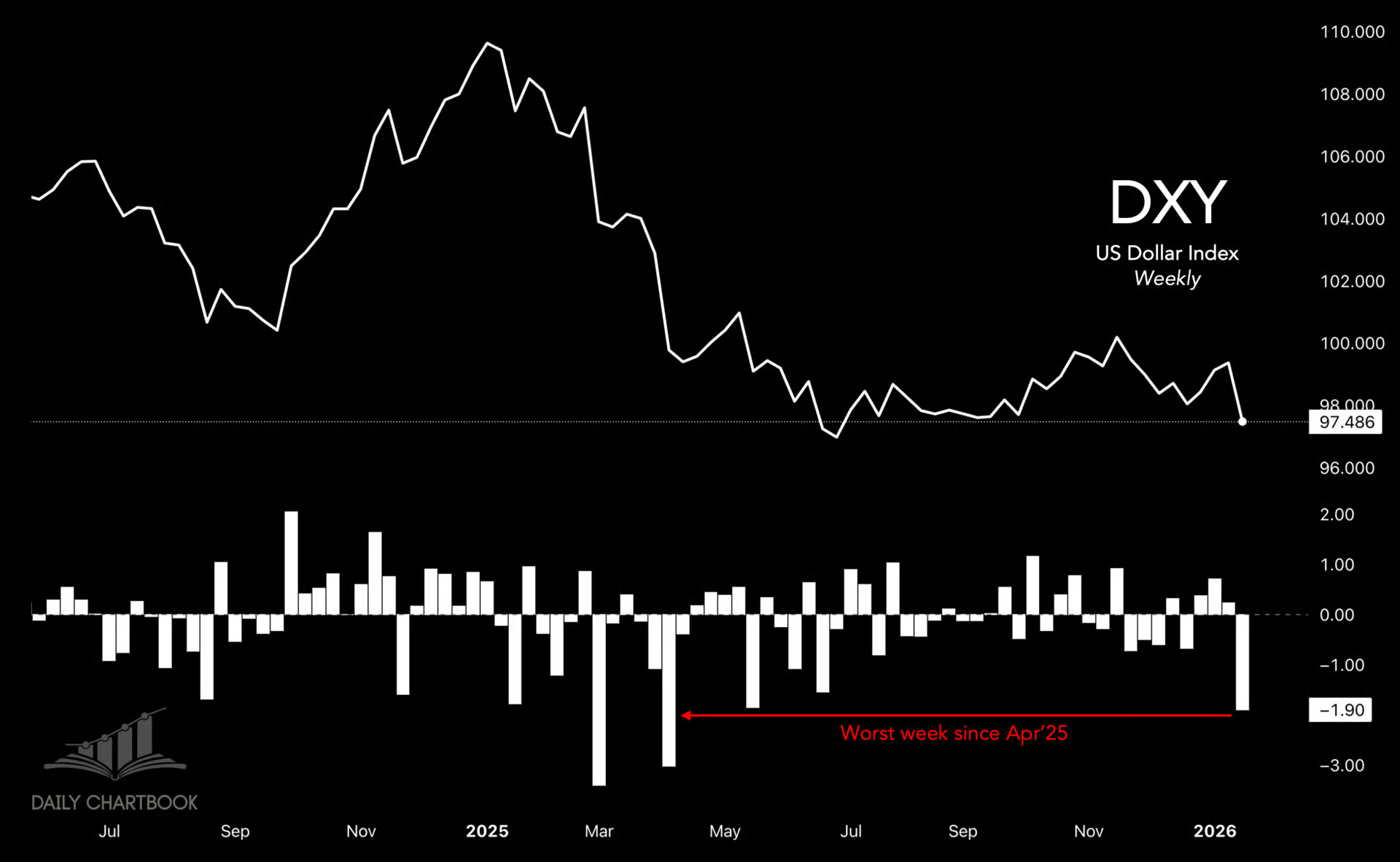
The US Dollar Index suffered its worst weekly drop since April as investors ran into foreign denominated investments…
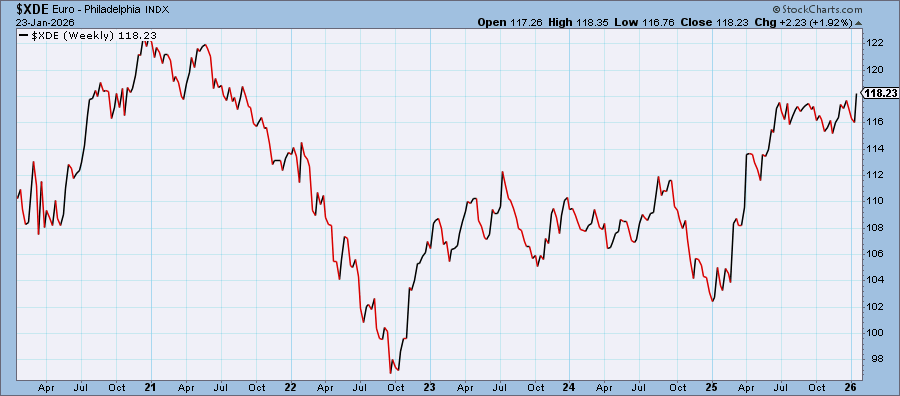
Even the Euro/US$ posted its highest weekly close since September 2021…
StockCharts.com
And the last thing the US needs right now is upset foreign bond investors given the January auction results…
The only constraint on Trump Unleashed is the global bond market. If you have a structural fiscal deficit of 6-7pc of GDP, a savings rate near zero and a reliance on the goodwill of foreigners to fund an explosive increase in debt issuance, you might wish to treat global creditors with a little care.
The US treasury sold $654bn of federal debt over the four days from Jan 12-15, about the same in one week as the annual GDP of Argentina or the United Arab Emirates.
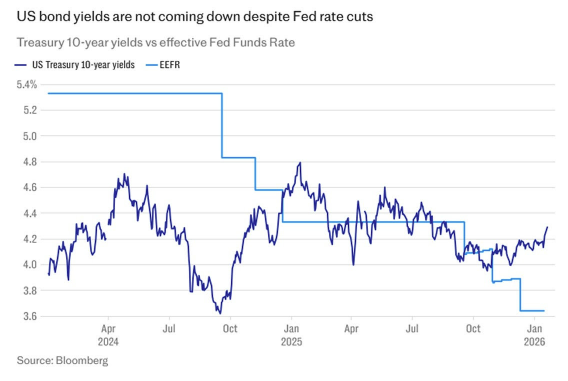
It did not go well. The market yields on long-term bonds are refusing to come down as the Fed cuts rates, and it is the long end that sets the borrowing cost for mortgage debt, car loans, student loans and corporate debt securities.
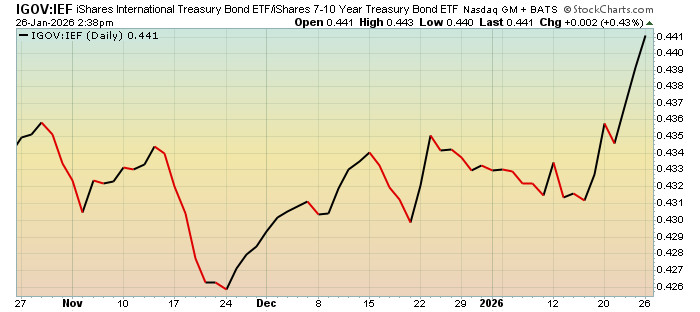
The "Sell America" trade is visibly obvious in the global government bond markets as foreign debt outperforms US debt…
StockCharts.com
Large European pension plans are shifting away from US Treasuries…
Europe’s biggest pension fund spent much of last year dramatically scaling back its exposure to the US government bond market.
Stichting Pensioenfonds ABP reduced its holding of US Treasuries by about €10 billion ($11.7 billion) to €19 billion in the six months through September. The figures, which are based on the €538 billion fund’s latest disclosures and numbers reported by Dutch public broadcaster NOS, add to evidence that institutional investors across northern Europe are scaling back their exposure to US government bonds.
The news follows similar divestments by funds in Denmark, which has seen relations with the US sour over Greenland. AkademikerPension, a $25 billion pension fund, said on Tuesday it was exiting the $100 million it had held in US Treasuries due to an array of concerns spanning fiscal discipline, a weak dollar and tensions over Greenland. Swedish pension fund Alecta sold most of its US Treasury holdings since early 2025, citing macroeconomic risks in America.
Don't ignore the increasing attractiveness of Japanese Govt Bonds over US Treasuries…
“Yields on JGBs have reached levels that make investing in US Treasuries unattractive on a currency-hedged basis,” said Ronald Temple, chief market strategist at Lazard Asset Management. “If JGB yields continue to rise, a rational choice by Japanese investors could be to move capital back to Japan.”
@neilksethi
Even the US bond giant PIMCO is shifting away from US assets…
Donald Trump’s “unpredictable” policies have prompted bond giant Pimco to diversify away from US assets, as Wall Street frets over the long-term consequences of the president’s attacks on the Federal Reserve.
Dan Ivascyn, chief investment officer of Pimco, told the FT that the $2.2tn fund manager was “diversifying” its portfolios as it contended with the US president’s rapidly changing policies, which had caused flare-ups in market volatility.
“It’s important to appreciate that this is an administration that’s quite unpredictable,” Ivascyn said. “What are we doing about that? We’re diversifying...We do think we’re in a multiyear period of some diversification away from US assets.”
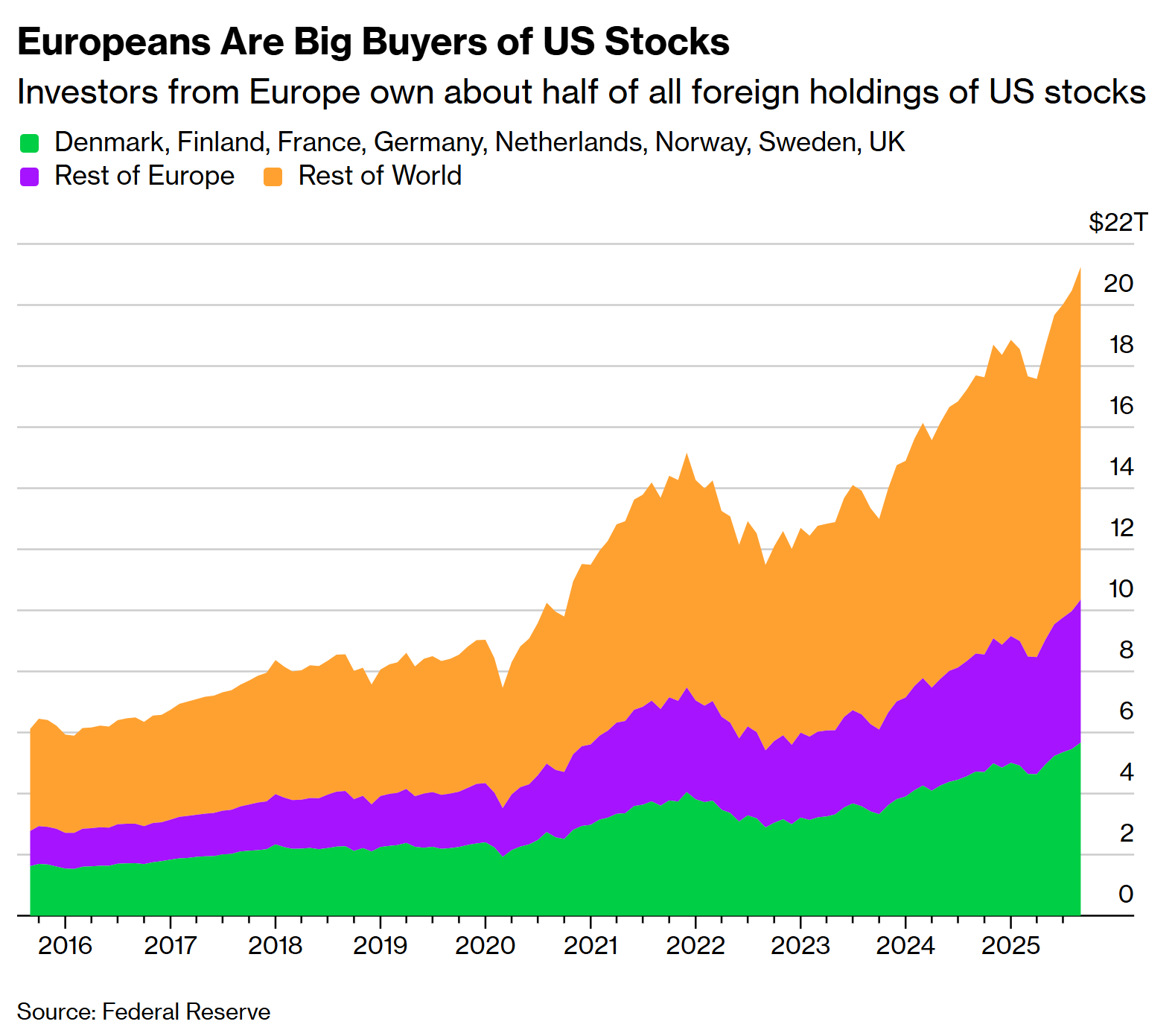
Bonds aren't the only asset at risk as Europeans are also looking at their US equity exposures…
“We are seeing more clients wanting to diversify away from the US. We saw that trend start in April 2025 but it has somewhat accelerated this week,” said Vincent Mortier, chief investment officer at Amundi SA, which is Europe’s largest asset manager with €2.3 trillion ($2.7 trillion) in assets under management…
European investors own roughly $10.4 trillion in US stocks — and more than half of that total is owned by investors in the very eight countries Trump threatened with tariffs, a move that contributed to a 2.1% drop in the S&P 500 on Tuesday.
To put those numbers in context, Europeans own 49% of all US stocks held by foreigners — a big enough chunk to pose a threat to the market, Scotiabank portfolio and quantitative strategist Hugo Ste-Marie wrote in note.
“If we see diversification accelerating, it could weigh on US equities, bonds and the dollar over time,” he said.
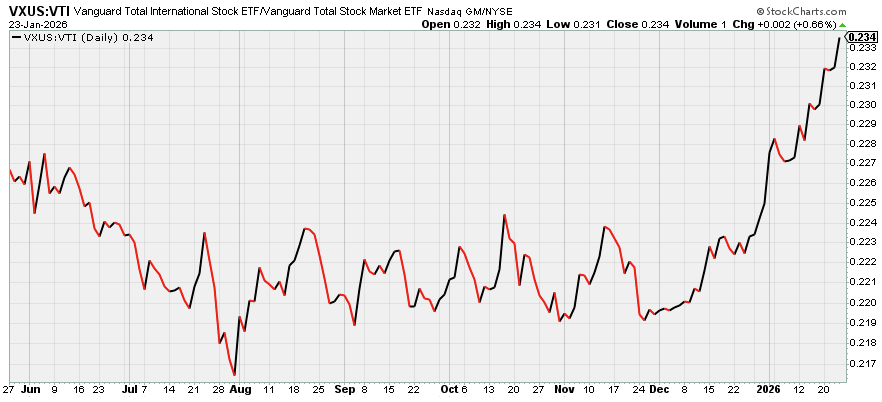
The move in ex-US versus US equities is legging higher…
StockCharts.com
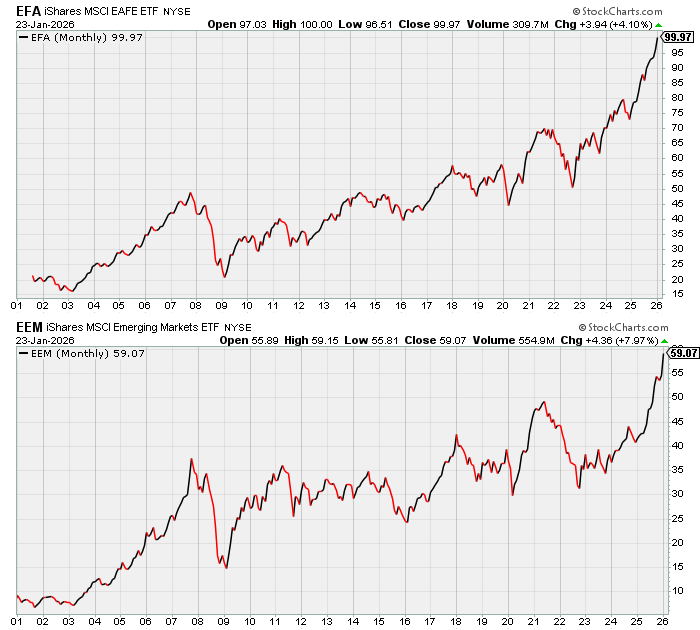
And new all-time highs being set for both Int'l Developed and Emerging Market equities…
StockCharts.com
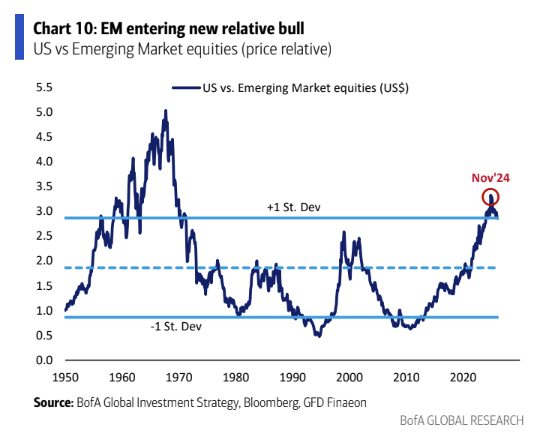
As BofA Global notes, this is a big turn for EM versus US equities…
BofA Global
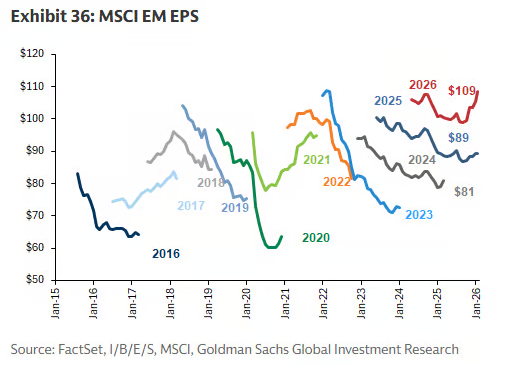
One solid reason would be that EM earnings revisions are on a tear higher…
Goldman Sachs
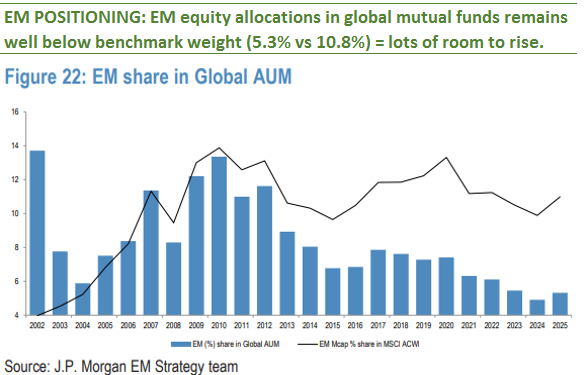
Also, EM exposures are at a fraction of their size 15 years ago…
J.P. Morgan
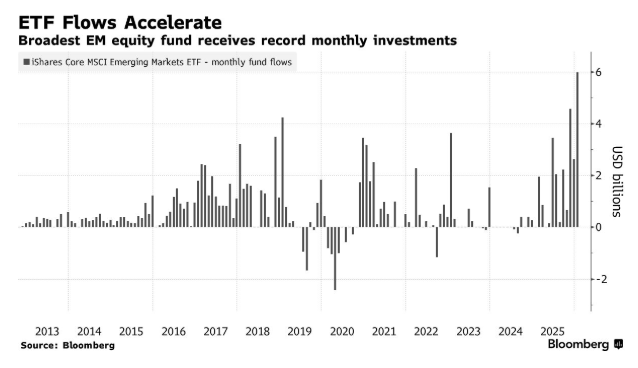
No surprise then that the largest EM ETF just had its biggest week of inflows on record…
The $134 billion iShares Core MSCI Emerging Markets ETF has absorbed almost $6 billion this month. That puts it on track for the biggest monthly inflow since its inception in 2012 and would beat the previous record set in November 2025. The fund, which invests in the broadest set of emerging-market stocks, received $639 million of fresh deposits on Wednesday.
It’s more evidence that investors are piling into the asset class, with technology stocks from Asia soaring to record highs and asset-managers around the world looking for alternatives to US markets. One of the world’s biggest funds tracking US equities, the SPDR S&P 500 ETF, has bled $13.4 billion this month, putting it on track for its worst month of outflows since March, as President Donald Trump’s latest tariff threats over Greenland roiled markets.
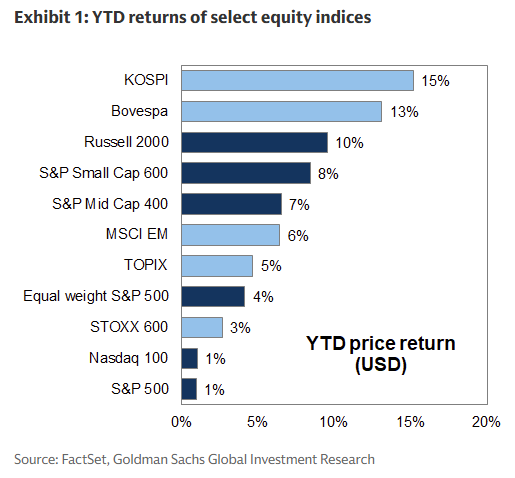
But not just international stocks, US small caps are also making a name for themselves in 2026…
Goldman Sachs
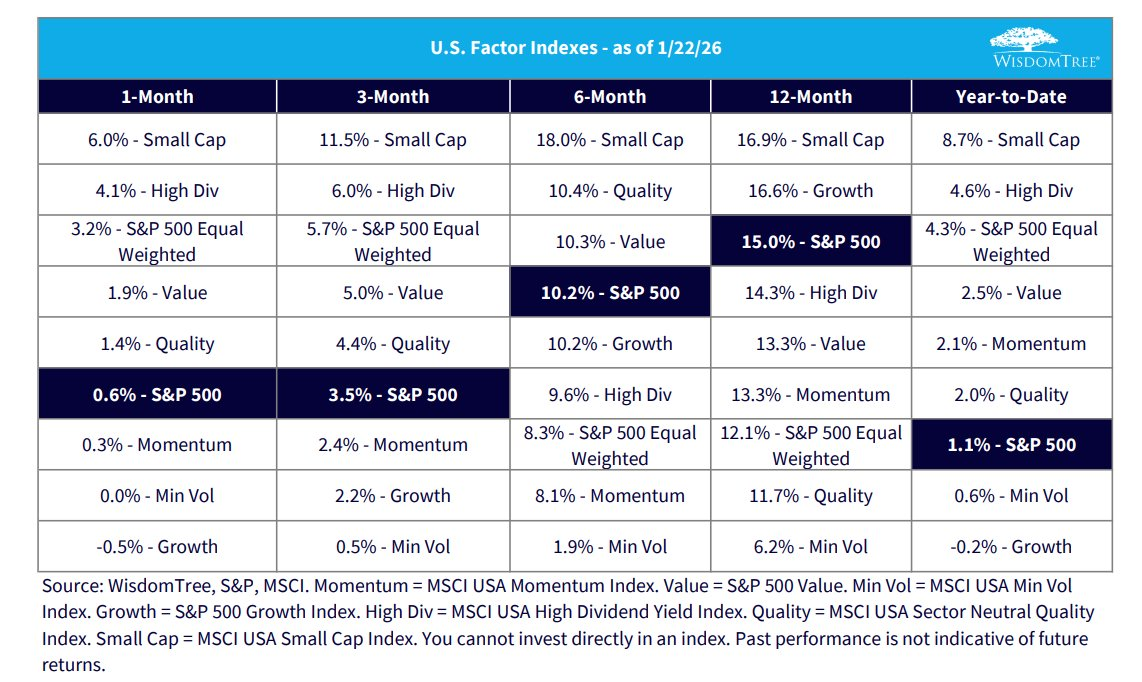
In fact, the Small Cap factor is now in the top slot for all near term timeframes…
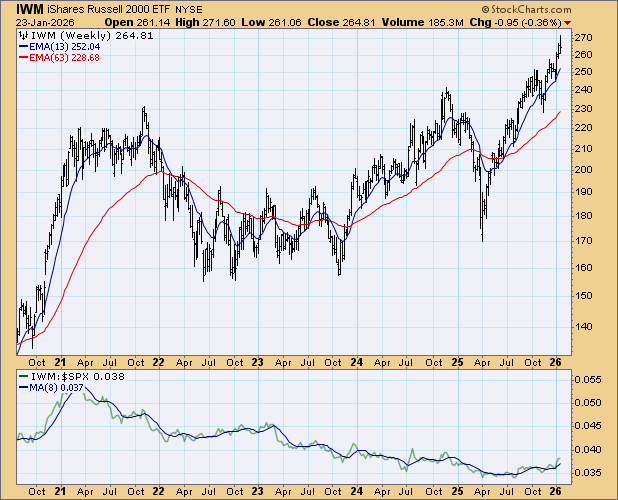
The Russell 2000 etf is also making new all-time highs as it outperforms the large caps…
StockCharts.com
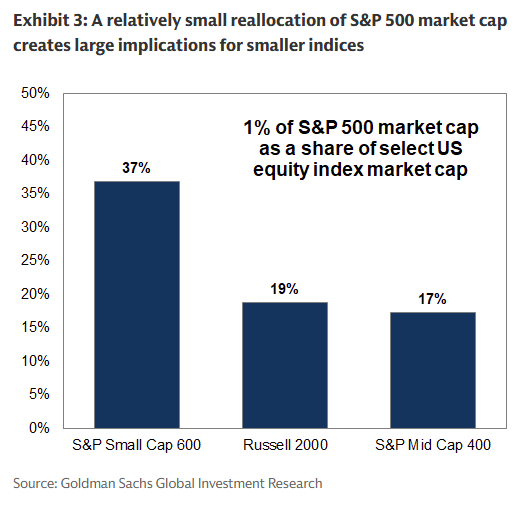
Important to understand that if a few big institutional investors decide to move assets from large cap to small cap, that it can have a massive impact on flows into smaller equities…
From a fundamental perspective, the improvement in market breadth can be explained by a broadening in the set of opportunities facing investors. The drivers of that opportunity set, including an improving economic growth outlook and friendly Fed policy, have coincided with incremental uncertainty surrounding the earnings outlooks for some of the largest US tech stocks.
From a flows perspective, the broadening also reflects a continued shift toward diversification in investor portfolios. A change in allocations with modest implications for the S&P 500 can have large implications for smaller indices. For instance, a rotation of 1% of S&P 500 market cap to the Russell 2000 would represent 19% of market cap for the small-cap index.
Goldman Sachs
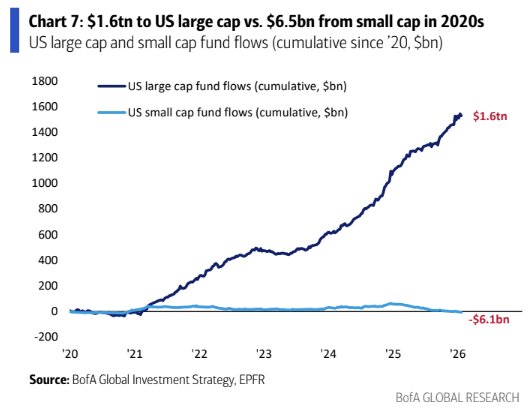
Just sizing up the last six years of flows into large and small cap buckets…
BofA Global
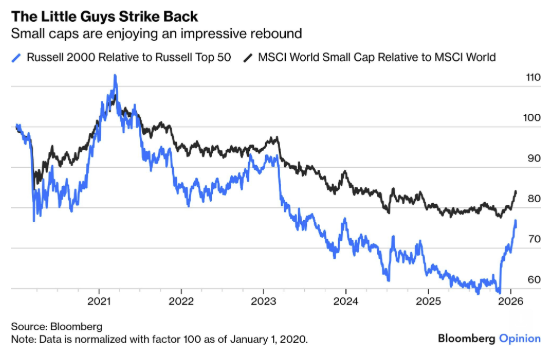
And the small cap effect is even occurring in overseas equities…
The chart below shows how smaller companies have performed relative to large caps, in the US and the developed world as a whole.
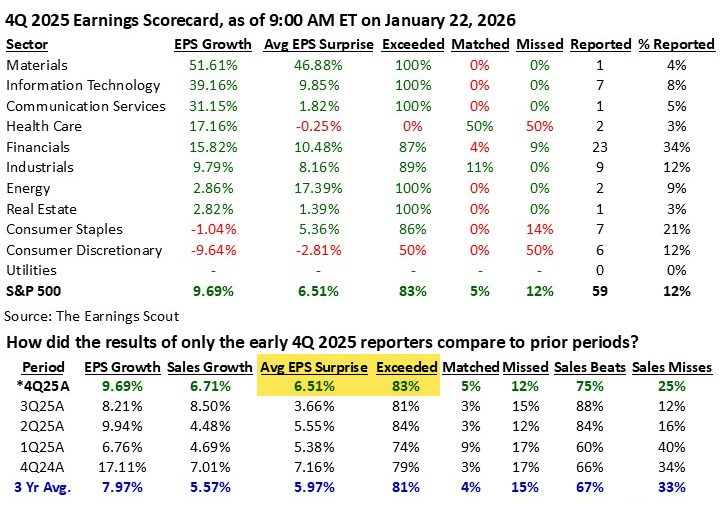
Early days for US corporate earnings, but so far, so good…
4Q25 #Earnings update:
59 S&P 500 co's have reported
83% beat EPS by +6.51%,
EPS up +9.69% YoY,
75% beat sales.
Most importantly, 63% had 1Q26 EPS ests raised post earnings, the strongest revision trend in over 5 years.
@EarningsScout
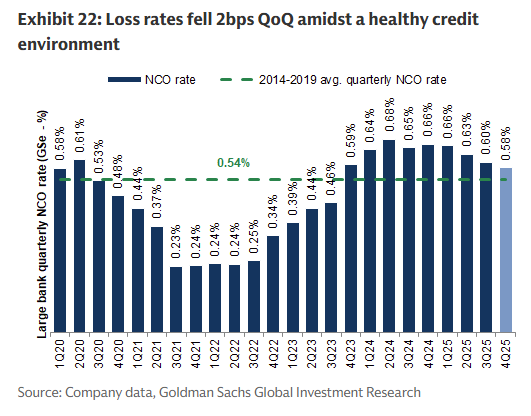
A summary of the big bank credit numbers shows an improvement that should make all investors feel good about downside risk…
Goldman Sachs
The key metric for this big bank CEO is US employment…
“Do we have the overall capacity to grow our business? Right now, the client sentiment’s pretty good. I would say in the macro, if you even break it down, my probably number one focus is employment. If I look at a number every day as employment, the index of risk to financial services, I think we all learned in the financial crisis was related to employment. So that’s what I stay really focused on. Will businesses still be confident to continue to hire? If consumers are confident that they have a job or can get a job or have a job and a gig job, then that confidence will stay and elevate it.” – Truist Financial CEO Bill Rogers
Taiwan Semi issued a massive beat and guide that will bode well for many companies in the technology space, especially semi-cap equipment companies…
The beat was supported by GM improvement, led by leading-edge demand and higher utilizations. GMs comfortably exceeded 60% for the first time… and the team underlined a higher long-term GM target of “56% and higher.” This was totally unexpected. More significantly, CEO CC Wei signaled that he’s fully embracing this AI upcycle, finally giving in to customer please to grow leading-edge capacity; ’26 capex (which we expected couldn’t even go as high as $50b) is likely to grow 30%+ YoY to an astonishing $52~56b (much of the incremental add will necessarily be cleanroom, though). This and the team’s commentary was a huge vote of confidence in the AI capex cycle (a move which cannot be underestimated, with the ghosts of Rick Tsai and his 2009 capacity overbuild still haunting the fabs).
J.P. Morgan
The big airlines did well as business and first-class seats carried the planes…
United Airlines expects earnings to jump this year, with its pricier seats and loyalty program outperforming standard ticket sales.
The Chicago-based carrier said revenue from its premium offerings, such as first-class and extra-legroom seats, grew 9% in the final quarter of 2025, compared with the same period a year earlier. That outpaced total revenue, up about 5% at $15.4 billion…
Delta Air Lines kicked off the airline earnings season last week with forecasts for a 20% earnings lift this year, as it pushes to keep luring high-earning fliers. United and Delta have led the industry’s shift to sell more first-class and business-class seats, which are more expensive and carry higher profit margins.
Fastenal is not seeing improvements but not seeing declines while CSX is not planning for any meaningful economic pickup…
“No, we’re not seeing any real decline. It’s really flat. We’re not seeing a lot of — I mean, I did get the note that someone was mentioning that the economy was slightly improving. We’re not really seeing that, but we’re also not seeing any declines in our manufacturing as far as the year-over-year usage.” – Fastenal President Jeffery Watts
“As we plan for 2026, we do not anticipate any meaningful improvement in macroeconomic conditions. We are assuming low single-digit revenue growth for the year based on flat industrial production, modest GDP growth, and fuel and benchmark coal prices consistent with current levels.” – CSX CEO Steve Angel
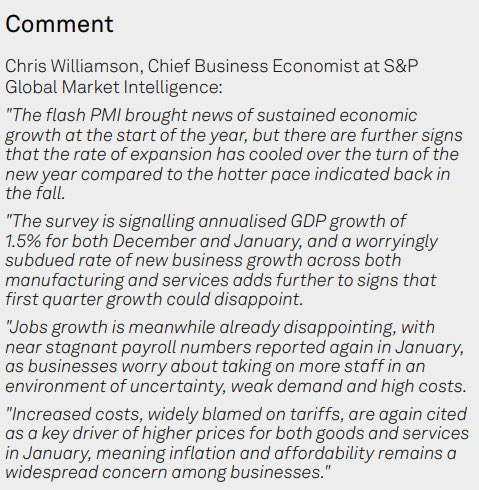
Last week's S&P Global January flash PMIs copy what Fastenal and CSX said…
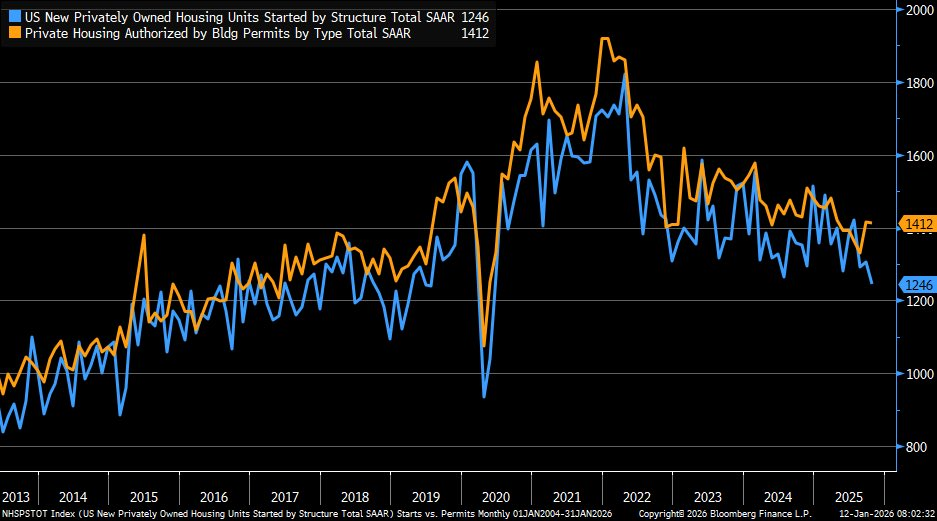
And a new cycle low in housing starts will not be of future help to building suppliers like Fastenal…
@LizAnnSonders: Building permits (orange) declined slightly in October but housing starts (blue) saw a much sharper decline and fell to a new cycle low
Here is this week's big sheet…
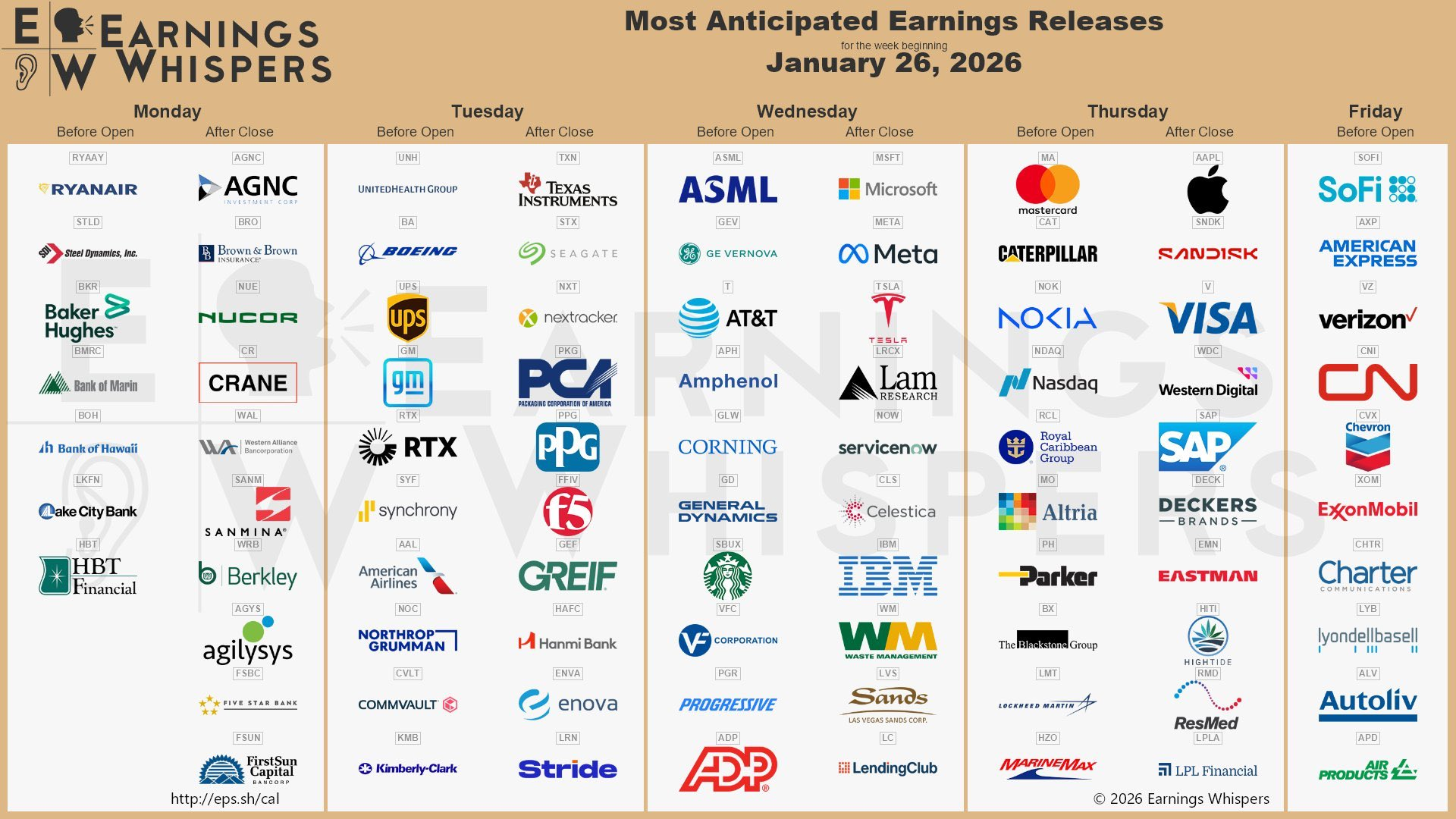
@eWhispers
I don't think anyone in the White House wants a recession or a major hit to bank profitability…
Capping credit-card interest rates as President Donald Trump has demanded could tip the US economy into a recession, according to Capital One Financial Corp.’s leader.
“Putting a price control in place, such as the proposed rate cap, would not make credit more affordable — it would make credit much less available for consumers up and down the credit spectrum,” Chief Executive Officer Richard Fairbank said Thursday…
“A material contraction in available credit would likely cause multiple shocks throughout the economy, as the lack of credit would result in greatly reduced consumer spending and would likely bring on a recession,” Fairbank said on a conference call, after McLean, Virginia-based Capital One reported fourth-quarter results.
The Delta Airlines CEO outlines how a 10% rate cap on cards flies the US into a recession…
$DAL CEO on the impact of credit card rates: "think one of the big issues and challenges with the potential order is the fact that it would restrict the lower-end consumer from having access to any credit, not just what the interest rate they're paying, which would upend the whole credit card industry. So, from our standpoint, we'll be working closely with American Express. But I don't see any way we could even begin to contemplate how that would be implemented"
@TheTranscript_
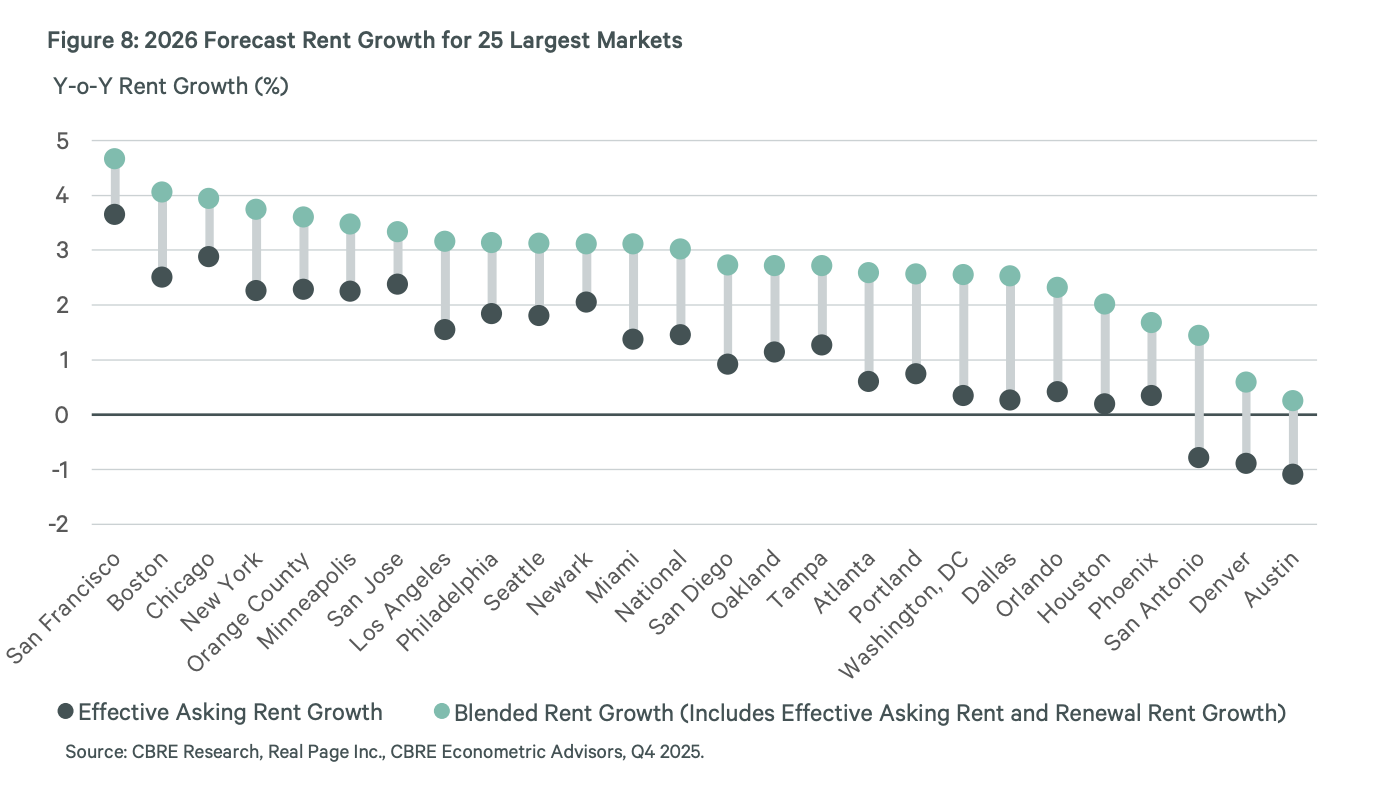
If you live in Austin or Denver right now, ask for a cut to your apartment rental rate…
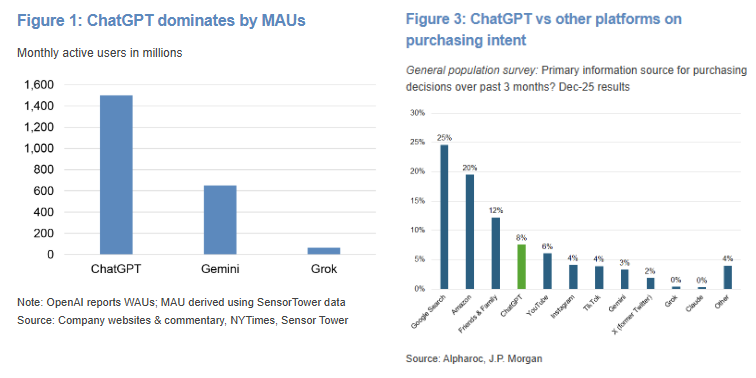
The largest player in AI just turned on the advertising fire hydrant. Let the revenues begin…
"Infrastructure expands what we can deliver. Innovation expands what intelligence can do. Adoption expands who can use it. Revenue funds the next leap. This is how intelligence scales and becomes a foundation for the global economy." – OpenAI CFO Sarah Friar
J.P. Morgan
AI is moving into product development and finding wins…
Scientists at paint manufacturer PPG built a database containing the properties of all of their products, overlaid with the laws of chemistry. Then, about a year ago, they asked the system to create something new—a fast-drying clear coat that body shops could apply after repainting a car.
Within minutes, the system suggested a combination of chemicals PPG’s scientists hadn’t thought of. Real-world testing proved that it worked, and last spring the clear coat, which cuts drying time by more than half, went on sale. It was PPG’s first AI-assisted new product. Dozens more are in the pipeline.
“What’s really exciting in this field is when the model picks formulations that you intuitively would not have,” said Daniel Connor, the company’s global technical director for automotive refinish coatings.

Here is how AI is helping a major US insurance company…
“Our renewal underwriting platform leverages generative AI to consolidate data into summaries of relevant, actionable information for our underwriters to evaluate, with early results showing more than a 30% reduction in average handle time. The net result is that our underwriters focus their efforts on decisions most likely to improve profitability and do so more efficiently.” – Travelers Companies EVP and President of Personal Insurance Michael Klein
It looks like the Supreme Court is going to protect the Federal Reserve's independence from the White House…
Judge Kavanaugh tied it all up for us in two key points. The court's final decision will be out this summer.
Kavanaugh expressed concern about the perceived independence of the Federal Reserve. He told Sauer that, “on … your position that there’s no judicial review” for the president’s determination that he has cause to fire a Fed governor, “no process required, no remedy available, a very low bar for cause that the president alone determines … that would weaken, if not shatter, the independence of the Federal Reserve.”
Kavanaugh also cited what he described as the “real-world effect” of a ruling for the Trump administration: if the court allows Trump to remove Cook, “what goes around comes around,” and a future Democratic president will remove Republican appointees to the Fed. When Sauer demurred, telling Kavanaugh that he “cannot predict” what might happen in the future, Kavanaugh retorted that “history is a pretty good guide. Once these tools are unleashed, they are used by both sides and usually more the second time around.”
2026 should be a record-breaking year for dealmaking according to these two bankers…
“2025...was the second best year in history from a dealmaking standpoint...the last four months of the year, definitely seems to be carrying on into 2026. And this could be one of the best, if not the best, years for dealmaking...The large megadeals are coming back, and therefore we feel that these will be important for both IPOs. Probably we are going to see much more than we would expect in 2025, but we feel that now 2026 is coming back and M&A too.” – JPMorgan Chase Filippo Gori, Co-Head of Global Banking & EMEA CEO
“The market environment remains favorable for continued new issuance in 2026. We anticipate middle market M&A activity to improve in 2026 after being muted for much of the past three years. We also expect financial sponsors who stayed largely on the sidelines with respect to middle market transactions last year but typically generate a meaningful percentage of our fees to be more active this year.” – KeyCorp CEO Chris Gorman
Speaking of deals, it was a pretty busy holiday week:
- Boston Scientific (BSX) has agreed to buy thrombectomy company Penumbra (PEN) for about $15 billion in cash and stock in a deal that bolsters its cardiovascular portfolio. Boston Scientific on Thursday said the deal values Penumbra at $374 a share, a 19% premium to its closing price of $313.43 for the Alameda, Calif., company. The deal, which carries an enterprise value of around $14.5 billion minus Penumbra’s roughly $470 million net cash and short-term investments, is slated to close later this year.
- Deutsche Börse Group (DB1.gr) signed an agreement to acquire wealth management company Allfunds for about 5.3 billion euros, or roughly $6.19 billion in cash and stock. The price represents a 32.5% premium to Allfunds’ closing price of 6.64 euros a share on Nov. 26 which is when a non-binding bid was made and exclusive talks began. Allfunds provides fund managers and distributors with systems for dealing and execution, data analytics and compliance services.
- Capital One Financial (COF) agreed to buy the fintech Brex for $5.15 billion in cash and stock, in a deal that could give the credit-card issuer more firepower with corporate clients. The privately held Brex, founded nearly a decade ago, specializes in technology used by companies to administer corporate credit cards, expenses and rewards. It also oversees nearly $13 billion in deposits held at partner banks and money-market funds.
- Allied Gold (AAUC) has agreed to be acquired by Hong Kong-based Zijin Gold International 2259 (XHKG.hk) in a deal worth 5.5 billion Canadian dollars, or roughly US$4.01 billion. The Canadian gold-mining company said that it has accepted a deal worth C$44 a share from the Hong Kong-listed global gold company, which represents a 27% over Allied Gold’s 30-day volume-weighted average price Jan. 23.
- Swedish private equity firm EQT AB (EQT.ss) agreed to buy Coller Capital Ltd. for $3.2 billion to gain a foothold in the booming market for secondaries, one of the fastest growing segments of the industry. The transaction will be funded through newly issued EQT shares, with up to $500 million in contingent consideration to be financed in cash if certain targets are hit.
- Leidos Holdings (LDOS) has struck a deal to buy utility consulting and engineering services platform Entrust Solutions Group from private-equity firm Kohlberg & Co. for about $2.4 billion in cash. Leidos, a Reston, Va., provider of services and solutions to government and commercial customers, said the acquisition of Entrust, with estimated 2026 revenue of about $650 million, will add new capabilities and effectively double the size of its energy-infrastructure-engineering business.
- Clorox (CLX) is buying Purell-maker Gojo Industries for $2.25 billion, adding the hand sanitizer brand to its stable of cleaning and other consumer products. Clorox said the all-cash deal, which is being funded with debt, will help it expand further into the health and hygiene categories.
- Drugmaker GSK plc (GSK) said it agreed to acquire Californian biopharmaceutical company RAPT Therapeutics (RAPT) for around $2.2 billion (65% premium to last sale), in a move set to bolster its respiratory, immunology and inflammation portfolio. GSK said Tuesday that it made a deal to pay RAPT shareholders $58 a share, with $1.9 billion upfront investment in cash.
- TransDigm Group (TDG) agreed to acquire Jet Parts Engineering and Victor Sierra Aviation Holdings from private-equity firm Vance Street Capital for about $2.2 billion in cash, including certain tax benefits, expanding the aircraft-components maker’s exposure to the commercial-aerospace aftermarket. The two businesses generated about $280 million in combined revenue in 2025. TransDigm Chief Executive Mike Lisman said both companies are profitable, growing businesses that align with TransDigm’s strategy to serve aftermarket customers.
- Worthington Steel (WS) launches a voluntary public takeover offer for Kloeckner (KCO.de) at €11/shr, for an enterprise value of €2.1B Listed in Germany, Kloeckner & Co is a leading service center and metal processing company with approximately 110 locations across North America and Europe. It has broad product capabilities including carbon flat-roll steel (sheet and plate), electrical steel, aluminum, stainless steel and long products.
- Quantum-computing company IonQ (IONQ) struck a deal to buy chip maker SkyWater Technology (SKYT) for $35 a share, or roughly $1.8 billion. SkyWater shareholders are set to receive $15 in cash and $20 in IonQ stock for each share of SkyWater stock.
- CVC Capital Partners Plc (CVC.nl) agreed to buy Marathon Asset Management as part of efforts to widen its footprint in US credit markets, the latest example of consolidation among alternative investment firms. Amsterdam-listed CVC will buy Marathon in a cash and equity transaction with a base consideration valued at as much as $1.2 billion, comprising $400 million in cash and as much as $800 million in CVC equity. The deal also includes earnout consideration linked to Marathon’s future financial performance over 2027 to 2029, of up to $200 million in cash and $200 million in CVC equity.
- U.S. Bancorp (USB) said it would buy Wall Street brokerage BTIG for up to $1 billion in cash and stock, snapping up a partner to bolster its capital markets presence. U.S. Bancorp will pay $725 million in cash and stock upfront, plus up to an additional $275 million in cash over three years, contingent on meeting performance targets.
- Smithfield Foods (SFD) acquires Nathan’s Famous (NATH) for $102 per share in cash, valuing the deal at approximately $450 million and representing a multiple of 12.4x LTM adjusted EBITDA (10.0x post-synergies).
- Mission Produce (AVO) will acquire Calavo Growers (CVGW) in a cash-and-stock transaction valued at approximately $430 million, with Calavo shareholders receiving $27.00 per share—comprised of $14.85 in cash and 0.9790 shares of Mission for each Calavo share—representing a 26% premium to Calavo’s recent average share price. Upon closing, Mission shareholders will own about 80.3% and Calavo shareholders about 19.7% of the combined company.
Various News Sources
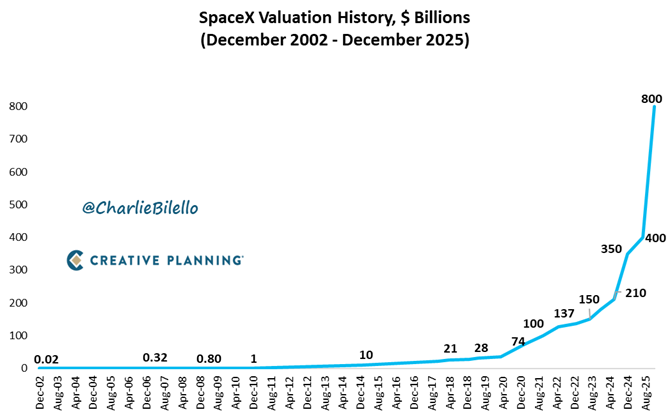
With the IPO bankers now selected, Elon Musk is now rolling his private company to its launchpad…
@charliebilello: SpaceX's valuation hit a record high of $800 billion in 2025. 3 years ago it was $127 billion, 5 years ago it was $36 billion & 10 years ago it was $10 billion. If SpaceX went public at an $800 billion valuation it would be the 13th largest company in the S&P 500.
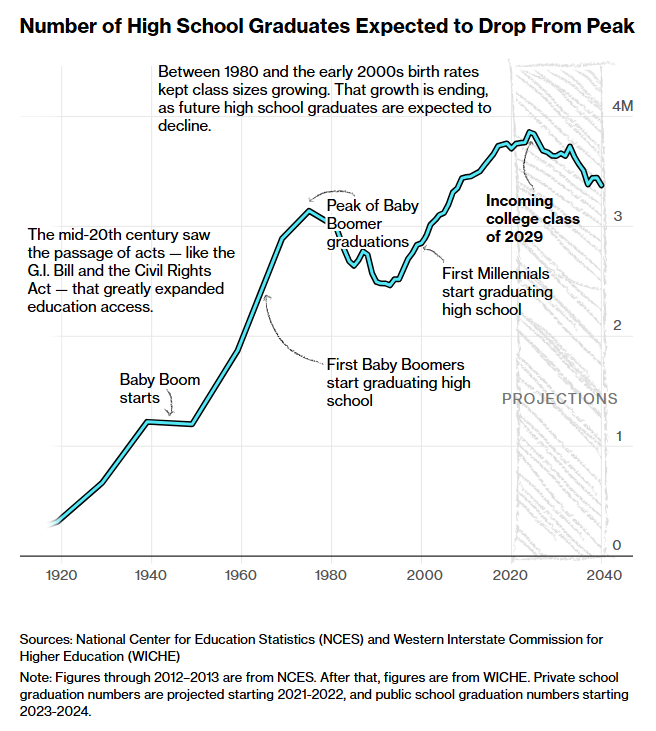
Unless colleges can reopen to admitting foreign students, higher education will hit a wall in 2029…
The country’s tumbling birth rate is pushing schools toward a “demographic cliff,” where a steadily dropping population of people in their late teens and early 20s will leave desks and classrooms empty. Many smaller, lesser-known schools like Cazenovia have already hit the precipice. They’re firing professors, paring back liberal arts courses in favor of STEM — or closing altogether.
Others will likely reach the cliff in the next few years.
Although it has plunged since the 1950s, the US birth rate ticked upward slightly before the 2008 financial crisis, and that brief demographic boost has kept enrollment at larger schools afloat. But the nationwide pool of college-aged Americans is expected to shrink after 2025. Schools face the risk that each incoming class could be smaller than the last. The financial pressure will be relentless.
Learn more about the Hamilton Lane Strategies
DISCLOSURES
The information presented here is for informational purposes only, and this document is not to be construed as an offer to sell, or the solicitation of an offer to buy, securities. Some investments are not suitable for all investors, and there can be no assurance that any investment strategy will be successful. The hyperlinks included in this message provide direct access to other Internet resources, including Web sites. While we believe this information to be from reliable sources, Hamilton Lane is not responsible for the accuracy or content of information contained in these sites. Although we make every effort to ensure these links are accurate, up to date and relevant, we cannot take responsibility for pages maintained by external providers. The views expressed by these external providers on their own Web pages or on external sites they link to are not necessarily those of Hamilton Lane.