
Weekly Research Briefing: The Architecture of Autumn

I'm back in the saddle after a week of art and architecture marathoning in the not so windy city of Chicago. In fact the weather was incredible. It was even a bit too hot for those seeking to set a personal record on Sunday. Seeing the strong lines of the Robie House, the chaotic beauty of Jackson Pollock and the colored mosaic of a Georges Seurat may not have given me the keys to solve the current market, but time away from the news and intra-day price moves was nice. Now if only the city could bottle last week's weather and sell it alongside a plate of cacio e pepe, they could easily balance their budget deficit.
Interest rates seemed to have come into balance while I was flipping through the Gutenberg Bible. Maybe all it took was a 5% yield on US Treasuries and a 4% yield on long-dated AAA/AA Muni bonds to draw in buyers. Unfortunately, the run in yields has weighed on financial stocks because capital market activities have slowed and IPOs continue to be pulled or delayed. Energy prices remain near their highs as the dangerously volatile Middle East has caused energy liquid shipping costs to soar.
Since world leaders have been unable to make progress on the numerous global macro issues, corporate earnings must now deliver strong results to keep equities moving higher. Micron posted solid earnings two weeks ago, but the market shrugged. Ditto for Samsung last week. Delta Air Lines and Pepsi also fizzled as rising costs and changing consumer behavior impacted results. By the time you open this email, many of the largest US banking stocks will have reported their earnings. Credit quality should remain strong, but a pullback in capital markets activity and potential threats to balance sheet deposits from AI agents could cloud the earnings calls. The bulk of earnings will hit in the second half of October when the biggest technology names report their numbers. In addition to the start of the earnings season, this week will see inflation reports via the CPI and PPI, and manufacturing surveys from the New York and Philadelphia Feds. Have a great week and enjoy that incredible weather.
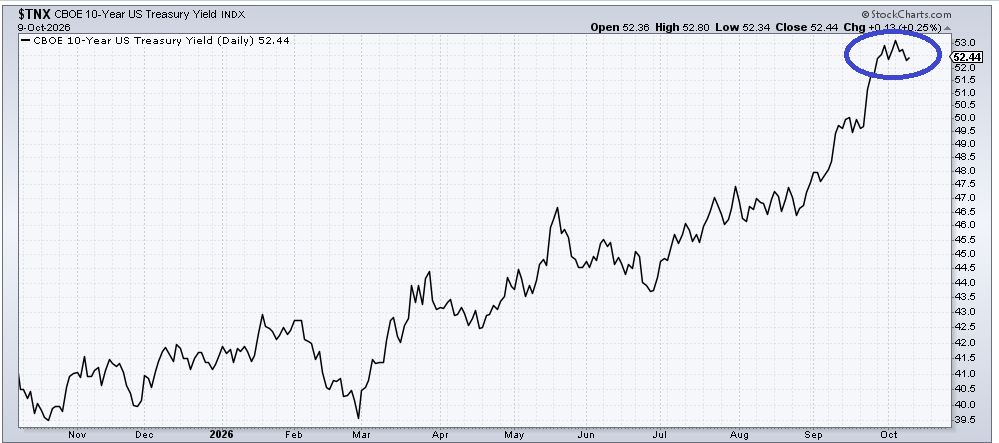
Time for a short term peak in yields?
Bondaleros. Yield on the 10 yr. Hasn’t done much in two weeks. Get that yield under 5.20% and it should change the chart. Also my mother asked about interest rates on my visit with her.
Maybe the contrarian magazine cover of the week, which greeted me at O'Hare airport…
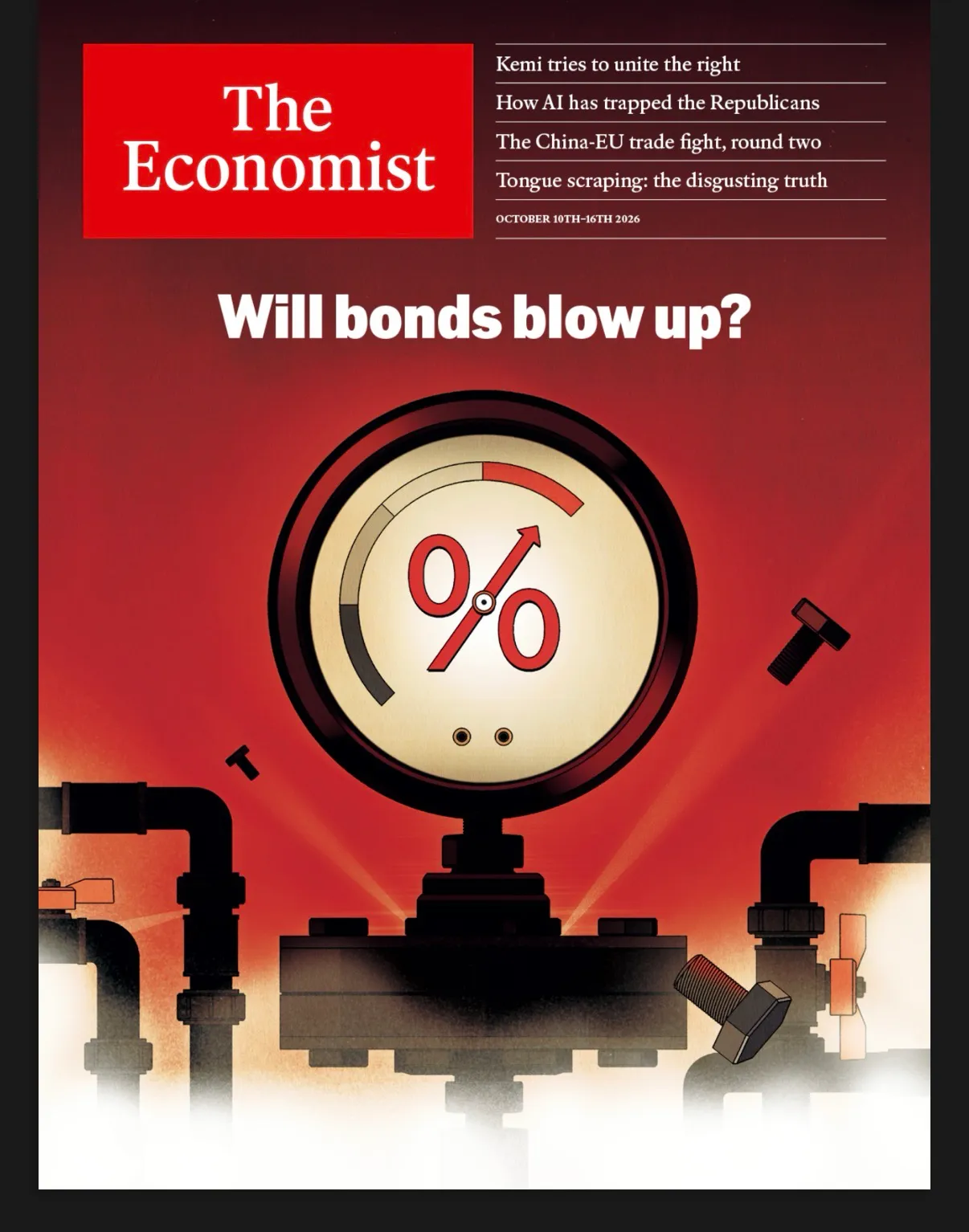
@economist.com
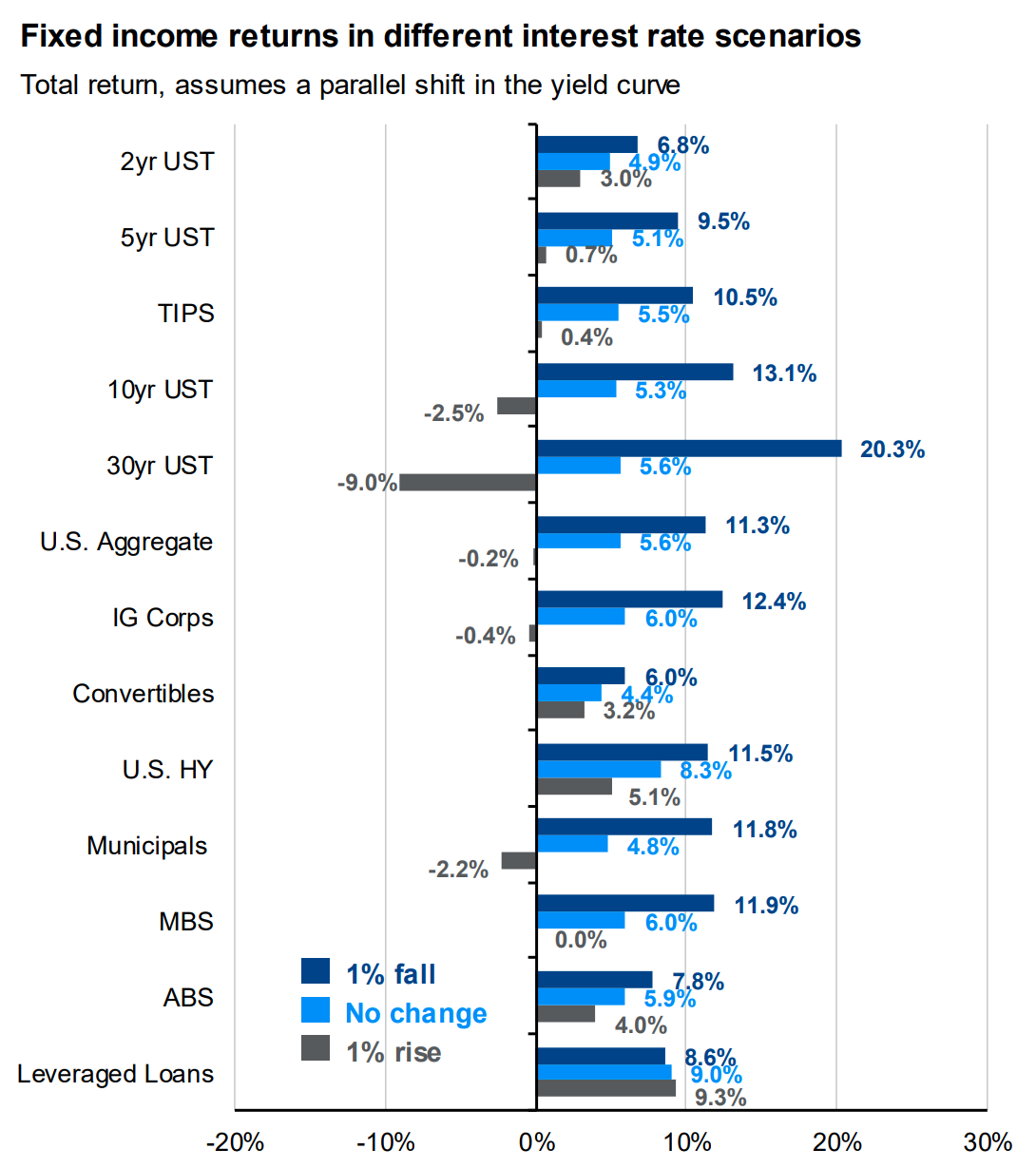
If a short term peak in interest rates is in store, there is a greater reward for those long fixed income securities of all shapes and forms…
Important Read: High Interest Rates Aren’t Slowing the A.I. Boom. That’s a Problem for the Fed…
But also worth watching is the pickle that the Fed has ahead of itself if market interest rates move higher.
The Federal Reserve has a conundrum on its hands as it tries to tame elevated inflation. One of the primary drivers of today’s growth, and the price pressures that have followed in its wake, appears nearly immune to the higher interest rates that the central bank has begun to impose on the economy.
Companies’ seeking to expand their artificial intelligence abilities have been undeterred by not only U.S. borrowing costs that have recently reached multidecade highs, but also soaring costs for electricity, high bandwidth memory and other inputs that are crucial to continued growth.
The implications for the Fed are vast, if price pressures do not ease as many policymakers expect in the coming months. To return inflation to the Fed’s 2 percent target, the central bank might need to tighten the screws on the economy more than otherwise would be the case to sufficiently slow down activity. The brunt of that adjustment will fall predominantly on industries more sensitive to higher rates, such as housing and the automotive sector, and in turn the people employed by the companies in those fields. Depending on how much the Fed ends up needing to choke off demand, the labor market, which is already starting to cool, could start to crack…
A growing share of [the AI] investment is being paid for with borrowed money, which in theory should make it responsive to rising interest rates. So far, however, there is little sign that higher borrowing costs are doing much, if anything, to slow the boom.
“If it’s a real transformational technology that potentially is going to define the tech space for years to come; if you have the balance sheet capacity to borrow to make these investments; and if you think the investments are going to be profitable and generate double-digit returns on invested capital, then it doesn’t actually make a huge difference if you’re borrowing at 5.5 or 6 percent,” said Andrew Sheets, global head of fixed income research at Morgan Stanley. “That 50 basis points is not the limiting factor in whether or not the math works.”
Global equities have paused even as earnings estimates have marched higher…
This could provide for a positive setup into earnings even as some asset flows are leaning into higher yielding bonds.
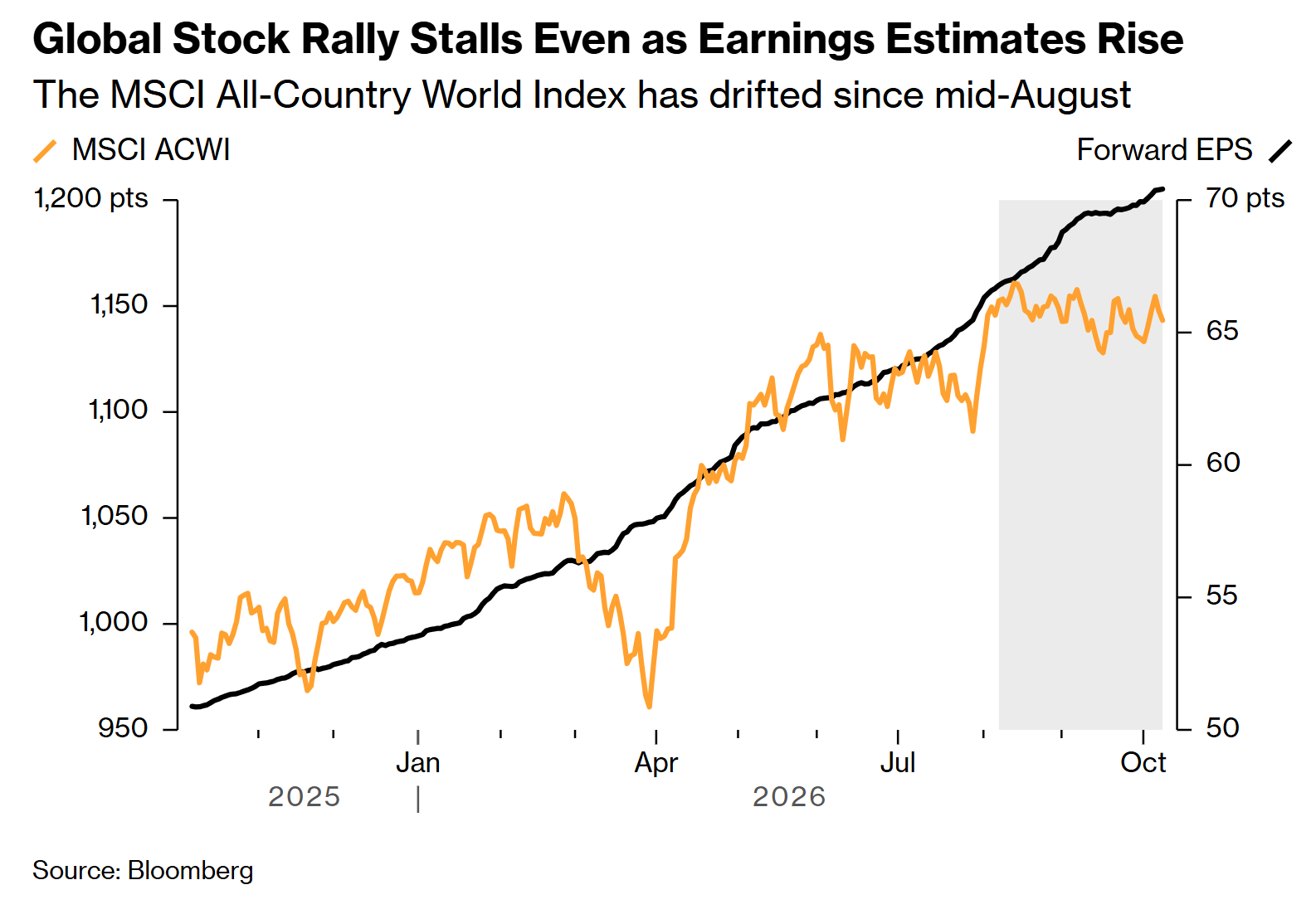
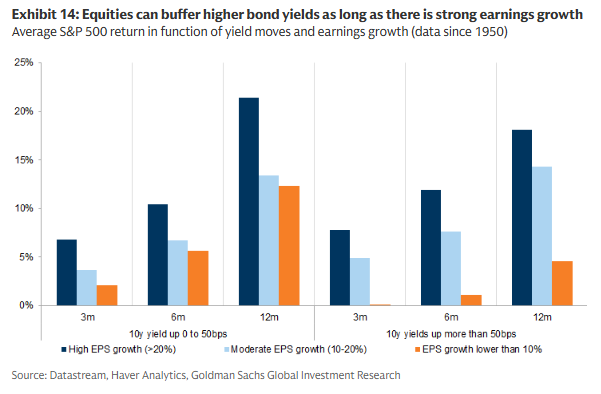
If earnings do deliver then stocks should be able to win over the recent rise in interest rates…
While bonds have not been able to provide a hedge for equities, equities have been able to buffer higher rates owing to strong earnings growth. While equity/bond correlations remain high on a high-frequency basis, equities have been more resilient owing to underlying strong earnings backdrop – as a result global equities have been rangebound. Also, equity volatility has been relatively anchored due to high dispersion within equity indices – this also makes equity exposure via call options more attractive. As Exhibit 14 shows, historically equities performed well despite rising yields, as long as earnings growth was strong.
Goldman Sachs
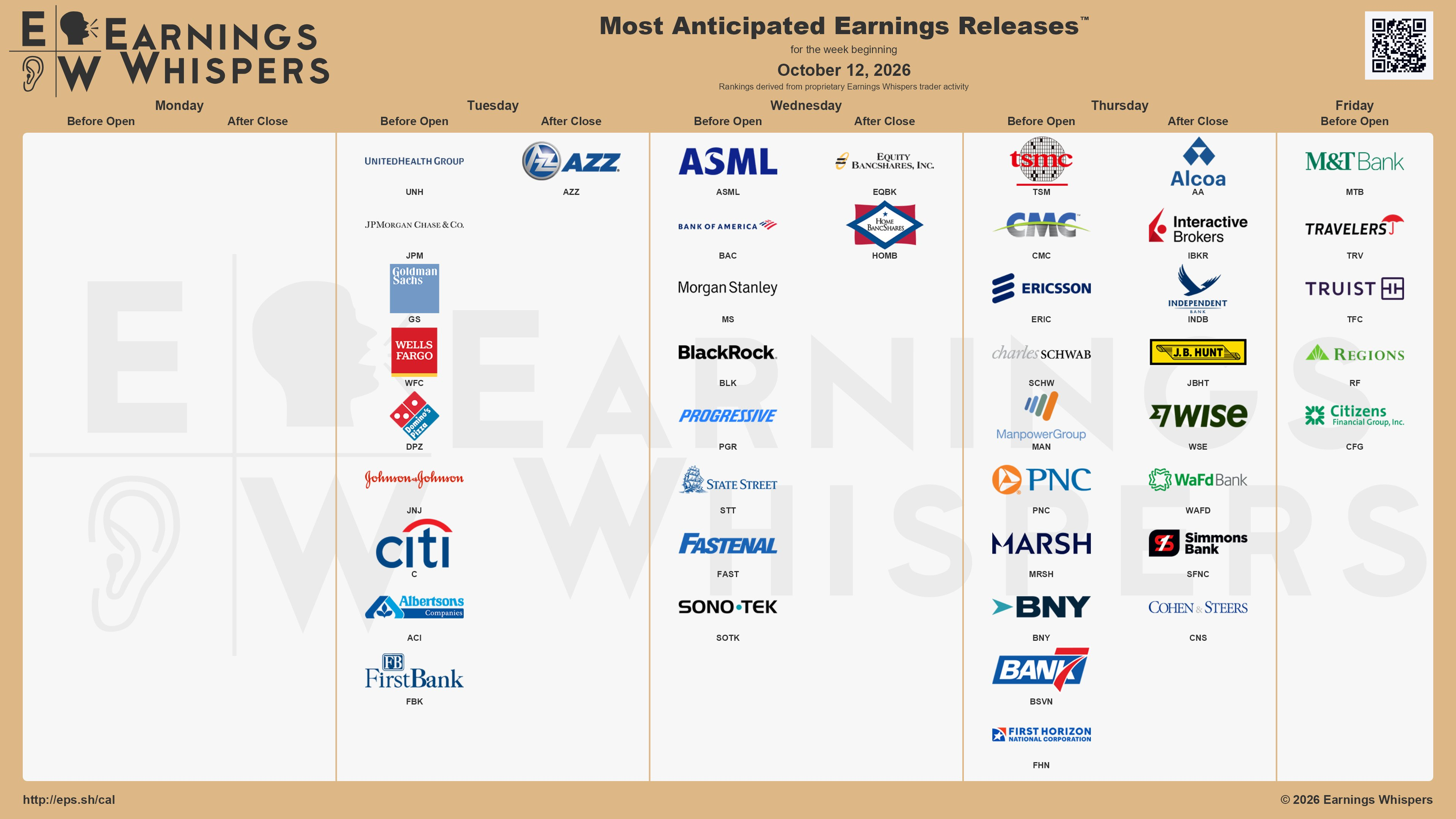
Earnings begin hitting the tape this week led by the financials…
@eWhispers
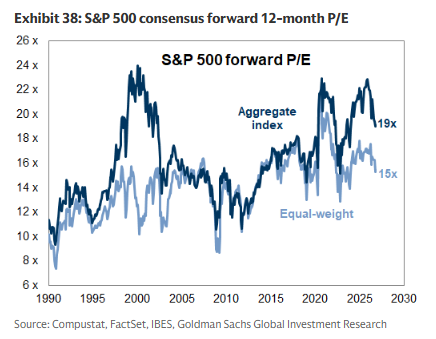
On an equal-weighted basis, the S&P 500 is now trading near a 6.6% earnings yield…
Goldman Sachs
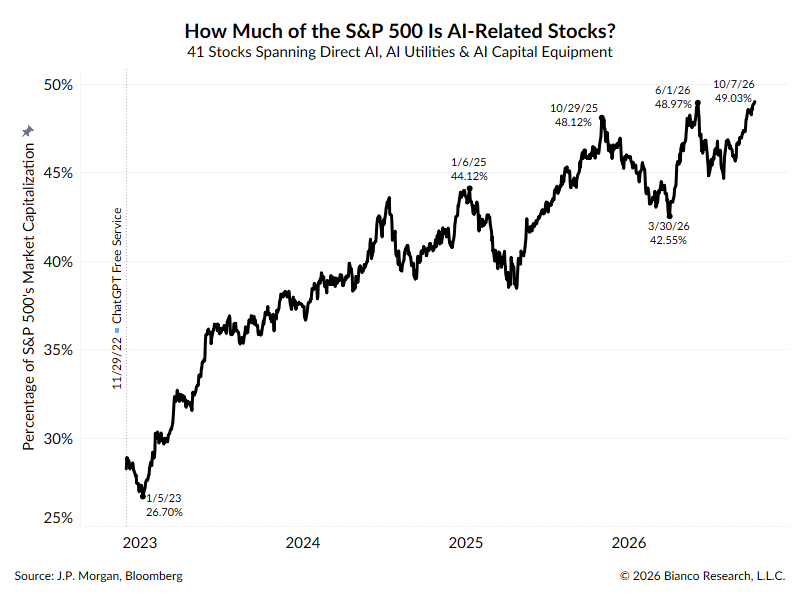
Based on market cap, the S&P 500 is very close to being able to call itself an "AI Trade"…
AI-related stocks (defined by the JPM basket) now make up 49% of the S&P 500.
Those same 41 companies account for about two-thirds of the S&P 500’s year-to-date market cap change.
@AlexMalitas
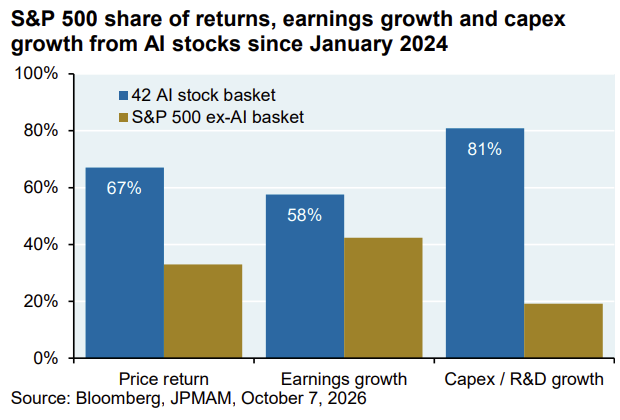
AI already dominates the big index on price return, earnings growth and capex growth…
The chart below shows that a basket of 42 AI stocks accounts for 60%-80% of all S&P earnings growth, price returns and capital spending since Jan 2024.
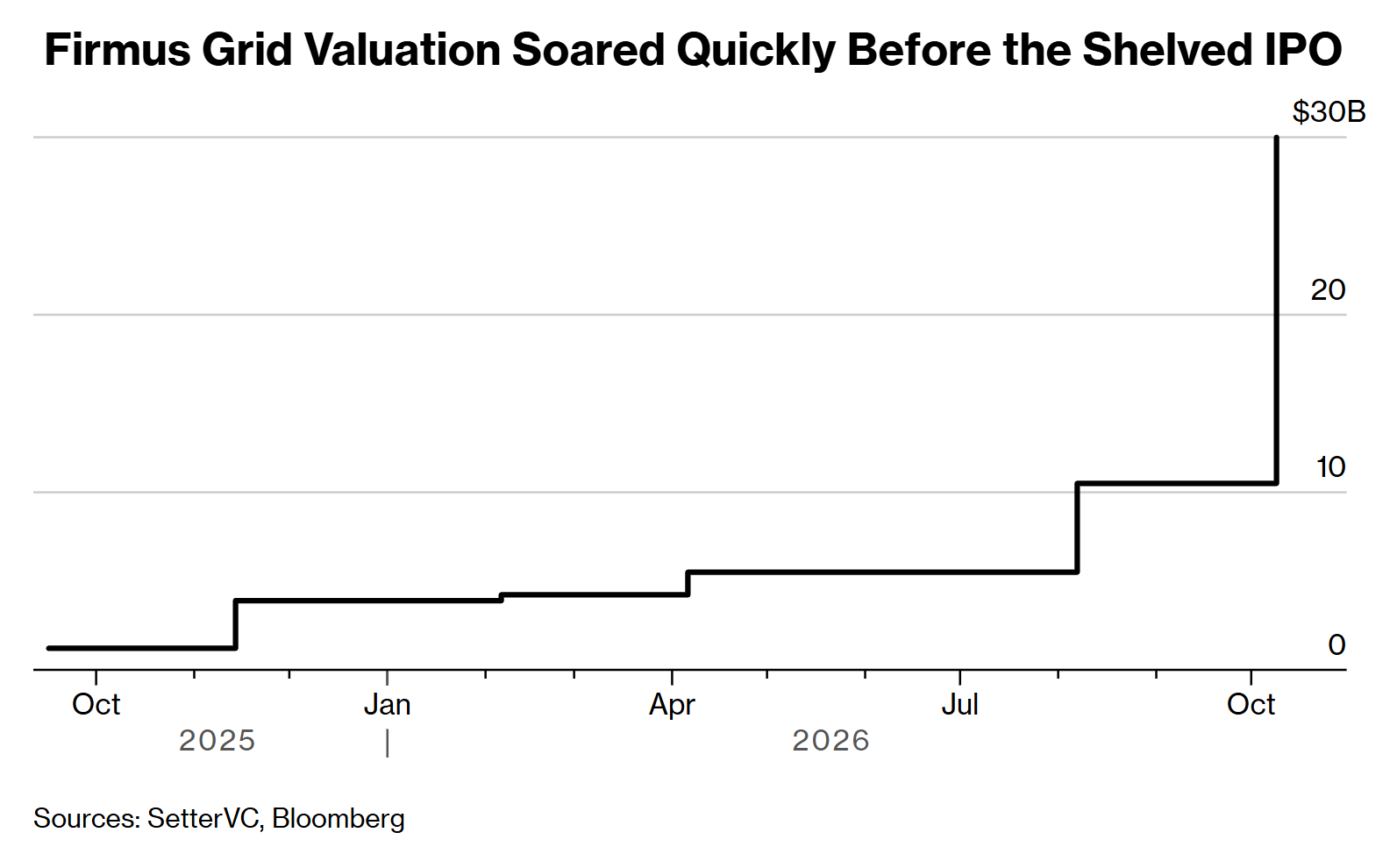
Last week an Australian AI neocloud found the AI cloud valuation ceiling…
Now future IPO underwriters and the companies going public will know their limits on future pricing valuations. This certainty should be a positive for the markets going forward as it will keep exuberance in check.
Firmus began formally gauging investor demand for its IPO late September. At up to $5.5 billion, it was already a lot larger than expected, showing the company was looking to convince investors to pay up for results that had not yet materialized.
Prospective investors, though, saw a business that was still in its early stages, with a lot of execution risk: Of its 912 megawatt pipeline, just 46MW had been built. They were being asked to value the company on future earnings contingent on the data centers being successfully delivered.
Firmus pitched an enterprise value-to-earnings before interest and tax multiple, used by neocloud peers such as CoreWeave Inc. in the US. Even if at 13 times it was at a significant discount to CoreWeave, it was based on EBIT forecasts two years down the line. The US company has both a longer track record and revenue that’s several orders of magnitude greater than Firmus’.
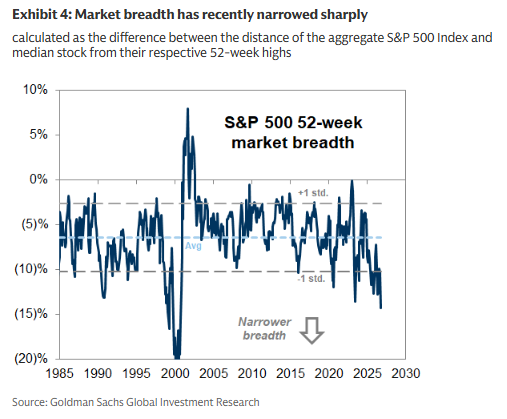
Market breadth stinks the most since 2000…
The median S&P 500 stock currently trades 16% below its respective high, pushing market breadth to its lowest level since the Dot-Com Bubble.
Goldman Sachs
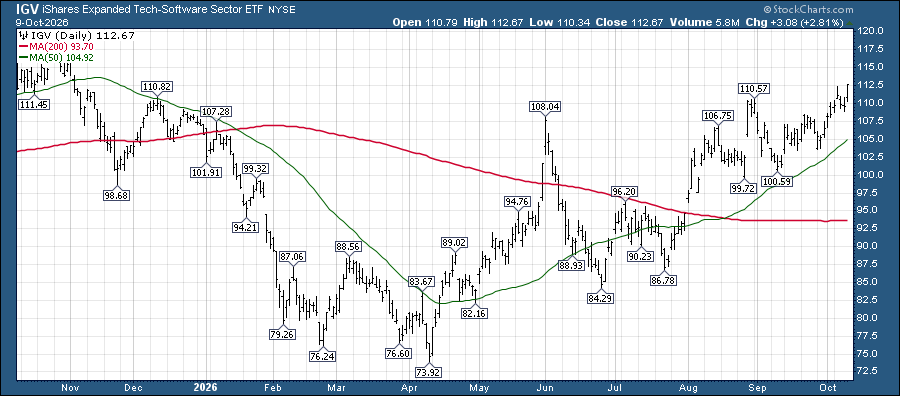
But not all is lost for stock investors. Just look at the continued recovery in Software stocks…
StockCharts
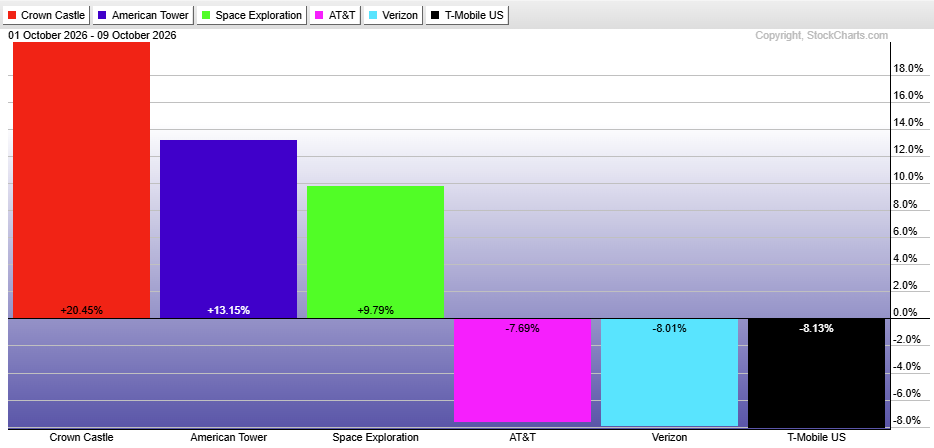
SpaceX's purchase of low band spectrum last week has put up the caution flags on existing wireless providers...
A new cellphone entrant could be good news for the tower companies if SpaceX decides to build infrastructure to provide full wireless coverage. Satellite dishes on every building in the US would be too expensive for SpaceX. But stay tuned to see how their wireless plan evolves.
StockCharts
If you know anyone that enjoys life on the high seas with plenty of risk attached…
“For many shipowners, the current market is generating revenues at levels rarely seen in the industry’s recent history,” said Dimitris Maniatis, founder and chief executive of maritime-risk company Marisks.
Ferrying oil directly from the Persian Gulf to global markets is also more expensive than ever, contributing to the appeal of shuttle runs. The cost of hiring an oil supertanker to sail from the Persian Gulf to China topped $1.2 million a day in late September. On the eve of the war, that cost was about $231,400 a day, according to maritime data provider Clarksons Research. In early January, it cost less than $40,000 a day.
The shuttle-run bonanza is trickling down to individual sailors. Those willing to perform the war-zone trips—many from India, the Philippines and China—are being lured with payouts worth two or three times their typical monthly salary. One Shandong-based ship-staffing company is even offering as much as $25,000 for a round trip as reward, according to seafarers and recruitment advertisements seen by The Wall Street Journal. For oilers and cadets, the $25,000 could represent more than a year of wages.
Triple digit oil prices look to be sticking around for the time being…
@SquawkCNBC: “Whether you're talking about diesel or crude oil as well as gasoline, all of these markets are getting more thinly stretched,” says Jeffrey Currie
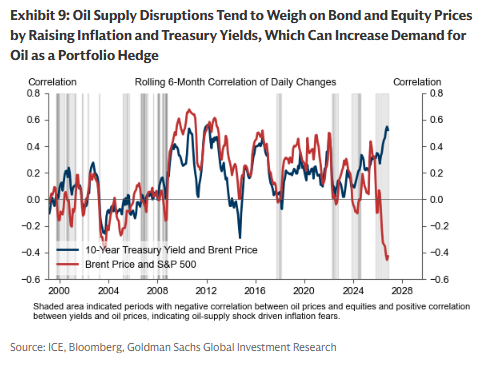
Interesting how oil prices remain correlated to bond yields but have broken with stock prices…
Goldman Sachs
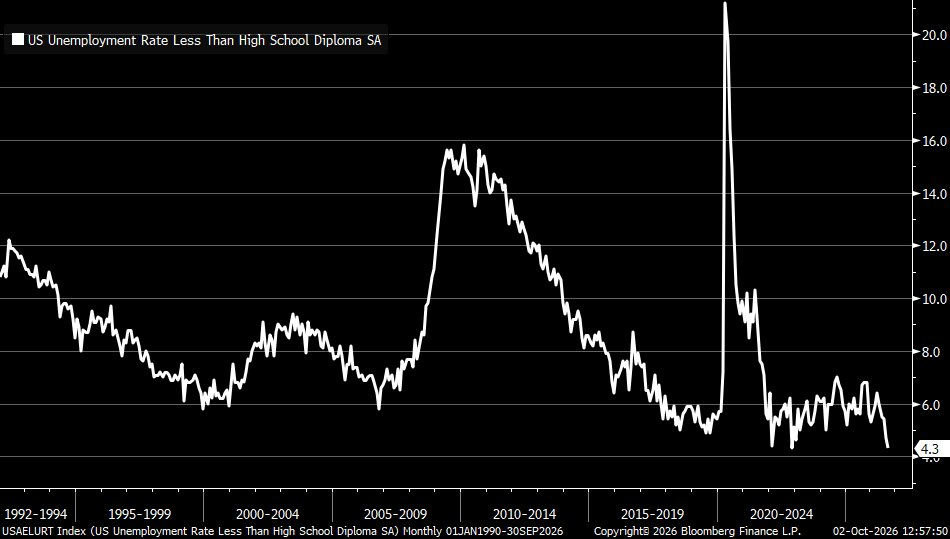
Most interesting economic stat which ran across my stream during my week away…
@KevRGordon: The unemployment rate for those with less than a high school diploma has fallen back to its historical low of 4.3%
Most interesting owned company stat which ran across my stream during the break…
@TheTranscript_: $COST Costco CEO Ron Vachris: Younger members are becoming a materially larger part of the membership base. “Our member base under 40 has grown nearly 60% since COVID, increasing our total penetration of members under 40 to more than 1/4 of our total base....While these younger members start out spending a little less with us, over time, they grow into higher spending members.
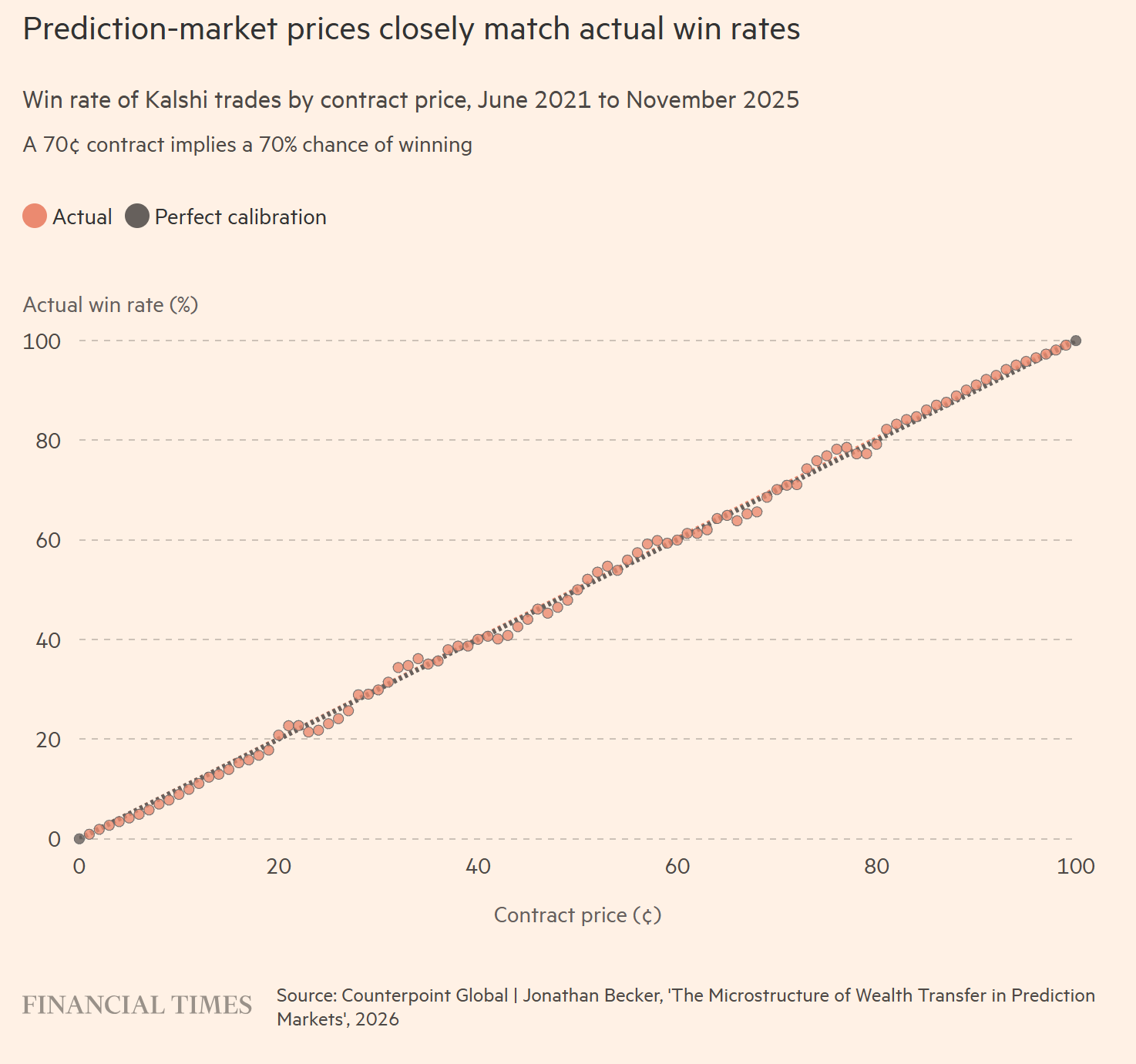
Michael Maubossin writes that prediction market trades can contain valuable cues for both businesspeople and investors…
Prediction markets are very well calibrated as measured by the relationship between the implied probability and the outcome. A closer look reveals that the win rate is slightly above average for high contract prices and slightly below for low prices. This is the “favourite-longshot bias,” which is underestimating the winning rate for high-probability bets and overestimating the winning rate for low-probability bets.
The high degree of calibration means that contract prices are a reliable source of information about the likelihood of future events in the aggregate. Prices in the stock market, on the other hand, do not offer such a clear signal. This makes sense. Prediction markets forecast a definitive outcome that is often revealed in relatively short order. Stocks generally lack a similar settlement, allowing narratives and herd thinking to emerge and persist.
For the same reason, price manipulation in a prediction market is difficult to sustain. Such attempts have a long history, including on political contracts in the 1800s. But economists who studied the phenomenon concluded “that the speculative attacks initially move prices, but these changes are quickly undone”.
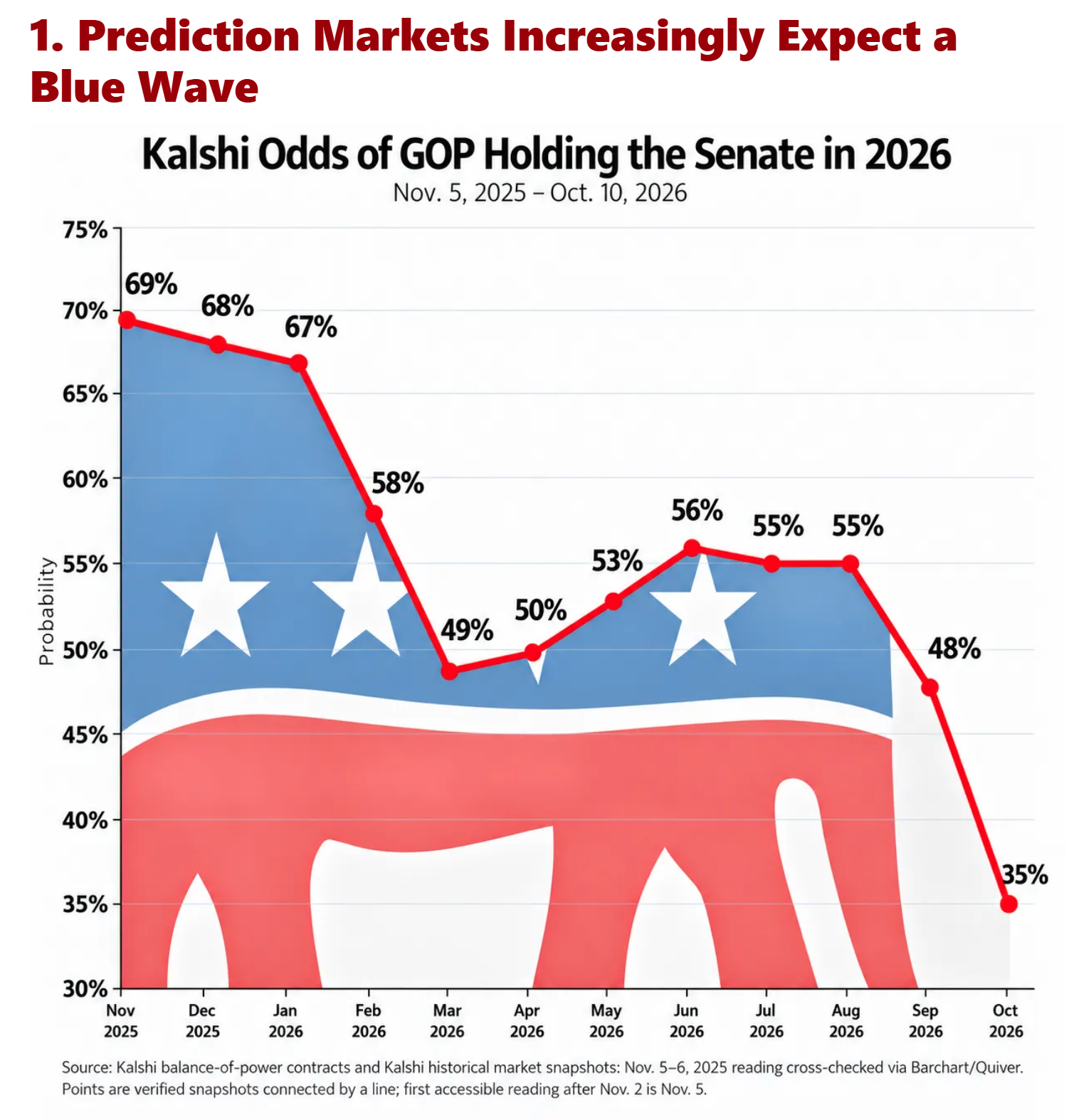
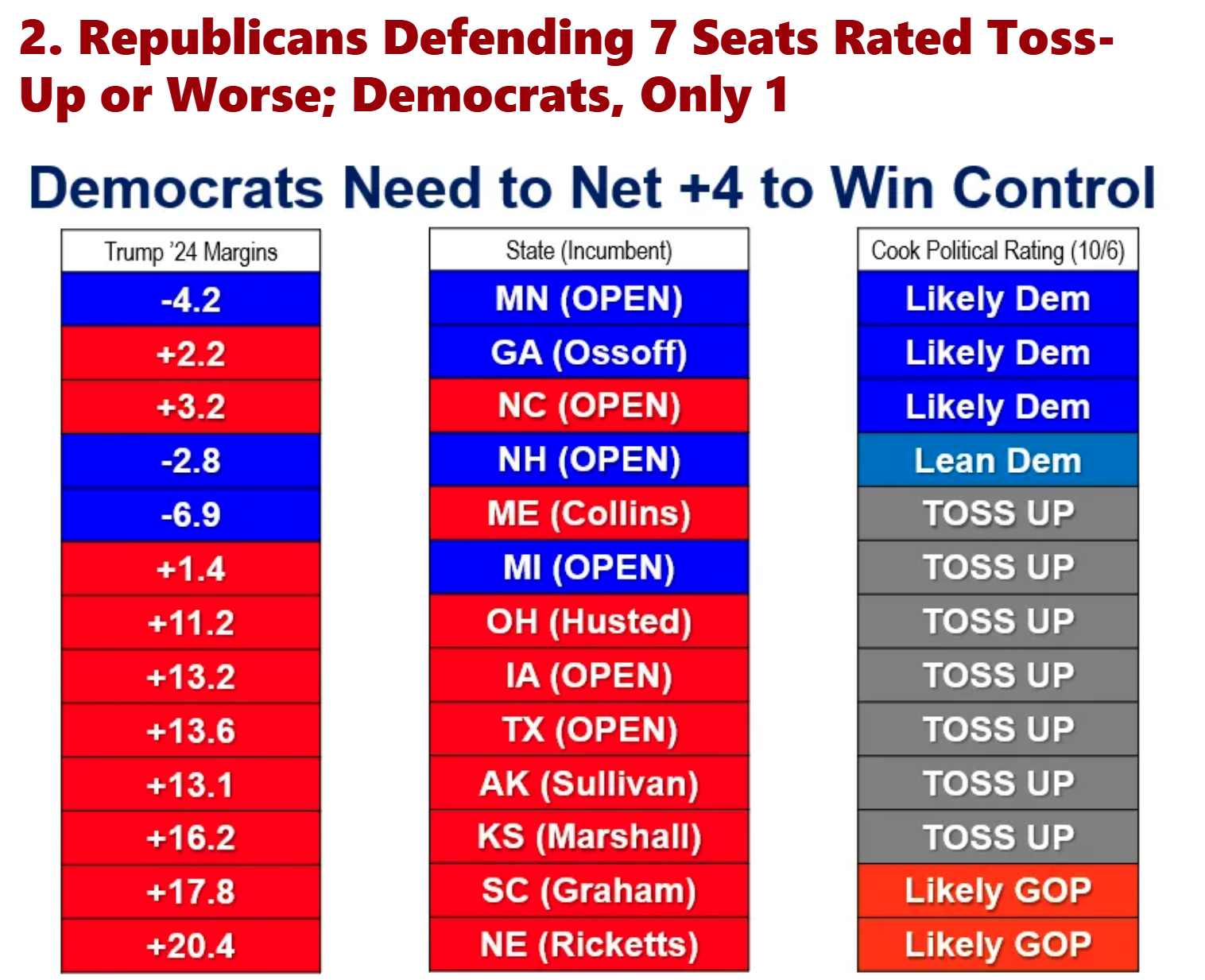
Not ignoring the prediction markets are the Dems and GOP who are now spending advertising dollars in Kansas to try and win the state…
If recent polling trends continue, the GOP might need to start spending in South Carolina also.
An insightful long read in the weekend FT Magazine: Napa Valley's hangover…
Wine, which had flowed freely in the US from bachelorette party to book club to the woman at home in a T-shirt proclaiming “A Day Without Wine is . . . Just Kidding I Have No Idea”, has slowed to a trickle. In 2025, global wine consumption plunged to the lowest level since 1957. The French government and the EU have invested hundreds of millions of euros paying farmers to rip up vines, reducing Bordeaux’s wine acreage by about 25 per cent. In 2023, Australia had two years’ worth of wine sales sitting in storage, and MPs were pushing for a study into the feasibility of turning wine into the world’s most expensive biofuel. Last year, 7 per cent of all California grapevines were pulled out, and half a million tonnes of fruit were left unpicked, like a version of John Steinbeck’s The Grapes of Wrath where the capitalists suffer.
There’s a bunch of causes: a post-Covid-19 hangover, younger people preferring canned cocktails, GLP-1s, legalised marijuana, inflation, a collapse in sales to China, a drop of more than 75 per cent in Canadian demand for US wine after Trump’s tariffs, someone finally saying something about that “A Day Without Wine” T-shirt.
Napa Valley does not care about 99 per cent of those drinkers. More than anywhere in the world, Napa is the luxury destination for wine tourism. A tiny region, packed with gorgeous wineries, resort spas and Michelin-starred restaurants, it has become the Saint Moritz of detecting notes of blackberry compote, cocoa nib and toasted vanilla. Unlike Burgundy, where most people can’t visit the high-end wineries, Napa democratically invites everyone to leave their $1,000-a-night hotel to sample a $400 Cabernet Sauvignon for a $100 tasting fee.
The K-shaped economy may have thus far kept Napa floating above the forces that decimated the sub-$12 bottle market, which makes up about two-thirds of American wine sales. But if Napa gets wrecked too, we’ll know that the wine business isn’t at the bottom of a cycle. If Napa becomes another California town abandoned after a gold rush, then an economy based on wealth inequality and thousands of years of enthusiastic alcohol consumption might be over.

Learn more about the Hamilton Lane Strategies
DISCLOSURES
The author has current equity ownership in: Costco Wholesale Corp.
The information presented here is for informational purposes only, and this document is not to be construed as an offer to sell, or the solicitation of an offer to buy, securities. Some investments are not suitable for all investors, and there can be no assurance that any investment strategy will be successful. The hyperlinks included in this message provide direct access to other Internet resources, including Web sites. While we believe this information to be from reliable sources, Hamilton Lane is not responsible for the accuracy or content of information contained in these sites. Although we make every effort to ensure these links are accurate, up to date and relevant, we cannot take responsibility for pages maintained by external providers. The views expressed by these external providers on their own Web pages or on external sites they link to are not necessarily those of Hamilton Lane.