
Weekly Research Briefing: Panda Diplomacy

Who says nothing was gained from the US & China talks last week? The Atlanta Zoo landed two new guests for its 5-star bamboo-laden Airbnb. The two world leaders also agreed to rename AI to SI (Super Intelligence). With these pressing matters dealt with, there was no progress to end the two ongoing wars in the Middle East and Eastern Europe. And while some trade tariffs were adjusted on less than 10% of total goods traded, Monday's soybean prices didn't suggest they were a focus item. Also, there was no progress on rare earth minerals even though a discussion of US-made weapons systems did arise. Enjoy those pandas.
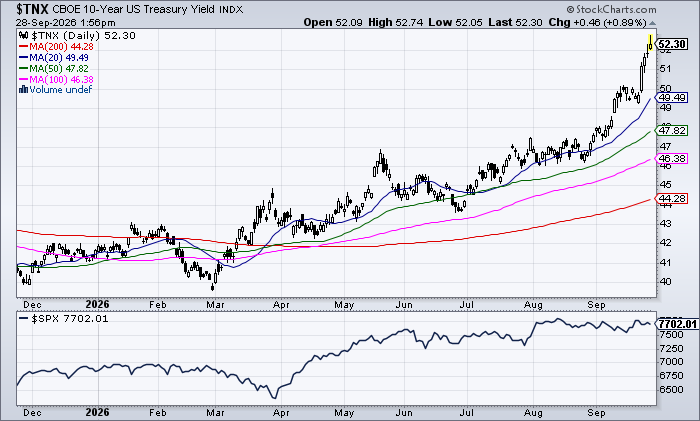
The panda-sized news in the financial market last week was the jump in interest rates. Bettors against The House are making a killing as economic data continues to impress and diesel prices move higher. Monday's 10-yr US Treasury yield hit 5.25%, an incredible 50 basis point spike from a month ago. Too much too soon has led to a pause in the stock market and a creep higher in credit spreads. But the S&P 500 volatility index is still in the mid-teens so no sign of a panic among equities yet. But with 30-yr AAA/AA Muni bonds now yielding 5% for the first time in 15 years, at what point will investors look to lock in some risk-free money for the long haul?
The surge in diesel prices and Democratic polling has led to talk in Washington about banning diesel fuel exports. While this could provide very short term relief for diesel fuel buyers, it won't last long because diesel refineries will cut back on production, causing gasoline and other fuel prices to move higher. While large diesel engine truck owners are now calculating their distances in dollars per mile rather than miles per gallon, the real answer to high fuel prices is to end the war in Iran and re-open the Strait of Hormuz. Meanwhile, there are only 35 days until the midterm elections, and the Democrats are feeling so confident that they are spending money on the Mississippi US Senate race.
The Q2 earnings season basically wrapped up last week with Costco Wholesale, meaning that Micron Technology will kick off the new fiscal quarter reporting season on Wednesday. The market had plenty of excitement 3 months ago surrounding Micron's last quarter blowout which was quickly followed by the Situational Awareness implosion. Let's see if the market will get an operational repeat from Micron but without a subsequent hedge fund blowup. As for economic data, we will get the Fed's favorite inflation metric, the Personal Consumption Expenditures Price Index, on Wednesday. And on Friday, the monthly jobs data will hit the tape. With weekly ADP data showing an average of 20,000 jobs created by private employers, economists expect a healthy report.
We won't be publishing a WRB next week as I am off to log 100,000 steps through some art museums and architectural wonders. Don't break anything in the markets while I am away. Have a great week.
Zinger of the week = Five and a quarter…
@WalterDeemer: BOND MARKET TO HOUSE: DROP DEAD
StockCharts
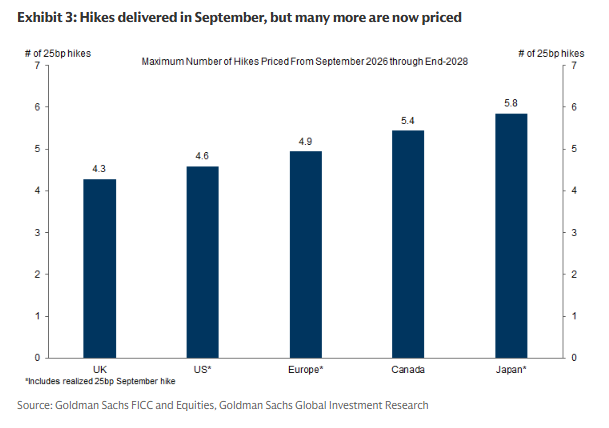
Energy prices are forcing all central banks to plan for several more rate hikes…
As the energy shock has extended, and product prices have risen further, the major central banks have restarted their tightening cycles. The market is now priced for cumulative tightening cycles (including those delivered in September) of close to 5 hikes for the ECB and Fed and more than 4 for the BOE.
Goldman Sachs
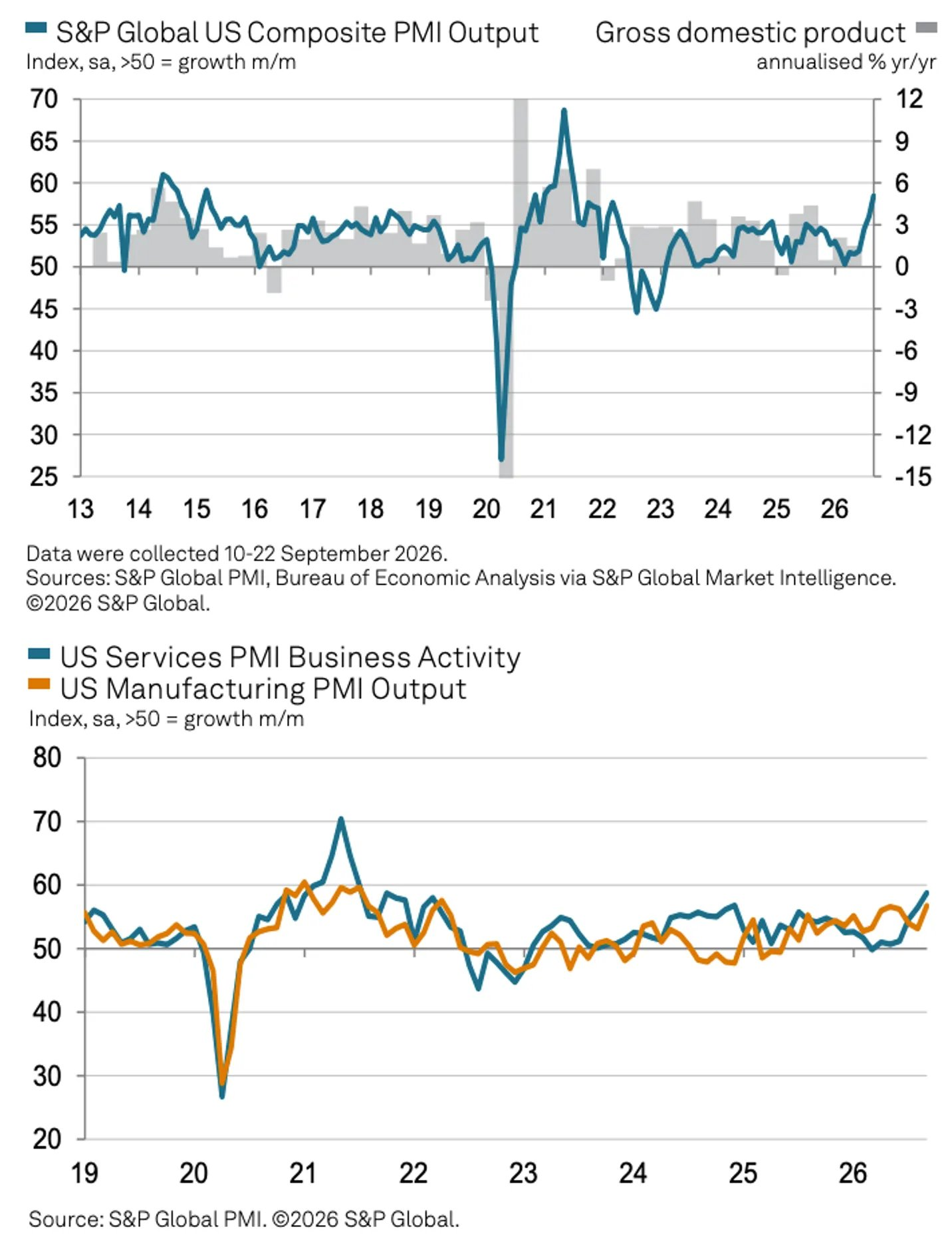
The US economy surprised to the upside last week…
@WilliamsonChris: "To put the growth surge in context, barring the spike in demand following the opening up of the economy after the COVID-19 lockdowns, the latest improvement in business activity is the greatest recorded since early 2015"
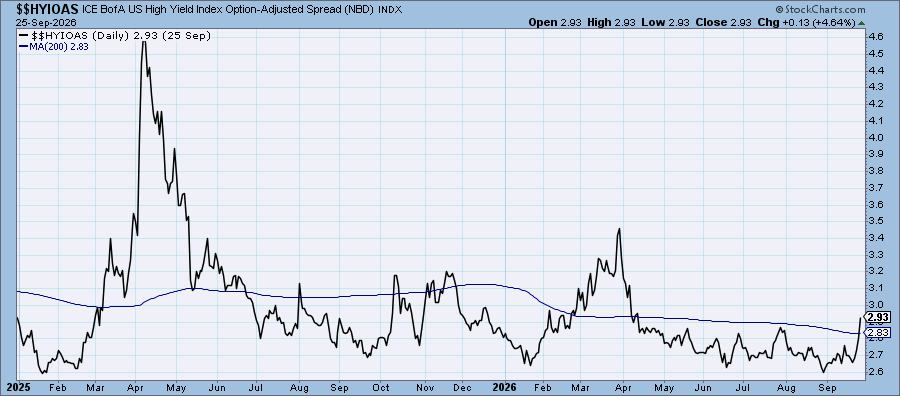
But higher interest rates are beginning to bite high yield credit spreads which is never a good thing…
Consider this just a leg kick under the table. Not yet to the peaks of a Middle East war or Global trade & tariff war yet.
StockCharts
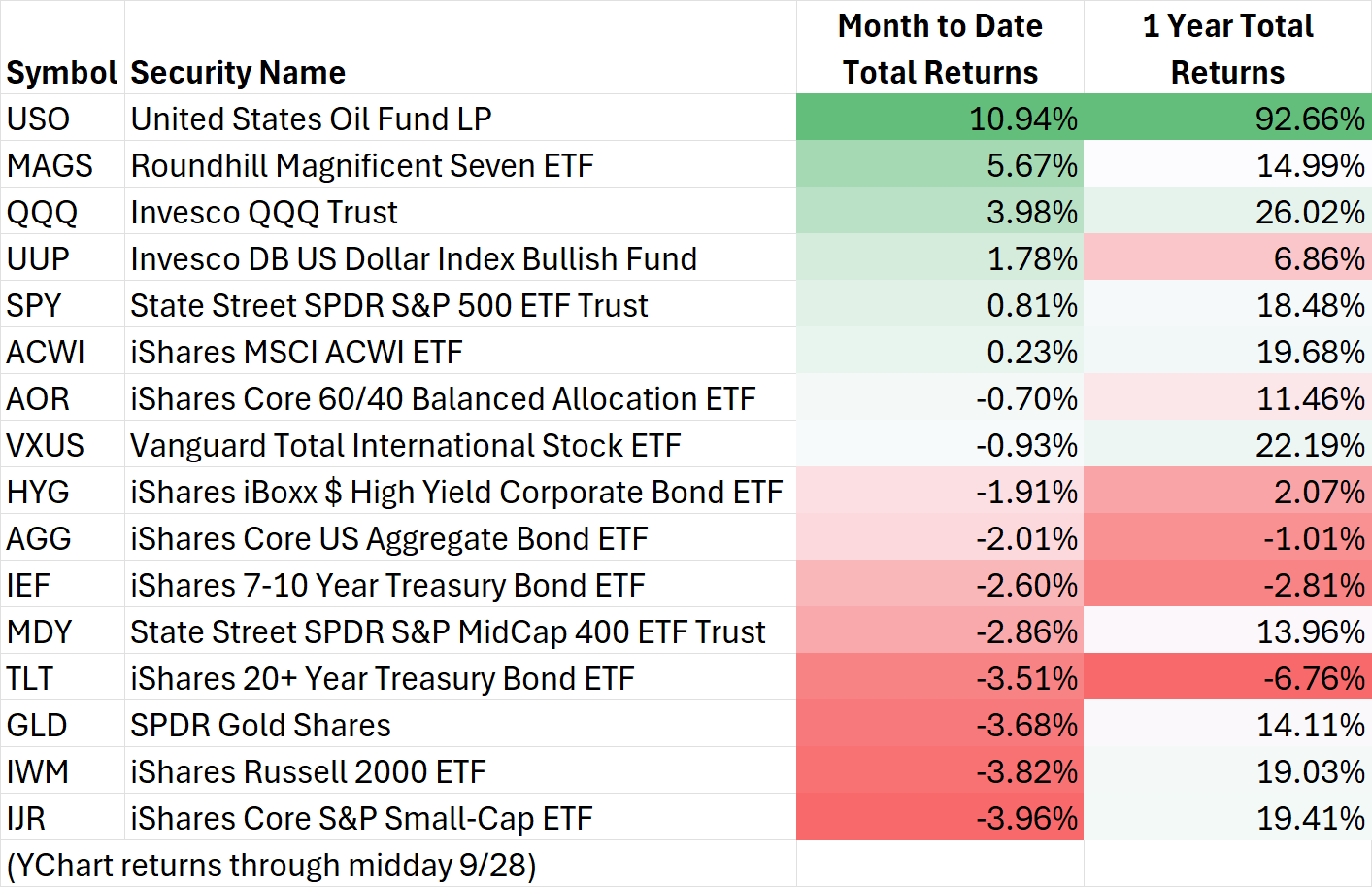
The September returns provide some insight…
- Oil up double digits, fixed income down
- The Mag-7 saves the market as valuations continue to recover from the Situational Awareness blowup
- Rising US interest rates benefitting the US dollar
- US Small and Midcap stocks feel the weight of rising rates
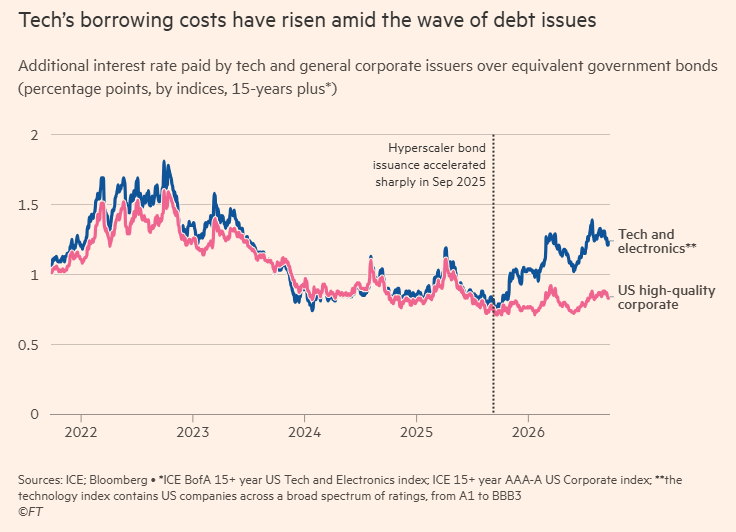
AI hyperscalers continue to transform the global debt markets…
And the sector’s huge capital needs are forcing companies and countries to rethink how they borrow money…
“The overarching narrative is — anywhere and everywhere,” says Greg Peters, co-chief investment officer of asset manager PGIM’s credit business. “The quantum of debt that is hitting the marketplace is historic. The numbers are just absolutely enormous. It’s transformational.”
The fundraising binge is changing the way the world borrows money, affecting where, when and at what cost companies and governments issue debt. Some have said it could be the biggest shift since the creation of the Eurobond market in the 1960s.
Many companies are now being forced to tiptoe around hyperscalers, timing their bond issues to avoid clashing with those of the tech giants and, investors say, often borrowing for shorter periods to avoid the market’s glut of long-term debt.
Even the very biggest financial players say they are affected.
Federal Reserve chair Kevin Warsh and US Treasury secretary Scott Bessent argue that the hyperscalers are competing for capital with the $31tn US Treasury market, where last week 10-year borrowing costs hit their highest since 2007.
Staff at the European Central Bank have expressed concern that “the surge in big tech borrowing could make it harder for other companies and other economic sectors to access finance.” In a blog post last month, they asked: “Can euro area financial markets smoothly handle such large and concentrated debt inflows?”
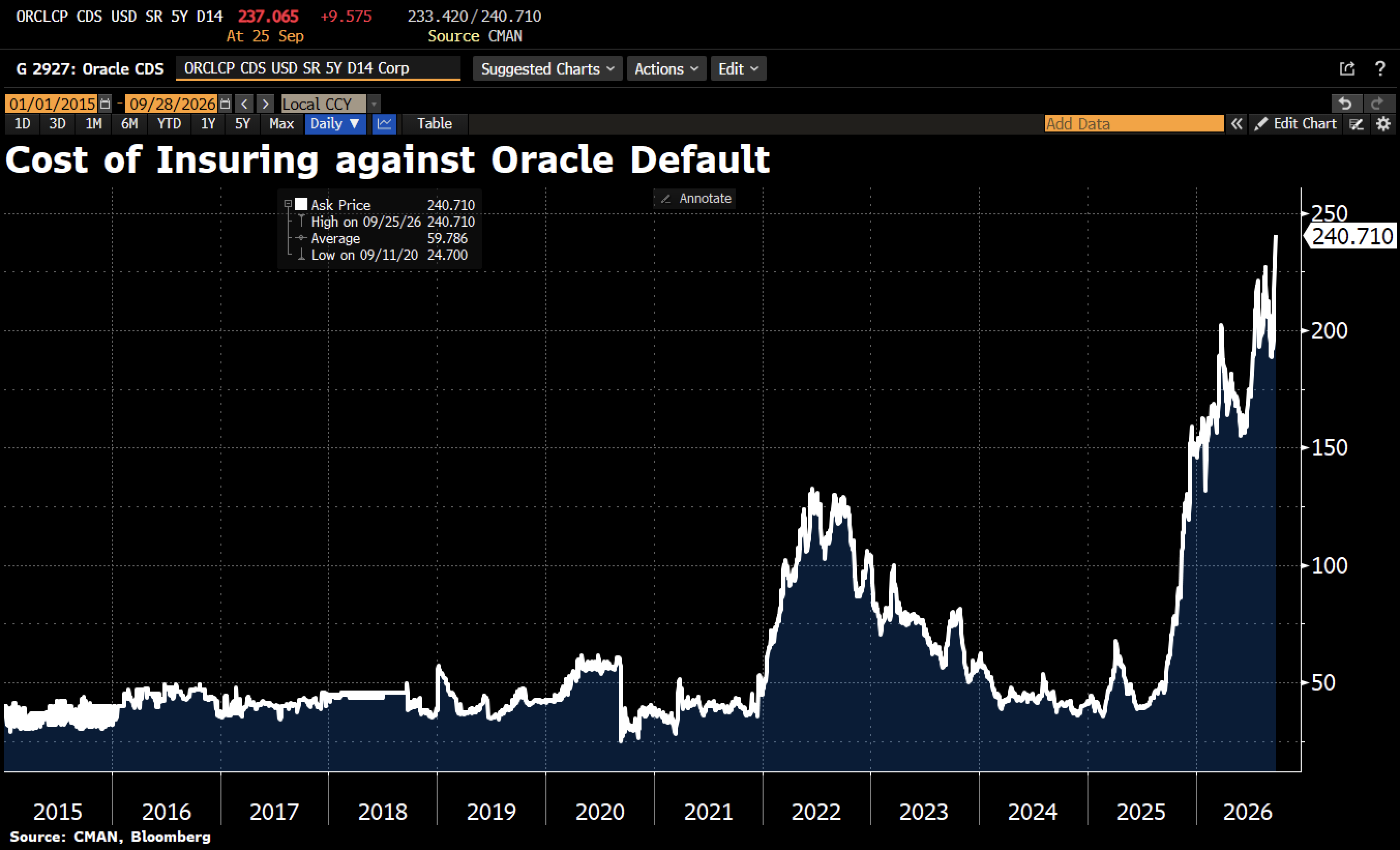
Meanwhile, Oracle declares force majeure in New Mexico and it raises their debt cost and lowers their stock price…
Why did they pull that pin out? The whole world knows who is on the hook for this massive project (which will likely be completed with a short delay). By threatening to run away from a liability, it won't make future Oracle AI datacenter partnerships any easier to secure.
The cost of insuring Oracle against default has surged to a record after its force majeure notice for Project Jupiter rattled AI data-center debt markets. 5y CDS quoted at 240.7bps imply a 19.1% probability of default by end-2031, assuming 40% recovery.
@Schuldensuehner
After having accelerated the AI flywheel by investing in others, Nvidia's next move will be to direct its free cash flow into buying back its own public equity…
Can you blame them with the P/E of the stock trading at only 13.5x analysts projected 2027 earnings?
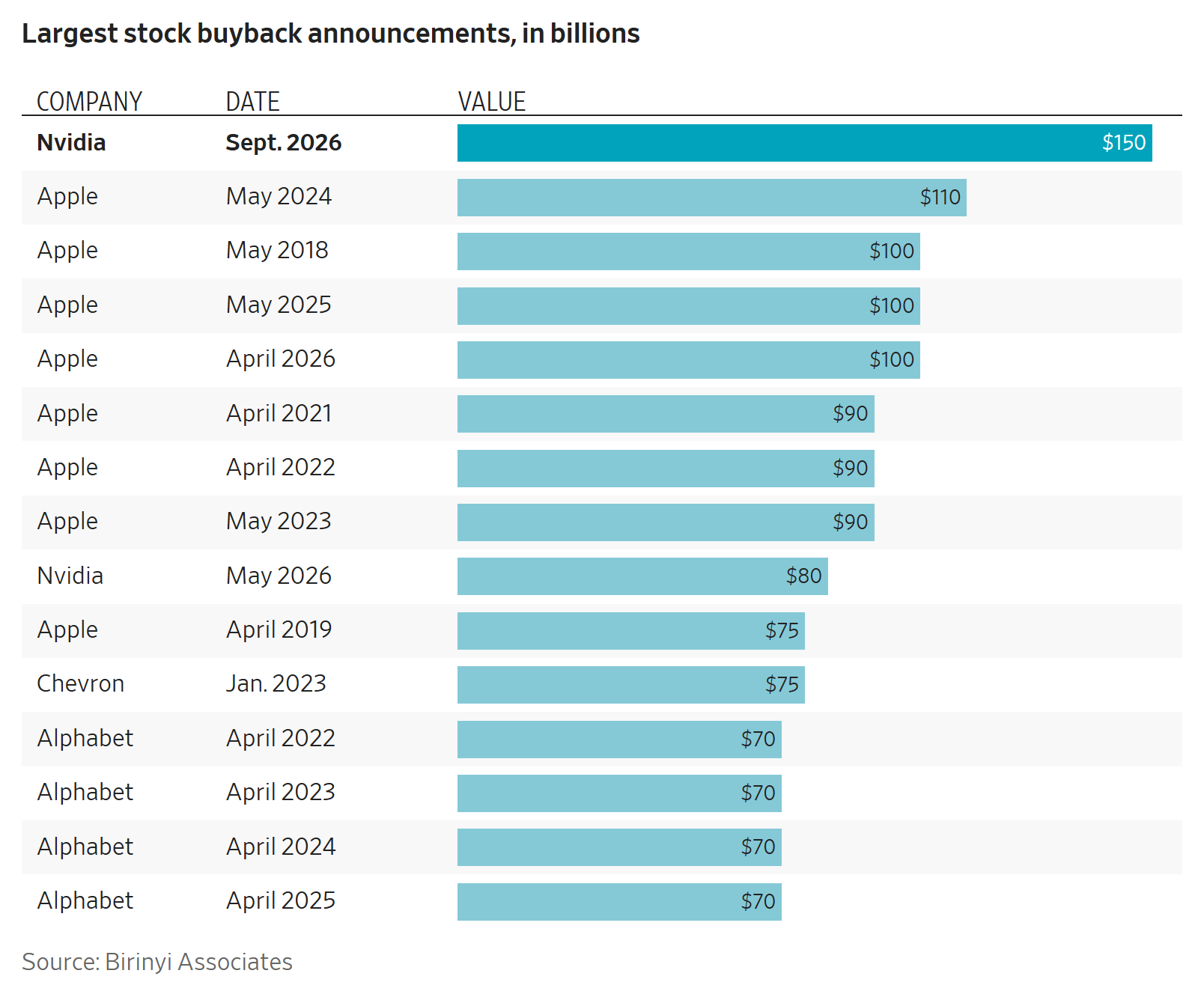
Nvidia flush with cash from the artificial-intelligence boom, is launching the largest-ever U.S. stock buyback.
The chip giant on Monday said its board had approved a $150 billion increase to the Santa Clara, Calif.-based company’s share-repurchase program, bringing the total buyback authorization to $235 billion.
The authorization eclipses the $110 billion stock buyback that Apple unveiled in May 2024 and comes just four months after Nvidia’s board added $80 billion to the buyback program.
Nvidia—which dominates the market as the world’s largest designer and supplier of graphics processing units and specialized hardware for AI data centers—sports a market capitalization topping $5.4 trillion, the largest of any company in the world.
“Nvidia’s growth is being driven by a once-in-a-generation platform shift to AI and accelerated computing,” said Jensen Huang, chief executive of Nvidia. “Our cash generation gives us the capacity to invest in the technologies that advance this transformation and return capital to shareholders.”
Halloween nightmares arrived early last week for companies that provide consumer services…
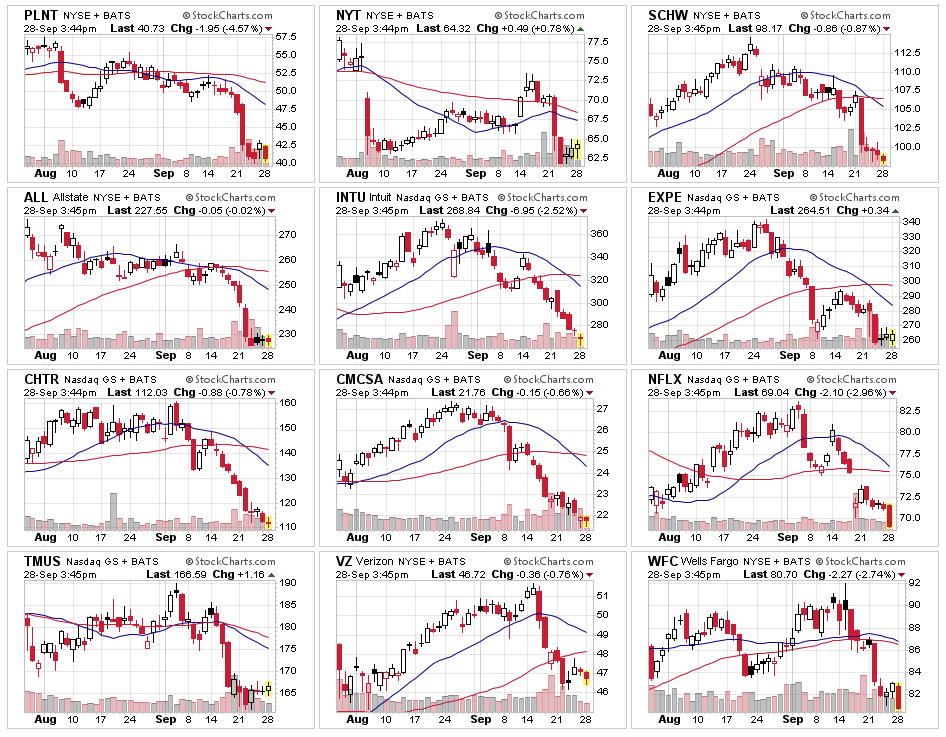
Meta's rollout of its personal AI agent named Muse has caused frightening thoughts in the minds of shareholders owning companies who bill monthly or provide online transaction assistance. So think cable, cellphone, travel, financial service, and video/audio services. The advantage of having an aways on AI agent is that it can look for lower prices or no longer used services that continue to charge your accounts. Some pretty big selloffs in the charts since last week when Muse was let out of its cage.
Shares of major banks, insurers and online travel agencies slid on Tuesday as investors fear that tools like Meta Platforms Inc.’s personal AI agent could disrupt businesses that benefit from so-called consumer inertia, the tendency to keep buying something out of habit even when a better alternative exists…
The downturn came as Muse, Meta’s new AI agent, rose to the top of Apple Inc.’s US app store. The product can complete digital tasks on a user’s behalf by connecting to third-party services like Gmail and OpenTable. Shares of Meta jumped 11% on Monday on signs of its rapid ascent.
As artificial intelligence assistants like Muse and Instinct improve at price comparison, trip booking and dealing with customer service interactions, industries that rely on recurring bills, negotiable pricing and add-ons could come under pressure, Goldman Sachs Group Inc.’s trading desk said in a note…
Goldman said telecoms, insurance and utilities are the industries to watch if AI agents make it easier and cheaper to switch service providers. Its basket of “consumer inertia” stocks at risk of disruption include telecom carriers AT&T Inc. and T-Mobile US Inc., insurers Allstate Corp. and Progressive Corp., streaming service owners Netflix Inc. and Paramount Skydance Corp., and travel booking sites Expedia and Booking.
StockCharts
US diesel export bans are being discussed. Do you remember the time that you kicked your first wasp's nest?
Even Energy Secretary Wright said that a diesel export ban would not work, and it would raise gasoline prices. Once the diesel inventory tanks are filled, the refinery must shut down as it has nowhere else to store. This will cause shortages in gasoline, jet fuels and other distillates. Solve one problem, but create many others. Also, the rest of the world turned to the US for diesel after we asked them to stop buying from Russia. Think of how upset they will become.
A gallon of diesel cost $6.52 on average in the U.S. on Wednesday, following missile attacks that have disrupted refineries and trade routes in the Middle East and Russia. Big exporters of the fuel, such as China, Japan and South Korea, have also reduced shipments as crude supplies out of the Strait of Hormuz waterway near Iran and Oman have stalled for months.
That has left the U.S. as one of the few major suppliers of diesel on the market—meaning American fuel makers have a lot to lose if the U.S. implements even a temporary export quota. U.S. refineries have been running near full capacity in recent weeks. In the second quarter, earnings at big oil companies surged as they banked on record margins for their refineries.
A full export ban on diesel would leave U.S. refineries with a large surplus of the fuel, which would force them to cut production by almost two million barrels a day, or 12% of refinery runs, according to S&P Global. The firm estimates gasoline production could decline as much as 750,000 barrels a day. Some analysts think that figure would translate into an increase of 25 cents a gallon in gasoline prices.
The oil-and-gas industry has been gearing up for this scenario. Even as energy prices soared and risked feeding into inflation, executives refrained from criticizing Trump, at least publicly.
Some oil executives and administration officials have long held the view that Trump wouldn’t hesitate to turn his back on his oil allies if the political circumstances demanded it. Still, veteran energy advisers have said that the industry wouldn’t take export controls lying down as it sees them as a red line.
Diesel prices have become issue number one for the midterm elections…
@NateSilver538: And here's how that map changes if you also account for diesel prices, which have increased even more, especially in the heartland.
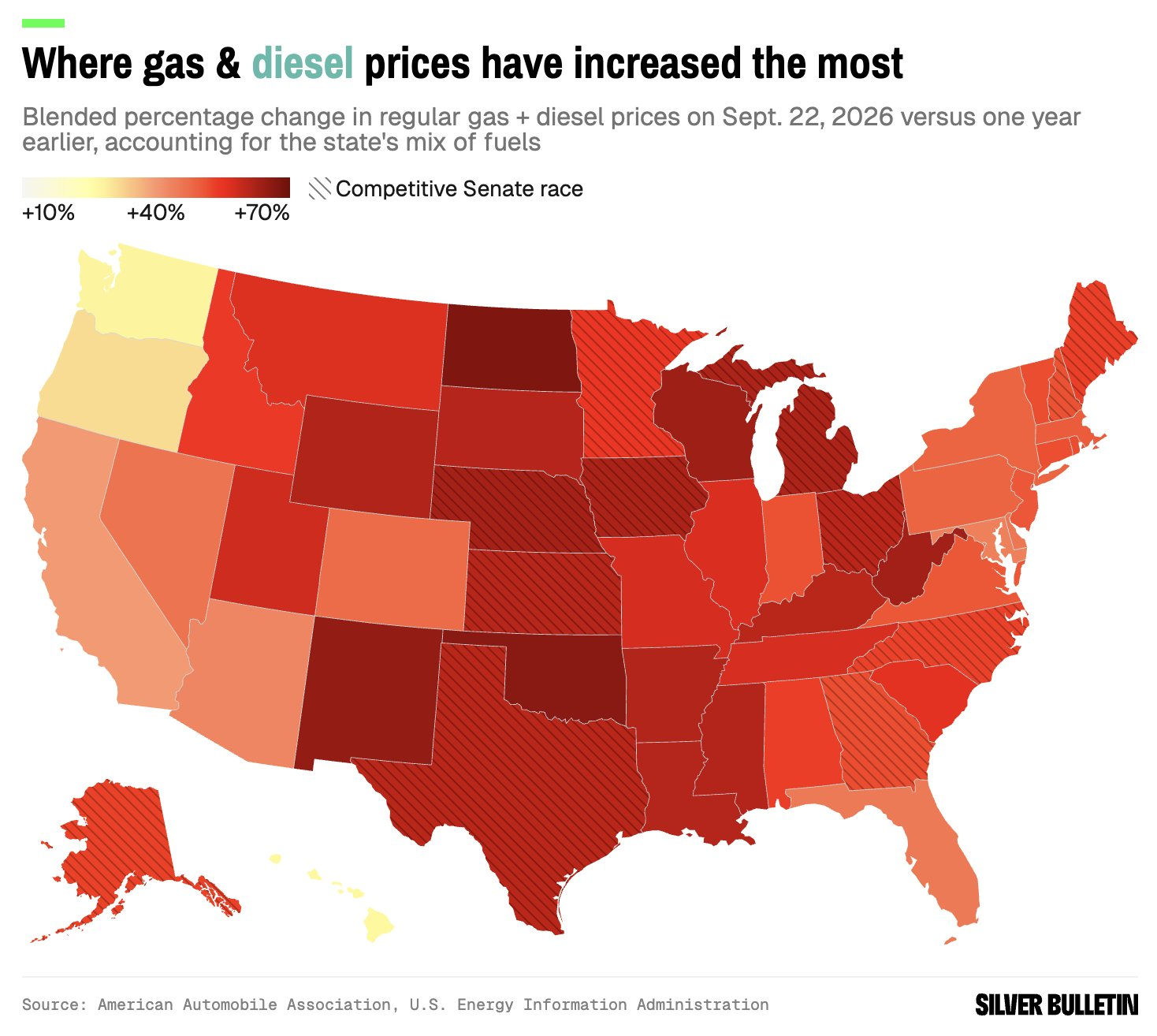
With only 35 days to go until the election, it will be the agricultural states who will decide the makeup of the 2027-2028 US Congress…
Republicans hold narrow majorities in the House and Senate, and their troubles in farm states are boosting Democrats’ prospects for flipping both chambers and taking back governor mansions. Races in agricultural states such as Iowa—which went for Trump by 13 percentage points in 2024—are increasingly competitive for Democrats, who are bashing Trump’s farm policies while calling for breaking up large agriculture companies…
Dave Wasserman, a senior elections analyst for the Cook Political Report, compared this election cycle to midterms in 1986, during an economic crisis that sent many farms and ranches into foreclosure, and 2006, an election seen as a referendum on the unpopular Iraq war and high fuel prices. Democrats flipped the Senate from red to blue in 1986 and increased their House majority. In 2006, they seized control of both chambers of Congress.
“Everything’s got to go right for Democrats to win in these double-digit Trump states, but this is close to a perfect storm for Democrats,” Wasserman said.
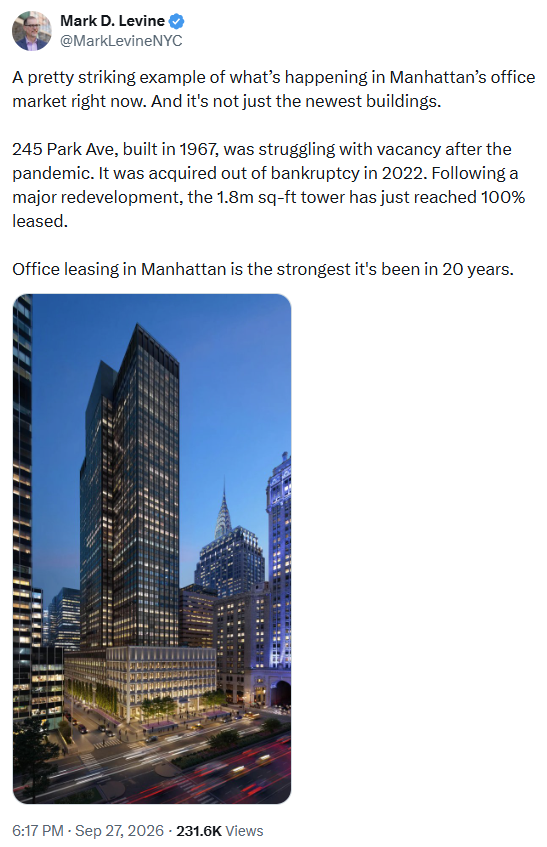
Beautiful building. Awesome return for the 2022 distressed buyers…
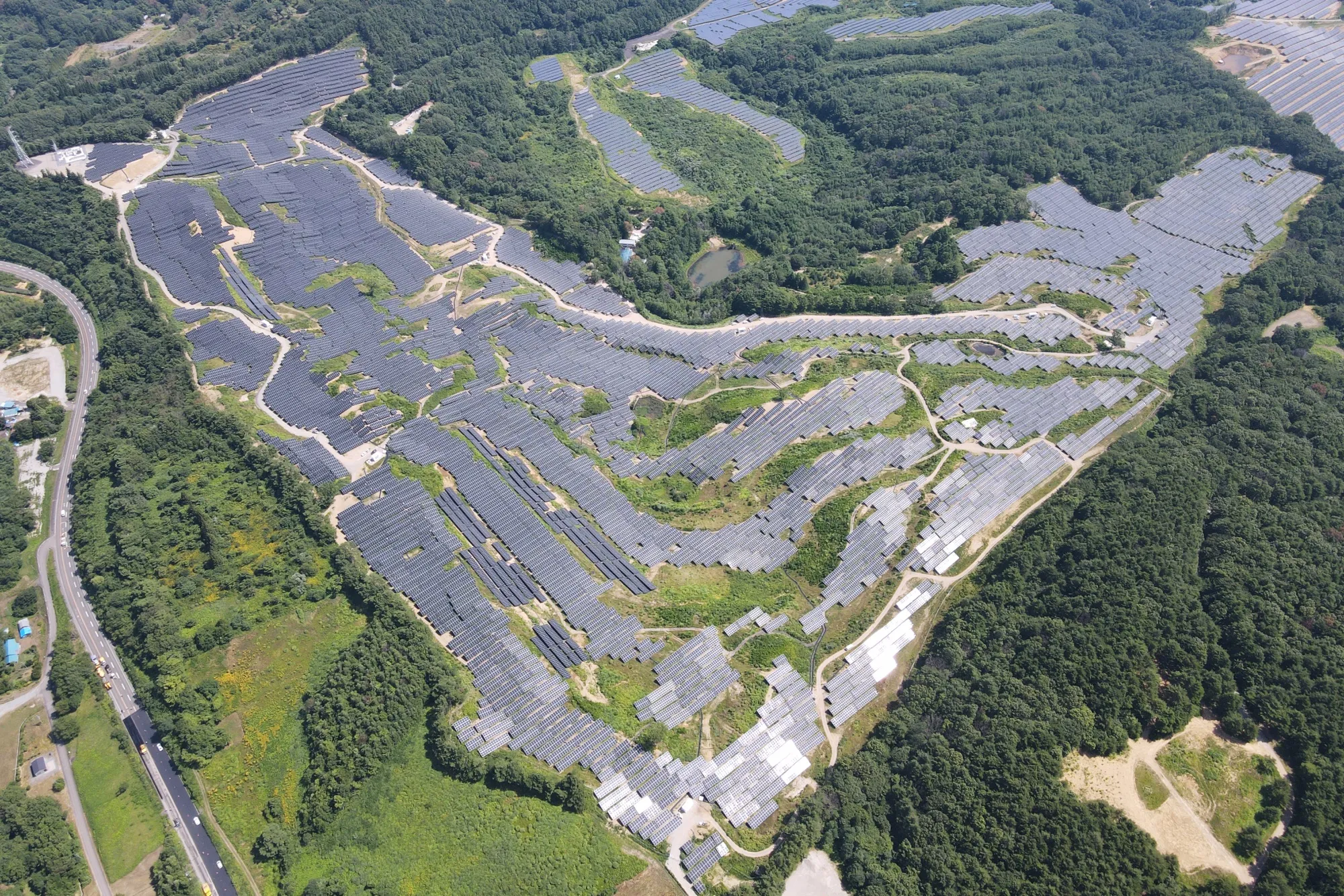
Urban golf course owners are literally playing on top of a future gold mine…
Mega-solar farms need good sunlight, access to the power grid and to be a reasonable distance from residential areas. Many golf courses tick those boxes.
“If you can snap up a cheap golf course, which is nice and flat, gentle slopes, not mountainous, it’s probably cheap land,” Chapman said. “So it makes a lot of sense, especially if they’re going into regional areas.”
Japan has plenty of courses thanks to a construction boom four decades ago, when resorts and golf became a symbol of corporate wealth and leisure during the country’s economic heyday. But the game’s popularity has faded over the last few decades, particularly in rural areas with declining populations.
The Minohara Country Club typifies this trend. The fee for a day of unlimited play at the course is just ¥5,000 ($31.87) – far cheaper than in the US or Singapore — yet it still barely attracts any customers.
“This establishment is losing money,” Kamisato Kensetsu’s Toya said. The course loses more than ¥2 million a year, he said. The developer bought the site with a plan to cover it with 152 megawatts of solar panels — one of the biggest projects planned for the country…
At least 1 gigawatt of solar projects either announced or under construction are located on Japanese golf courses — roughly 10% of the current pipeline, according to Bloomberg calculations.
Learn more about the Hamilton Lane Strategies
DISCLOSURES
The author has current equity ownership in: Nvidia Inc. and Costco Wholesale Corp.
The information presented here is for informational purposes only, and this document is not to be construed as an offer to sell, or the solicitation of an offer to buy, securities. Some investments are not suitable for all investors, and there can be no assurance that any investment strategy will be successful. The hyperlinks included in this message provide direct access to other Internet resources, including Web sites. While we believe this information to be from reliable sources, Hamilton Lane is not responsible for the accuracy or content of information contained in these sites. Although we make every effort to ensure these links are accurate, up to date and relevant, we cannot take responsibility for pages maintained by external providers. The views expressed by these external providers on their own Web pages or on external sites they link to are not necessarily those of Hamilton Lane.