
Weekly Research Briefing: Tricks, Treats, and Plenty of Bumps in the Night

If the financial market's news tape is giving you sensory overload right now, you are not alone. Earnings, elections, missile strikes, oil prices and multi-page midnight missives about Bill Maher. How does one keep up? Focus on what is most important (earnings results and AI capex spending patterns), keep an eye on the global macro events we cannot control (wars and elections), and consume late night POTUS tweets only if they entertain you. We will all be drinking from an increasing fire hydrant of major news for the next week so get ready. Also, don't miss consuming that S-1 for the largest IPO ever to hit the market because the underwriters want to bring it public before the Thanksgiving Day parade heads down 6th Avenue.
Last week was another wild one in the markets: oil prices rose, bond yields fell, credit spreads widened and the AI trade disappointed. But for the second week in a row, market breadth improved as more defensive and non-AI stocks outperformed while the market looked to hedge away from its AI-concentrated bets. Even hedge funds unwound their long positioning at rates not seen since DeepSeek & COVID. Plenty of rumors are swirling about another failed fund but as of yet, no firm name has been confirmed. It's safe to say the wall of worry has grown even higher.
Will the AI spending justify an adequate return? Will financial constraints end the party or just strengthen the incumbents' positions? Is the AI race just a three car event between Google, OpenAI and Anthropic? Read the S-1 because that is what ANT believes. What we do know is that AI's importance is significant. Its growth rates will eventually slow but still be much larger than US GDP growth. Major and minor players are making capex commitments and finding ways to raise capital. We should all look forward to seeing the hyperscaler earnings this week. Semiconductor shortages, power needs and political constraints are keeping a lid on growth which will help ease the fears of a massive overbuild like optical networking in 2000. The current sell-off looks and feels like just another sell-off. Even though the public prices of the three largest listed neoclouds are trading at six-month lows, they still have over $80b in market cap trusted to them by their investors. Not all of today's AI participants will make it to the finish line. The lack of adequately priced financing and poor large language models will turn some of today's companies into data center operators or semiconductor chip resellers. AI Darwinism will reward the best players and their guppies.
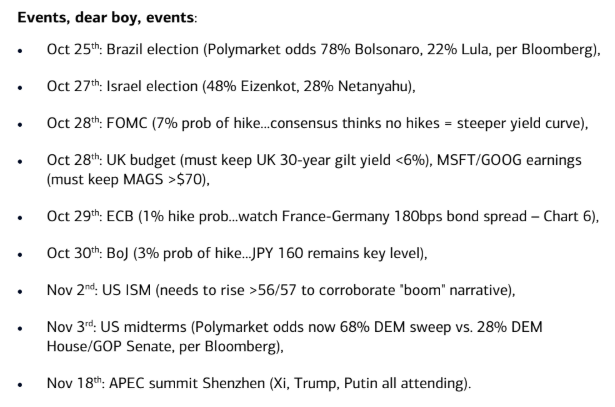
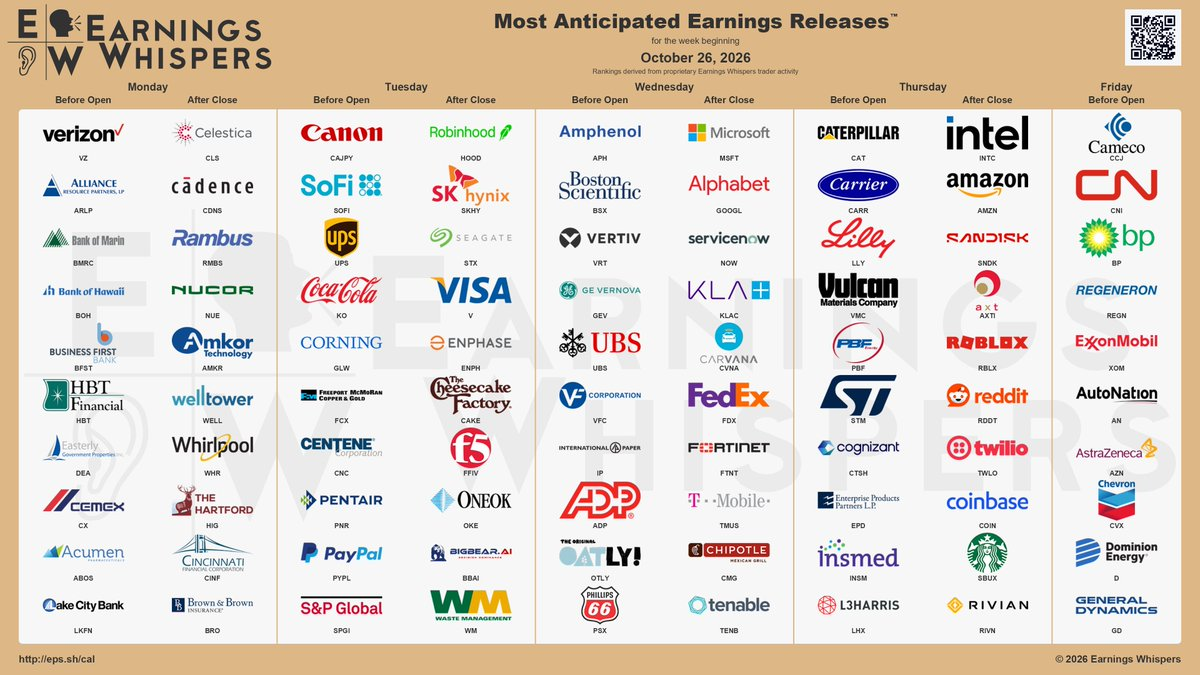
This is a big week. Israel election, FOMC, ECB, BOJ, plus 30% of the S&P 500 earnings by names and 40%+ by market cap. Might as well just start me an IV of coffee and Coca-Cola right now. Have a great week.
October 25th was a major event surprise. Now what other incomings are likely to bump the markets?
BofA Global Research
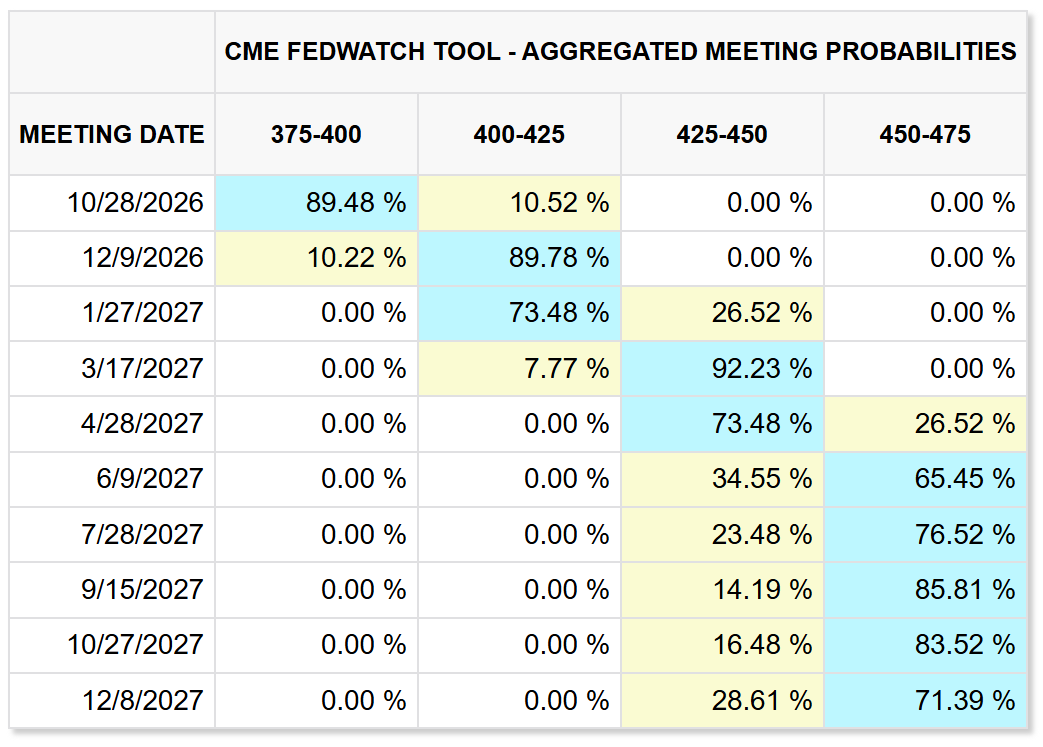
FOMC meets on Tuesday and Wednesday. The markets expect a pause on rates. Nick and others think it could get interesting…
The Fed is expected to hold rates steady Wednesday, but it is a closer call on the data than the market-implied probabilities suggest.
The case for hiking:
- The hot September CPI and PPI underscore a second straight lost year for getting inflation down
- With a Dec hike widely expected, hawks will argue that there's less to gain from waiting six weeks given the cost of falling further behind
- Hawks will also argue that policy isn't restrictive and needs to be
The case for holding:
- If officials still think this is a 2-3 hike recalibration, spacing out remaining moves costs little. "Being six weeks late is a manageable risk," says Rob Kaplan
- Back-to-back moves could signal a faster cycle than officials intend
- After several officials signaled no rush, and Warsh’s silence let odds of a hold build, a surprise hike days before the midterms would be a jolt. The Fed has raised rates right before elections, but not as a surprise
@NickTimiraos
The markets read is stay now and hike in December and March…
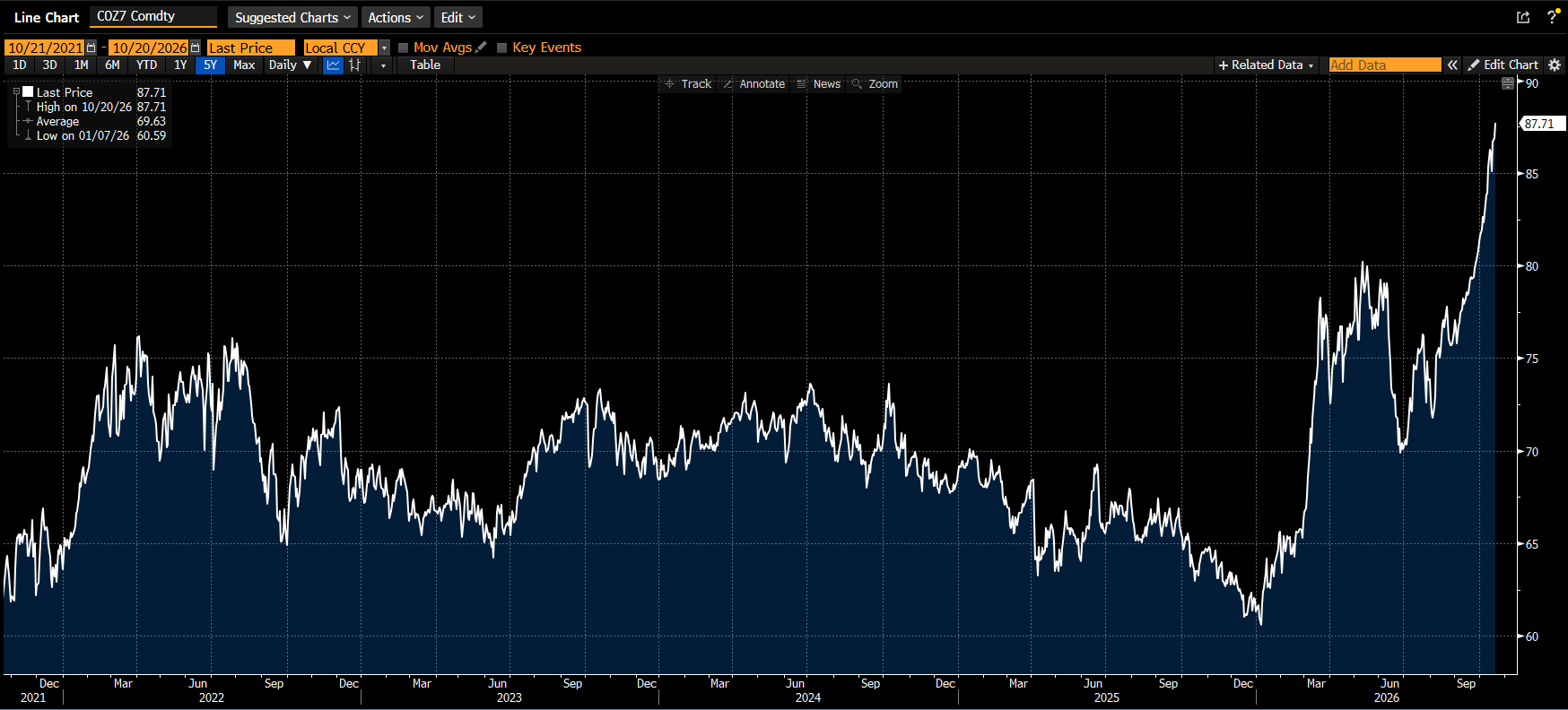
How many FOMC members will have a forward oil price chart in their bag to pass around the table?
Oil traders are increasingly pricing the battle over the Strait of Hormuz as the new normal. Futures contracts for brent crude in December 2027 are now close to $90 a barrel, the highest ever and a sharp departure from even a month ago.
@lisaabramowicz1
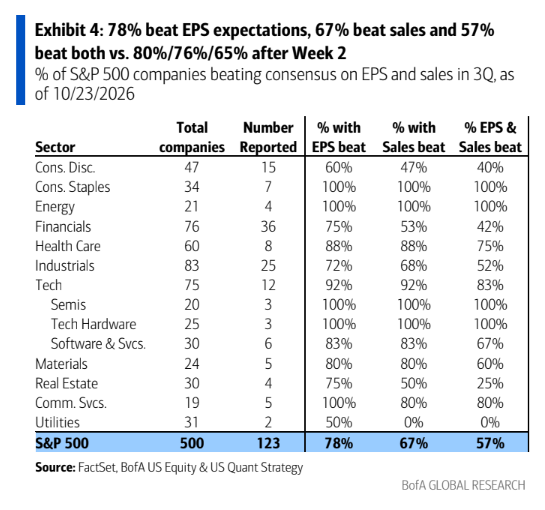
With less than a quarter of big cap earnings results in the books, the numbers are tracking with historical trends…
After Week 2, results from 123 S&P 500 companies (30% of index earnings) are now in:
78% beat EPS expectations, just shy of the 80% beat rate after Week 2 last quarter and well above the historical post-Week 2 average (65%). Reporters beat EPS by a slim 2% in aggregate but a stronger +6% excluding Meta’s one-time litigation charge. With the bulk of the index still to report, consensus 3Q EPS growth is still tracking 27% YoY.
BofA Global Research
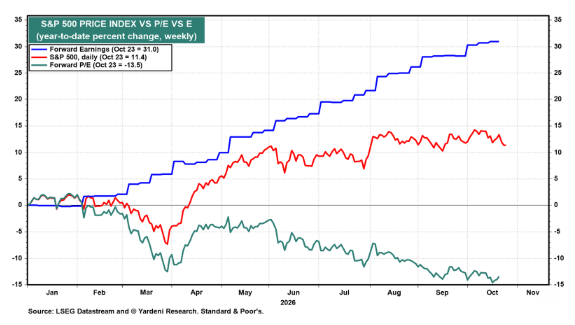
Forward earnings continue to inch higher meaning that the market continues to only get cheaper…
The S&P 500's forward earnings is up 31.0% ytd (chart). The index is up 11.4%. The forward P/E is down 13.5%. Stocks have gotten significantly cheaper this year.
Here is the very big earnings slate for this week…
@eWhispers
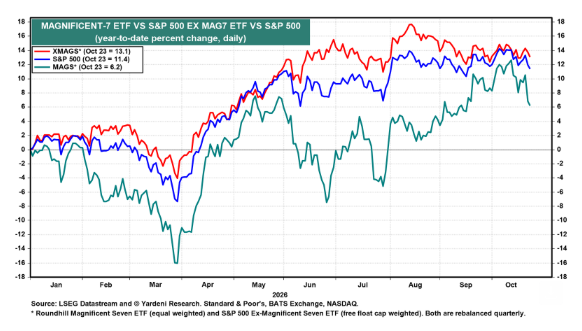
The Mag-7 has not outperformed the rest of the market at any point in 2026…
The S&P 500 is still up double digits ytd at 11.4% (chart). XMAGS is up 13.1%, while MAGS is up only 6.2%. The gap has widened again in recent weeks as MAGS rolled over. Meta led the latest leg down, falling 9.4% last week after reporting earnings.
The largest US public pension plan wants to own less Mag-7 and hundreds more private companies…
California’s $640bn pension giant is pivoting away from big US tech companies and boosting its exposure to private equity, underscoring concerns that the AI rally that has powered Wall Street to record peaks is running out of steam.
“We have traded large exposure to seven companies for several hundred companies,” Anton Orlich, Calpers’ deputy chief investment officer, told the FT. “We are diversifying our equity risk. We are less concentrated.”
His remarks came after Calpers, the US’s largest retirement fund for government workers, repositioned its portfolio in the first half of 2026, reducing the combined number of shares it directly held in the Magnificent 7 stocks — Apple, Microsoft, Alphabet, Amazon, Nvidia, Meta and Tesla — by 26 per cent, according to FT calculations based on the fund’s regulatory filings.
Calpers’ shift highlights the growing angst among many investors about the sustainability of a rally in tech stocks fuelled by massive spending on data centres and chips at the heart of the AI boom…
“The valuations are higher in public equity markets,” Orlich said. “There you are really concentrated in a few names and I can see a world where those stocks underperform on a relative basis.”
He said private companies were priced at more alluring levels than listed stocks, something he called an “arbitrage” opportunity that could help insulate Calpers in an eventual downturn in public markets.
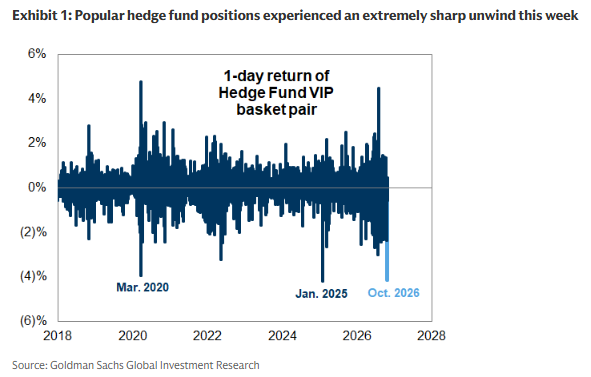
Hedge Funds cut back on their exposures last week at one of the fastest rates in 8 years…
On Thursday our Hedge Fund VIP long/short basket pair fell by 4%, a decline only rivaled during the past decade on DeepSeek Monday in January 2025 and during the COVID sell-off in March 2020. Likewise, GS Prime Services data show a large decline in gross leverage that has contributed to an unusually challenging environment for hedge fund returns. Following the unwind of the last two weeks, they estimate that fundamental hedge fund net leverage registers close to 5-year lows while gross leverage remains well above historical averages.
Goldman Sachs
The widening of high yield credit spreads last week did nothing to help hedge fund appetites for risk…
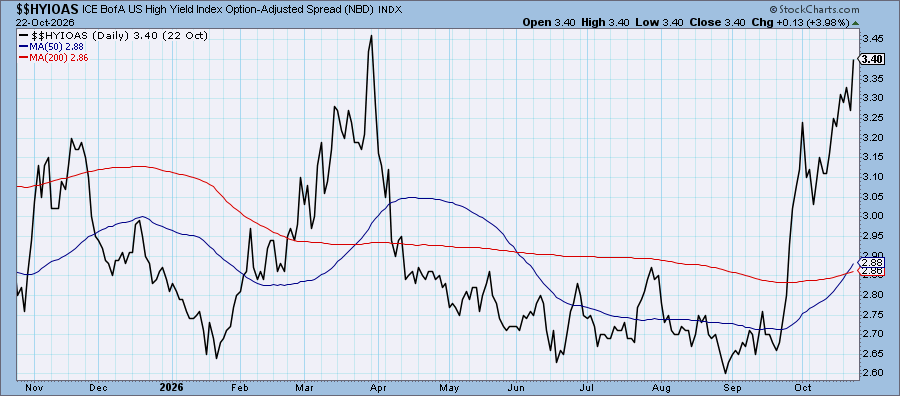
StockCharts
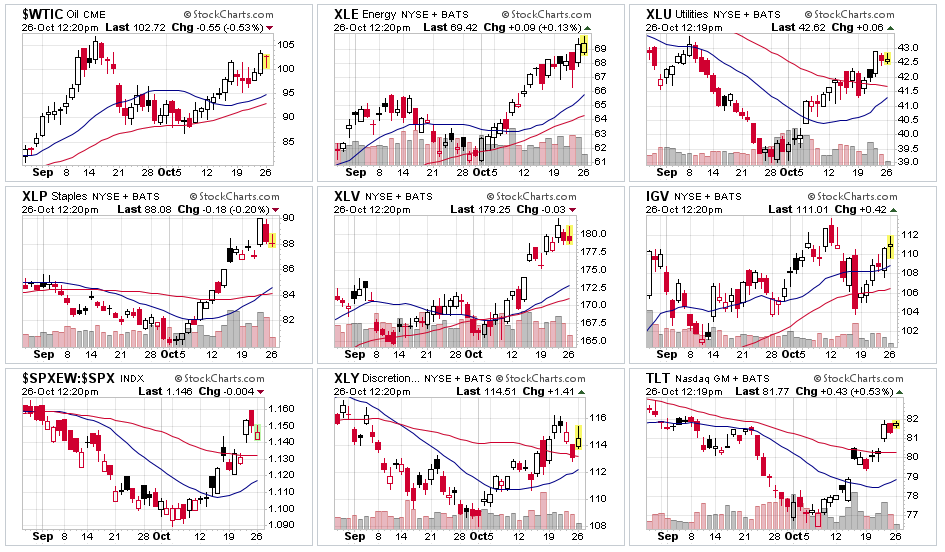
Here is a list of the notable outperforming shifts among publicly traded asset classes in the last month:
- Oil leads with a +13% move as Energy stocks follow +12%
- Defensives bounce as Utilities, Staples and Healthcare bounce 5-8%
- Software outperforms the broader Tech universe with a 5% gain
- S&P 500 Equal Weight leaves Market Weight in the dust
- And long Treasuries rise from the dead
StockCharts
Many positive readings on AI from the earnings calls last week…
The AI players are price insensitive:
“This whole AI ecosystem build-out is kind of full on...And even with higher rates, the kind of desire to get the compute power in place, the players aren’t really batting an eyelash, up 25 or the back end of the curve is moving up a bit. So I think that’s relatively inelastic to pricing.” - Citizens Financial Group CEO Bruce Van Saun
AWS capacity is largely sold out through 2027:
“There’s only so much data center and power today. There’s only so much memory, and I don’t think that shortage ends in 2027. I think that, you know, one of the reasons, coming back to the capital investment, why I think we could invest a lot more and it wouldn’t be a bad use of capital is that, you know, 2026 is obviously at this point sold out. 2027 is largely sold out. We always leave a certain amount for on-demand and our inference service, Bedrock or EC2, but largely sold out, all the big chunks. A good chunk of 2028 is sold out. Like, there’s so much demand.” - Amazon CEO Andy Jassy
“Compute prices are actually up 50% year-on-year. There’s a lot of value in legacy H100 chips. Before, people thought they would depreciate much more quickly.” - Blackstone COO Jon Gray
“We are also, frankly, hounded relentlessly by every hyperscaler and by dozens of smaller companies to rent more of our compute. So we could rent out our compute several times over if we said yes to everyone. That’s just the situation here.” - SpaceX CEO Elon Musk
Hyperscalers aren’t slowing down:
“...we are watching, like everyone, the CapEx investment into the data center market. It doesn’t have -- it doesn’t signal right now any -- we are not seeing any slowdown. We are seeing continuing demand, actually growing demand.” - Texas Instruments CEO Haviv Ilan
“As we’ve said, the next few years, we don’t see a period of time where memory is not going to be in short supply in the next 2 years, as Sanjay said, we actually don’t see a time when it comes into balance.” - Micron Technology Chief Technology and Products Officer Scott DeBoer
Lam Research (Semi Equipment) – “As we move into calendar year 2027, we see cleanroom space availability and supply-chain constraints for certain components continuing to limit chipmakers and equipment companies' ability to fully meet end demand.”
United Rentals (Equipment Rental) – “By vertical, the trends of the first half of the year carried into the third quarter. Construction continues to grow across non-residential and infrastructure. And on the industrial side, power once again posted double-digit growth, as did metals and minerals. Now, as I mentioned earlier, a variety of end markets drive our growth...With this in mind, we saw projects kick off in the third quarter across numerous end markets, including energy, manufacturing, infrastructure, and data centers.”
BofA Global Research
$FAST Fastenal CEO: Data centers have become a meaningful contributor to growth:
“Right now, internally, we look at about 4% to 5% of our — 4 to 5 percentage points of our growth...The impact we see comes from the construction contractors and the manufacturers supplying the build-out. We really serve that through existing customer relationships"
@TheTranscript_
But even with all of the good news on AI capex spending, the cost to finance continues to rise…
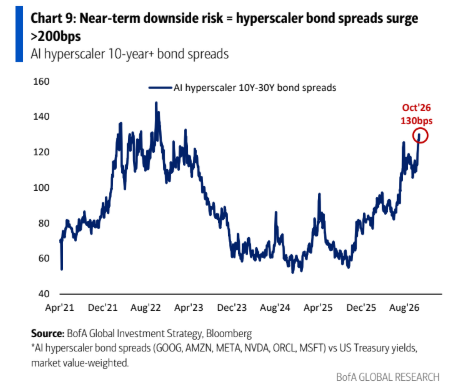
BofA Global Research
These two companies noted the rising costs in their earnings last week and then hit the markets over the weekend with significant new financings of debt, equity and preferred equity…
“Recent significant capital raises at other notable companies...have resulted in an increasingly challenging environment for raising capital. The Special Committee considered that, while the Company presently has sufficient capital resources for its current needs, in order to finance its funding needs going forward it would be prudent for the Company to do so before even more companies have absorbed available capital in the market.” - Meta Special Committee
“As of the past few weeks, debt markets have almost entirely shut off access to money for any company that doesn’t have substantial revenue independent of AI data centers. SpaceX closed $40B of debt for GPUs, but we’re investment grade and have Starlink & launch revenue. That means the 200+ neoclouds are going to see guppy-level death and consolidation. Some will make it through, but not many.“ - Tesla CEO Elon Musk
Checking in on the publicly traded Neoclouds…
The stocks are trading at six-month lows but still have $84b in market cap supporting them right now.
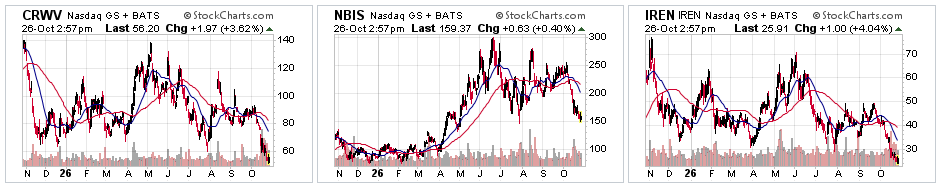
StockCharts
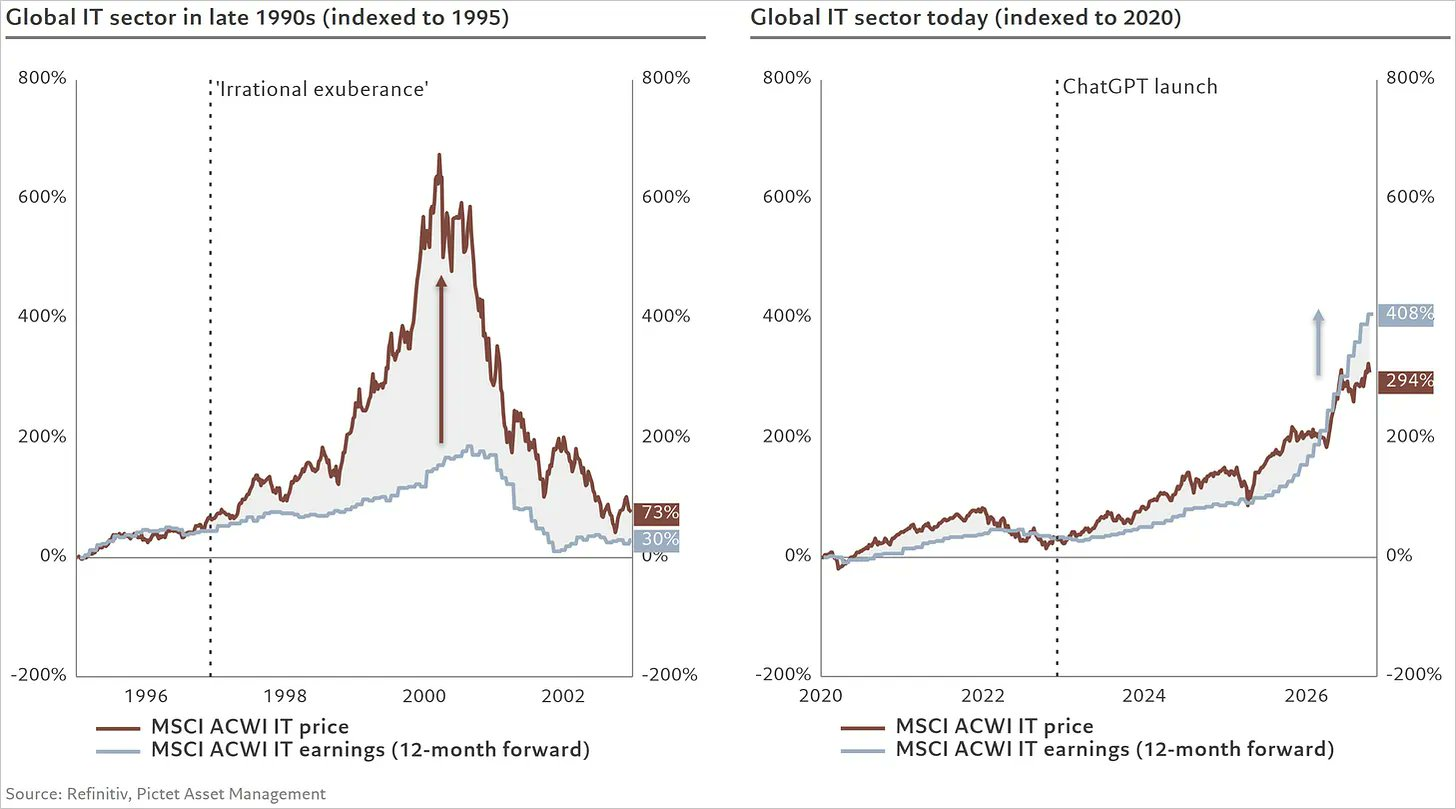
Taking a step back from AI jitters - IT booms compared…
Unlike the dot-com bubble, when global technology stocks surged far ahead of earnings, the current rally has been supported by stronger earnings growth. And the ANT S-1 shows that balanced growth can be achievable.
@steve_donze
As the brightest minds rip thru the ANT S-1…
The most mind blowing stat we've seen so far is this:
"As of June 30, 2026, we had raised an aggregate of $141.1 billion of capital and had cash and cash equivalents of $112.4 billion and short-term investments of $19.3 billion."
That means to date, they have burned $9.7b, they are growing at a rapid pace, and are profitable on an operating income basis as of the June quarter! This is likely the most efficient scaling of a business in the history of capitalism.
@SemiAnalysis_
And more to chew on…
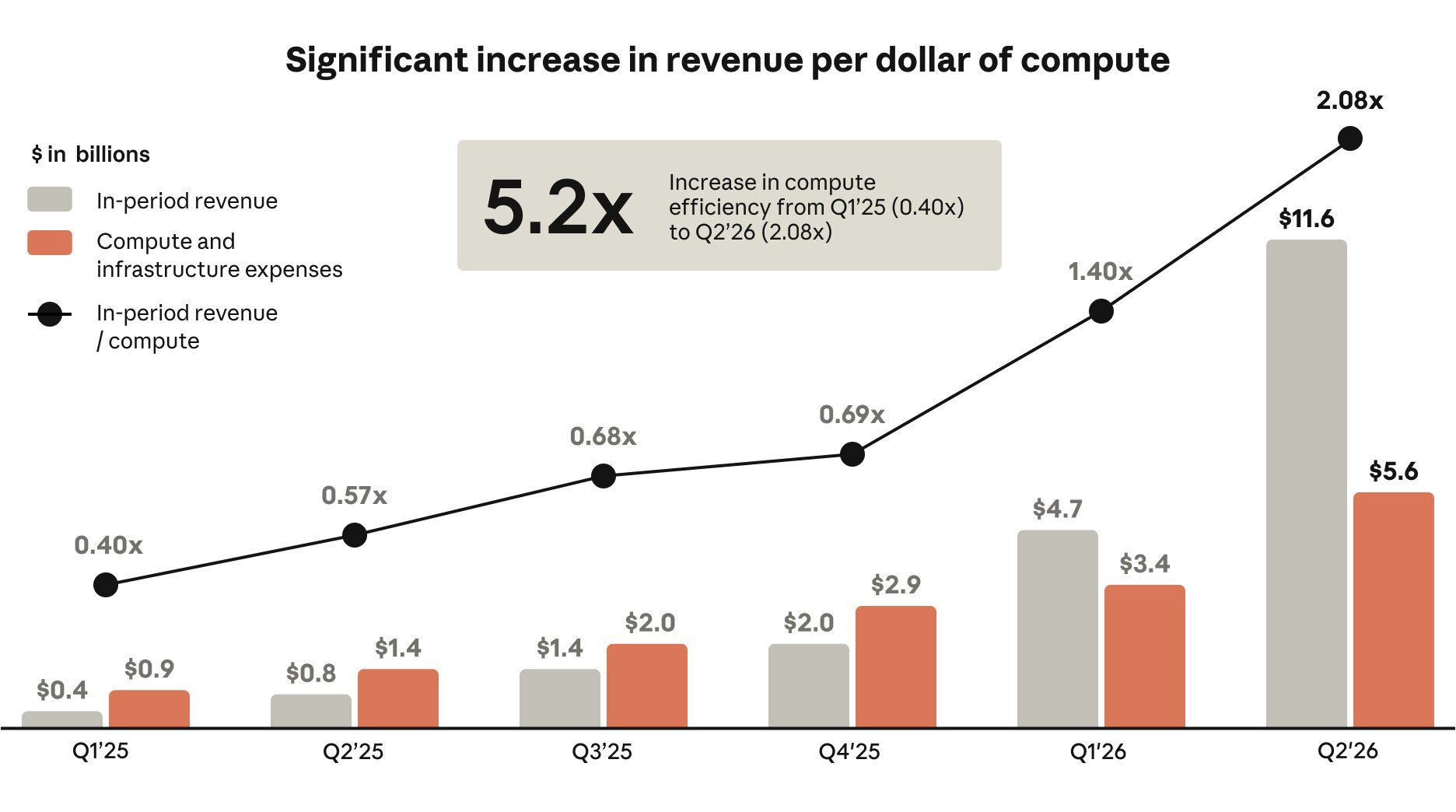
ANTHROPIC NOW GENERATES $2.08 OF REVENUE FOR EVERY $1 IT SPENDS ON COMPUTE
Revenue per $1 of compute:
- Q2'26: $2.08
- Q1'26: $1.40
- Q4'25: $0.69
- Q3'25: $0.68
- Q2'25: $0.57
- Q1'25: $0.40
That's a 5.2x jump in compute efficiency since Q1 2025.
Q2'26 revenue grew 1,368% YoY, while compute costs grew 300%.
@wallstengine
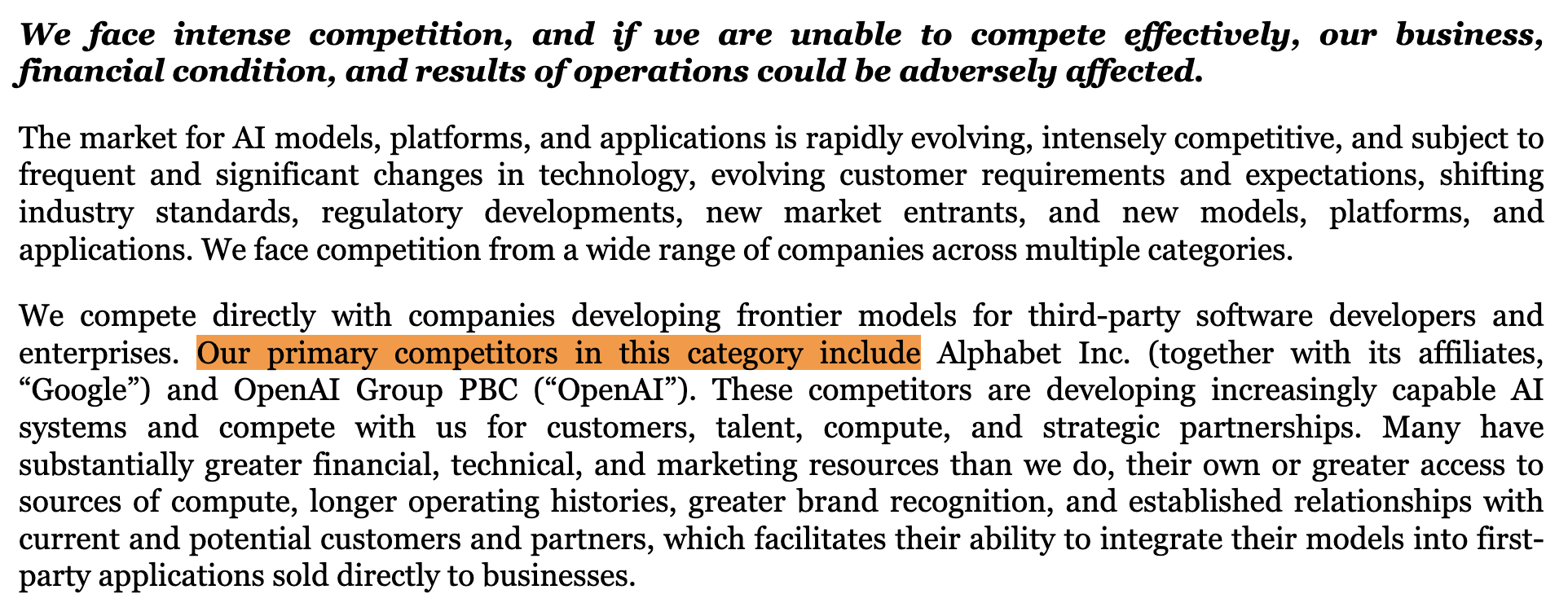
Interesting. Anthropic's S-1 names only two primary competitors: Google and OpenAI…
@wallstengine
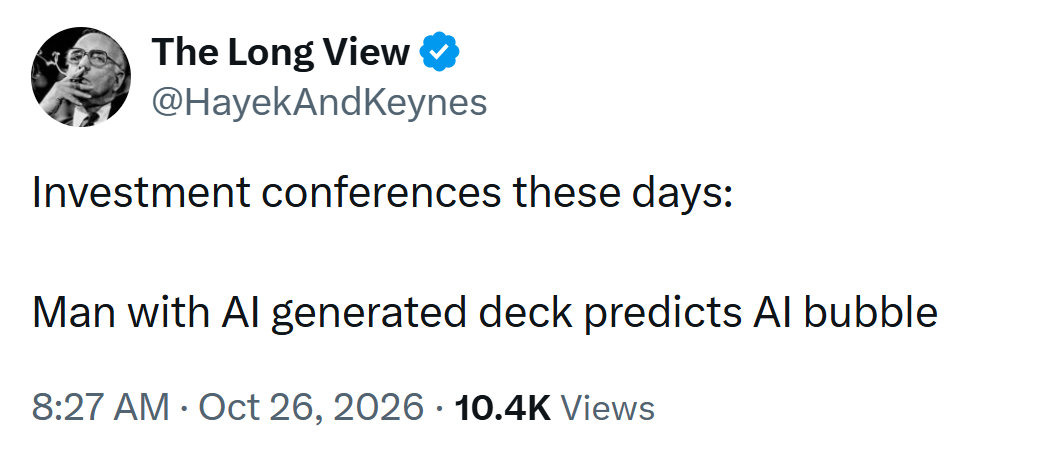
Meanwhile, about that wall of worry…
In other earnings news, biotech funding and academic spending are recovering which is a big deal for hundreds of public and private equipment companies…
“So when I think about the quarter, the activity that we saw a step up in Q2 in our end markets continued. Actually, the quarter’s end markets were very strong… Biotech continues to improve. We’re getting good growth out of biotech, and the customer confidence there is strong.” - Thermo Fisher Scientific CEO Marc Casper
“...this is the third quarter in a row where life sciences has beat our internal expectations. The end markets continue to steadily improve. Large pharma and biopharma remained robust. Biotech funding is reading through. Academic demand, still below historic levels, but improved modestly sequentially” - Danaher CEO Julie Sawyer Montgomery
Pizza franchises continue to wrestle with a host of issues…
$DPZ CFO: Domino's lowered its 2026 U.S. net store opening forecast to 125–150, citing pressure on franchisee profitability.
"This is not at all about closures. This is really about the franchisees are looking up at a bit of pressure on franchisee profitability, and that's why we're focusing on stabilizing and then growing franchisee profits again..that I will say is, until we get franchisee profits to move in the right direction, there will be incremental pressure going forward. We're doing our budgets right now. We'll come back and update you after Q4."
@TheTranscript_
Manhattan office space looks to be in great shape…
$SLG Q3 call: Manhattan office rents are “now rising quickly” as strong demand meets limited high-quality, well-located supply. Portfolio leases are generally achieving rents approximately 15% above previous rents, supporting more than 4% same-store NOI growth; management expects the operating strength to continue into Q4. (SL Green Realty Corp)
@Trade_The_News
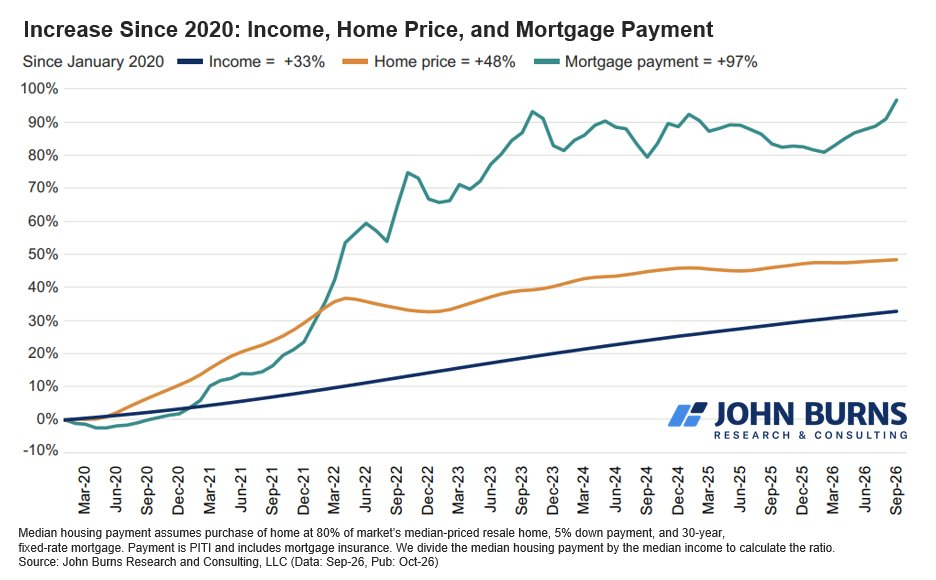
But higher mortgage rates are impacting homebuyer traffic…
“...the big move higher in interest rates, along with inflation, global tensions and waning confidence reached the point where more consumers simply put their search on pause. In the third quarter, our customer conversion rates were relatively stable, but traffic to our communities was down 14% from the prior year and on a sequential basis, down 11% from the second quarter.” - PulteGroup CEO Ryan Marshall
We also saw it in the existing home sales data last week…
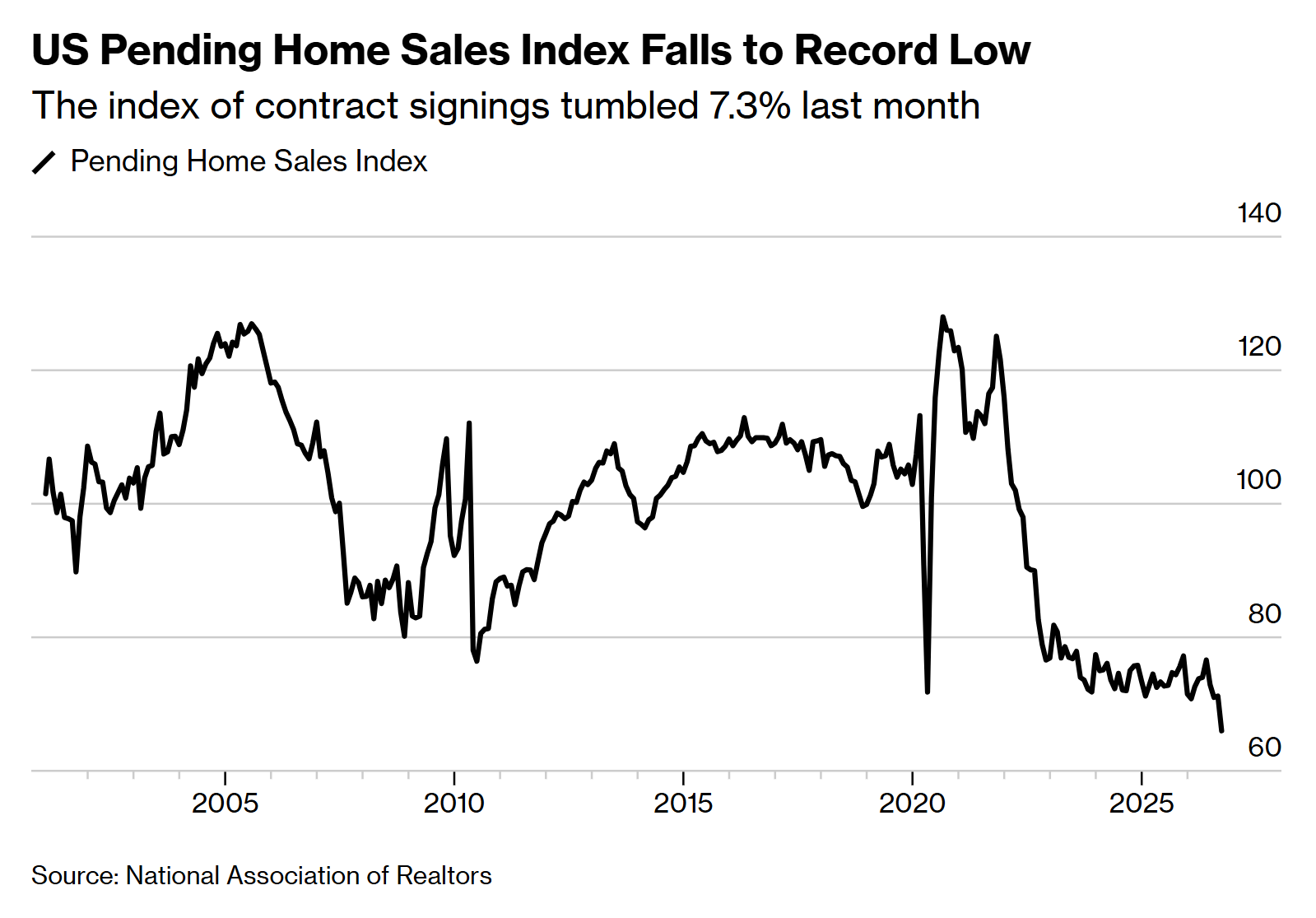
Pending sales of existing US homes fell to a record low in September as high mortgage rates continued to weigh on demand.
An index of contract signings from the National Association of Realtors tumbled 7.3% to 66 last month, its lowest reading since records began in 2001, according to data released Tuesday. The decline was sharper than any estimate in a Bloomberg survey of economists…
“Market conditions weakened in September due to fast-rising mortgage rates,” NAR Chief Economist Lawrence Yun said in a statement. “Buyers and sellers may simply be holding back until mortgage rates move favorably.”
Contract signings typically take place a month or two before closings. They have historically served as a forward-looking indicator of existing-home sales.
Pending home sales plummeted across all US regions. The West saw the steepest decline of 9.2%, while sales in the South — the biggest home-selling region — fell 8.2%.
How many voters next week will be most focused on energy and housing prices?
@RickPalaciosJr: Housing’s affordability headache ahead of midterms.
Read this twice: Electric Semi Trucks will account for 1/3 of all Chinese heavy truck sales sold in 2026…
Record fuel prices driven by the dumb oil war in Iran are fueling a faster-than-expected switch to electric trucks in the world’s biggest freight markets – and Swedish heavy truck brand Scania is scrambling to meet demand with a new factory in China.
The Swedish truck maker is set to begin manufacturing battery-powered trucks at its new Rugao assembly plant in China as soon as it receives a license, according to Scania Chief Executive Officer Christian Levin.
In an interview given in Södertälje, Levin said he expects electric trucks to account for half of China’s market by the start of 2027. “We have had to speed up those plans,” Levin explained. “It’s always quite a complicated process in China to get licenses to do different things, but I have to say: it has moved much faster than we could have imagined.”
Chinese electric semi-truck sales jumped almost 80% in the first half of 2026 compared to 2025, and are on pace to account for over 30% of all heavy trucks sold this year – and that pace is accelerating.

Learn more about the Hamilton Lane Strategies
DISCLOSURES
The author has current equity ownership in: Alphabet Inc. and Danaher Corp.
The information presented here is for informational purposes only, and this document is not to be construed as an offer to sell, or the solicitation of an offer to buy, securities. Some investments are not suitable for all investors, and there can be no assurance that any investment strategy will be successful. The hyperlinks included in this message provide direct access to other Internet resources, including Web sites. While we believe this information to be from reliable sources, Hamilton Lane is not responsible for the accuracy or content of information contained in these sites. Although we make every effort to ensure these links are accurate, up to date and relevant, we cannot take responsibility for pages maintained by external providers. The views expressed by these external providers on their own Web pages or on external sites they link to are not necessarily those of Hamilton Lane.