
Weekly Research Briefing: Force Majeure

It was another rollercoaster weekend of news and financial market volatility. Wartime activities escalated as new attacks on oil infrastructure and water desalination plants occurred by both sides. With the Strait of Hormuz still closed, energy producers are making the difficult decision to shut in production. Nearly every country in the Persian Gulf is now dialing back or shutting in its energy production, which will affect one-quarter of global crude oil supply. For now, energy tankers are still headed to their faraway ports. But if the Strait is not open, physical shortages will occur, forcing many commodities that typically leave the Gulf to declare force majeure.
As oil prices approached $120 on Sunday night/Monday morning, many people became alarmed. Global equity investors lowered their GDP assumptions and earnings estimates. Airline executives were double checking their jet fuel hedging and rethinking their future plane acquisitions. The G7 finance ministers were considering tapping their Strategic Petroleum Reserves to help soften the incoming energy price shock to their economies. And someone in the White House was kicking themselves for not filling up the US SPR when oil traded with a 5 and 6 handle for the first two months of the year.
Between this sudden new surge in energy cost inflation, Friday's weak job data and the declining stock markets, uncertainty has reached a higher level. Companies sensitive to energy costs will need to study their emergency budget forecasting plans. Consumer-facing companies will run multiple scenarios based on declining spending power. And bankers will need to rethink downside scenarios if delinquencies and charge-offs begin to accelerate. Gasoline at $4 a gallon makes for a much different world than gasoline at $2 a gallon. Many people that I spoke with over the weekend think that high prices can return to normal instantly. But once oil wells are shut, aluminum factories are taken off-line, or fertilizer plants are paused, restarting them can take weeks or months. Higher prices will persist for a while even if the Strait of Hormuz reopens in March.
It is a very busy week of economic data with Home Sales, Housing Starts, Durable Goods, the CPI and PCE Price Indexes all hitting the tape. Also Oracle will report earnings Tuesday afternoon, providing a highly anticipated read on their AI data center results and updated building plans. Enjoy the improved weather and don't forget to fill up your tank.
The world's most important bottleneck closes…
The Long-Feared Persian Gulf Oil Squeeze Is Upon Us
Traffic through the Strait of Hormuz has ground to a virtual halt, unleashing the most severe energy crisis since the 1970s and threatening the global economy
“In the whole written history of the strait, it has never been closed, ever,” said JPMorgan Chase analyst Natasha Kaneva. “To me, it was not just the worst-case scenario. It was an unthinkable scenario.”…
One week into President Trump’s war on Iran, the most severe shock to energy markets since the 1970s is cascading through the world economy. The disruption quickly fed into higher gasoline and diesel prices at the pump, and higher mortgage rates and borrowing costs for the U.S. government, endangering Trump’s economic priorities.
"This is not just a scenario planning exercise"…
$PSX Philips 66 CEO this week: ,"all of us, I think, intellectually have done the game in our head, geez, what would happen if the Strait of Hormuz is closed, but to sit here today and watch it unfold in real time, it's a little bit surreal to see these things. This is not just a scenario planning exercise. This is a real live war. People unfortunately are dying. We've lost, I think, 6 U.S. soldiers, and it's tragic to see what is unfolding.
@TheTranscript_
Force majeure across the board…
Qatar's Energy Minister Saad al-Kaabi in the FT: "Everybody that has not called for force majeure we expect will do so in the next few days that this continues. All exporters in the Gulf region will have to call force majeure. If this war continues for a few weeks, GDP growth around the world will be impacted. Everybody's energy price is going to go higher. There will be shortages of some products and there will be a chain reaction of factories that cannot supply"
@TheTranscript_
Sunday night's big event sent oil to $120…
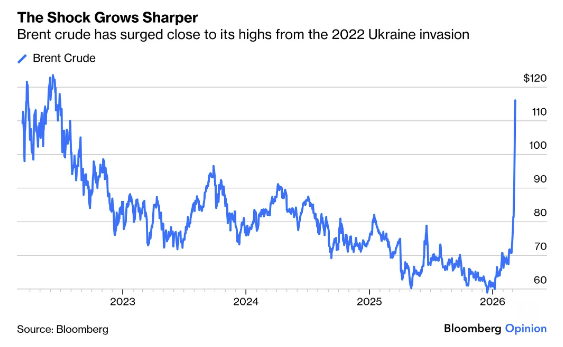
What the 5% drawdown in the S&P 500 on Sunday night was telling us…
Before the attack on Iran, the market was expecting double digit earnings growth out of the S&P 500 for 2026. To get to a 5% pullback in the index shows you that investors are cutting earnings forecasts to maybe reflect a +50% jump in crude oil prices and a 50 bp slice to both the US and World GDP. You can calculate your own version using the Goldman Sachs' earnings sensitivities below.
For US equities, the bigger risk is a sustained period of severe oil disruption that weighs on economic growth. Every 1 pp change in real US GDP growth corresponds to a 3-4% change in S&P 500 EPS in our top-down model. In addition to the potential drag on economic and earnings growth from higher oil prices, a sustained major increase in uncertainty could also undermine corporate confidence and the nascent rebound in industrial activity that has contributed to recent rallies in many "old economy" cyclicals.
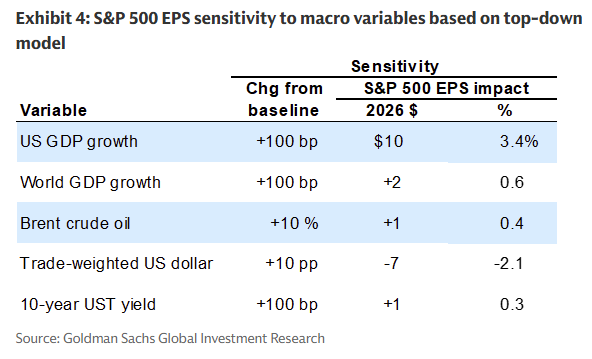
Goldman Sachs
Monday's US average gasoline station price chart approached $3.50 per gallon…
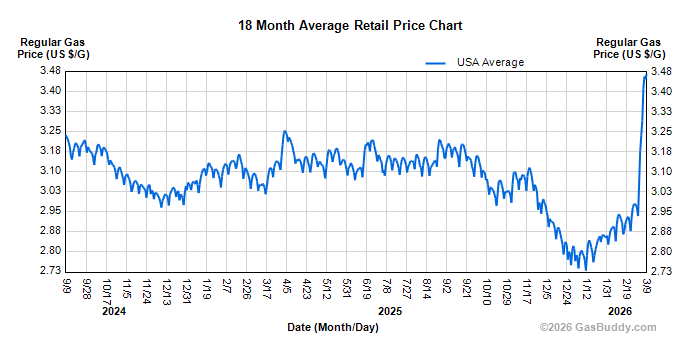
The White House throws Wall Street and Main Street a curve ball…
SAVITA SUBRAMANIAN, BOFA SECURITIES HEAD OF US EQUITY & QUANTITATIVE STRATEGY: "We thought the administration was going to be focused on affordability and quelling inflation, and that seems to be the opposite of what's actually happening."
@talmonsmith
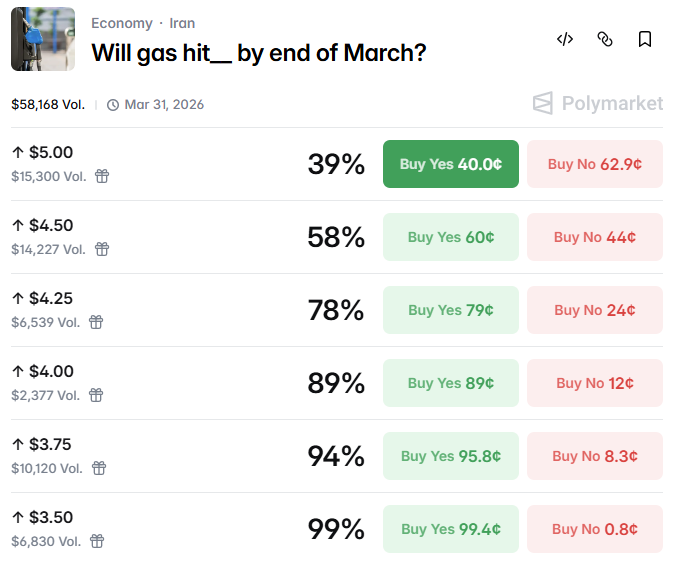
Will gas hit __ by end of March?
$4.50 looks to be the current battleground for an end of March price. But $5 per gallon is not a stretch according to the prediction markets on Monday.
Meanwhile, US auto companies zigged while oil prices zagged…
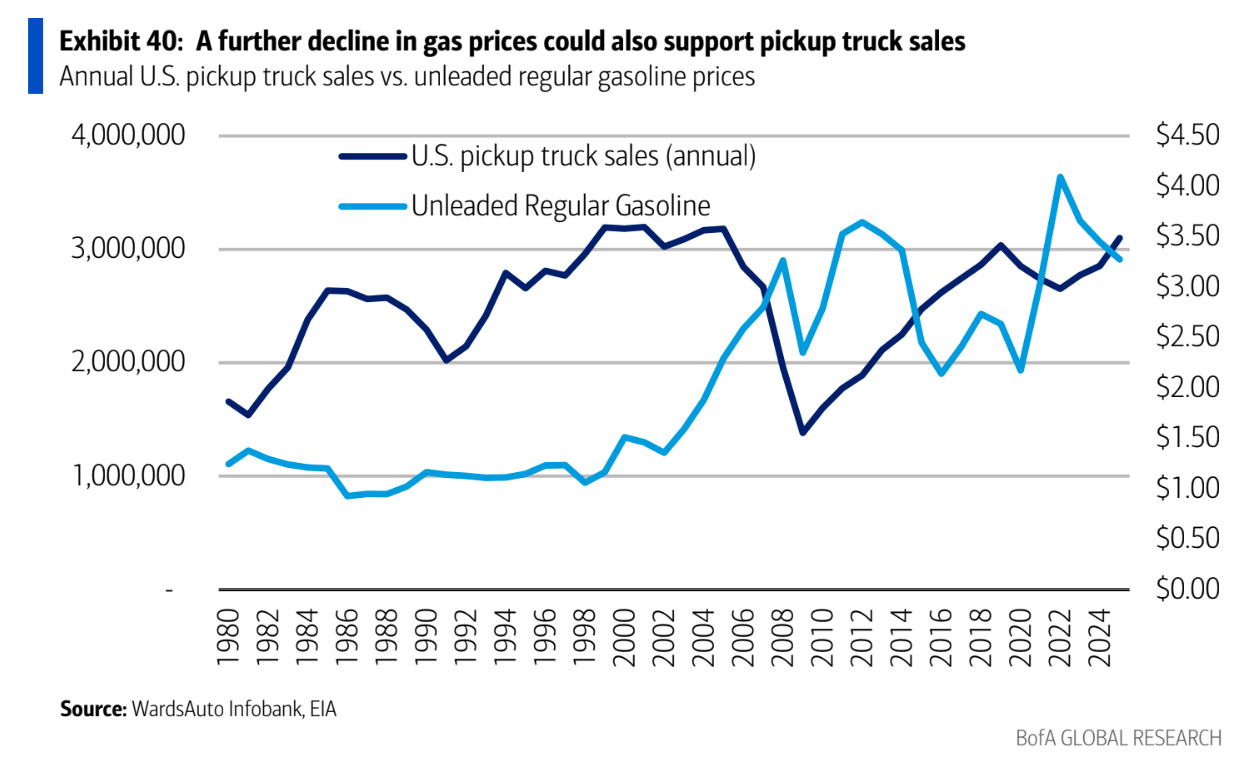
With unleaded gas prices headed toward $4.50, when will the truck factory shutdowns begin? Meanwhile, it still costs less than $10 to fill the battery on an EV which will drive 250 miles and accelerate faster than any ICE engine car.
2026 is the year of the pickup: U.S. OEMs are in a more favorable position to prioritize the production of their most margin accretive gas-powered vehicles especially pickup trucks while delaying or cancelling lower margin electric vehicle models. We expect EV sales to decline 20%+ in 2026 from the phase out of consumer incentives, while automakers’ cancellation of 40% of EV programs and extension of over 45% of ICE programs will pressure penetration over the next several years.
BofA Global
And say goodbye to gasoline powered Uber/Lyft drivers…
“It’s too much,” said Uber driver Ahmed Abdelmagid, as he filled his SUV at a New York City gas station. Overnight, the station’s cash price for a gallon of regular had jumped 30 cents, to $3.29, according to data from GasBuddy.
“Especially for New York, everything is too expensive,” he said.
US gasoline prices will likely reach an average of $3.50 to $3.65 a gallon by the middle of the week, according to Patrick De Haan, GasBuddy’s head of petroleum analysis. But $4 a gallon, which looked unlikely at the outset of the conflict, no longer seems outlandish, he said.
“I still have some level of confidence that the ‘drill baby drill, $1.85 a gallon in Iowa’ president is going to step in before we get to $4,” De Haan said. “But now I’m losing faith.”
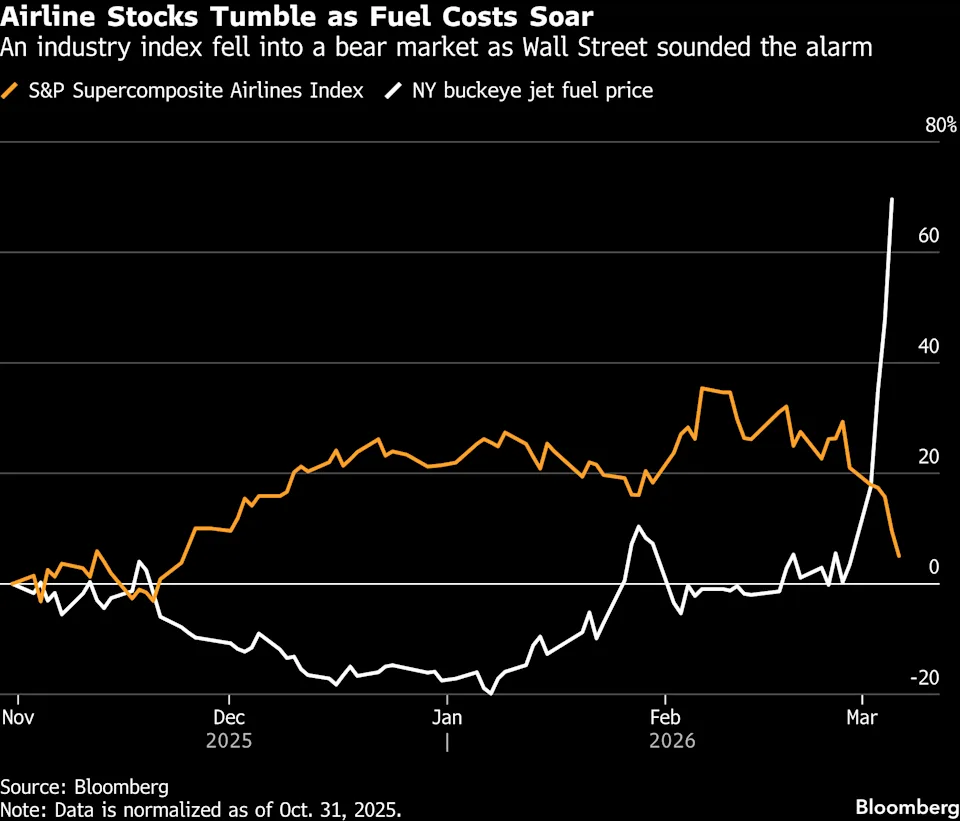
Jet fuel prices have gone parabolic putting the airline industry into thin air…
The price jump represents an “existential threat” for carriers, Deutsche Bank warned on Friday. The industry suffered serious damage when fuel prices surged in 2005, prompting Delta Air Lines Inc. and Northwest Airlines to file for bankruptcy, the firm noted.
“Absent near-term relief, airlines around the world could be forced to ground” thousands of aircraft as a result of the Iran war, analyst Michael Linenberg wrote in a note. “Some of the industry’s financially weakest carriers could halt operations.”
Though US airlines are largely insulated from the travel disruptions that have engulfed the Middle East, jet fuel is responsible for as much as 30% of their costs, meaning they have a large indirect exposure…
“Other important considerations include the negative impact of higher fuel prices on the US economy, and more specifically on demand for air travel, particularly among the most price sensitive consumers,” Deutsche Bank’s Linenberg wrote.
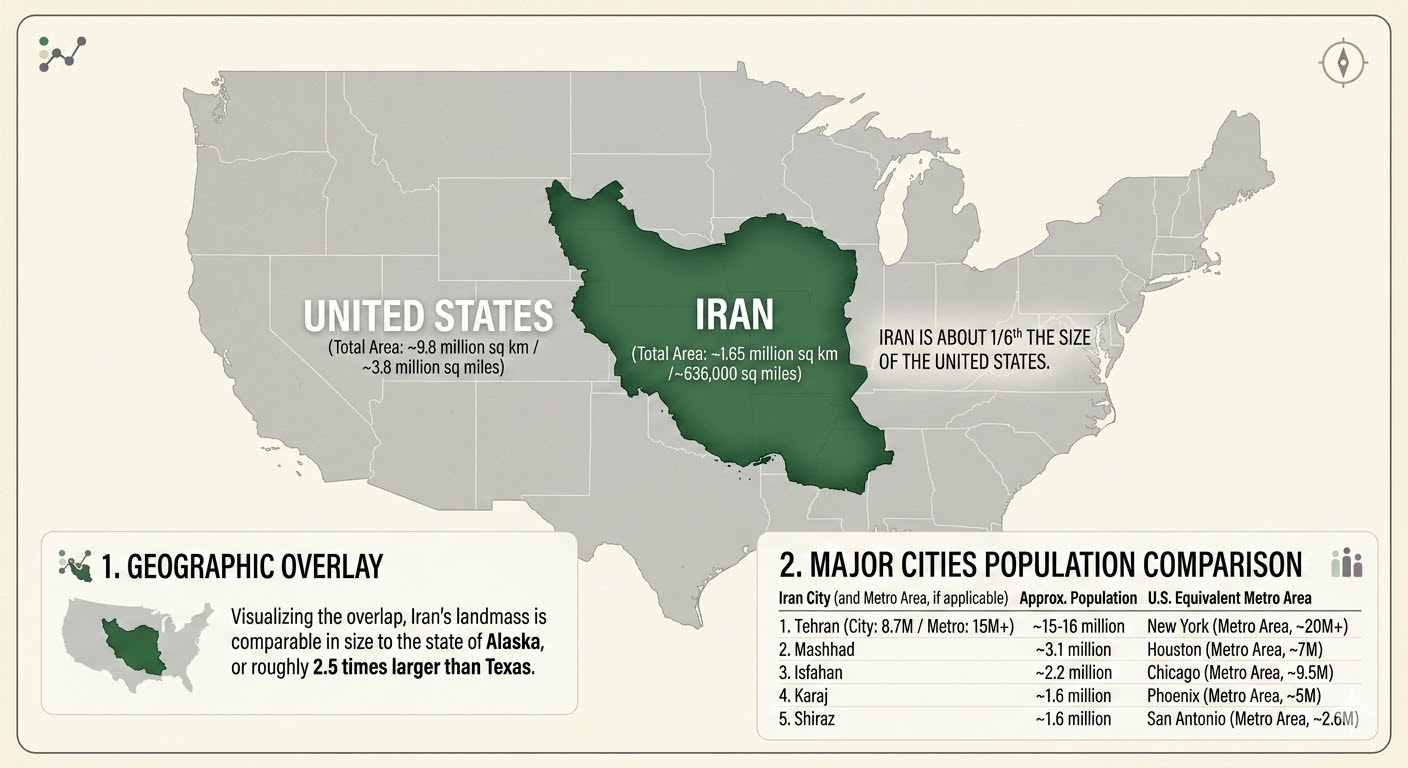
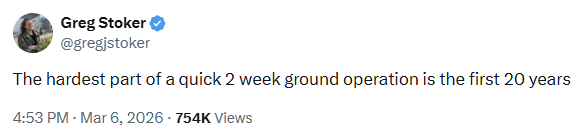
Some in Washington DC think that a win in Iran will be quick victory…
But as you can see, this is not a small country. It is 4x larger than Iraq and 2.5x larger than Afghanistan for anyone considering boots on the ground.
Gemini.Google
Or as better described by a Army Ranger Veteran running for Congress in Texas-31…
As you have likely read, water desalination is very important to the populations in the Middle East…
They are very energy intensive which makes their location to the energy sources very useful. Iran is only 3% dependent on desalination versus the US allies in the region at 40-90%. Any attack on one of these plants is an extreme act of war.
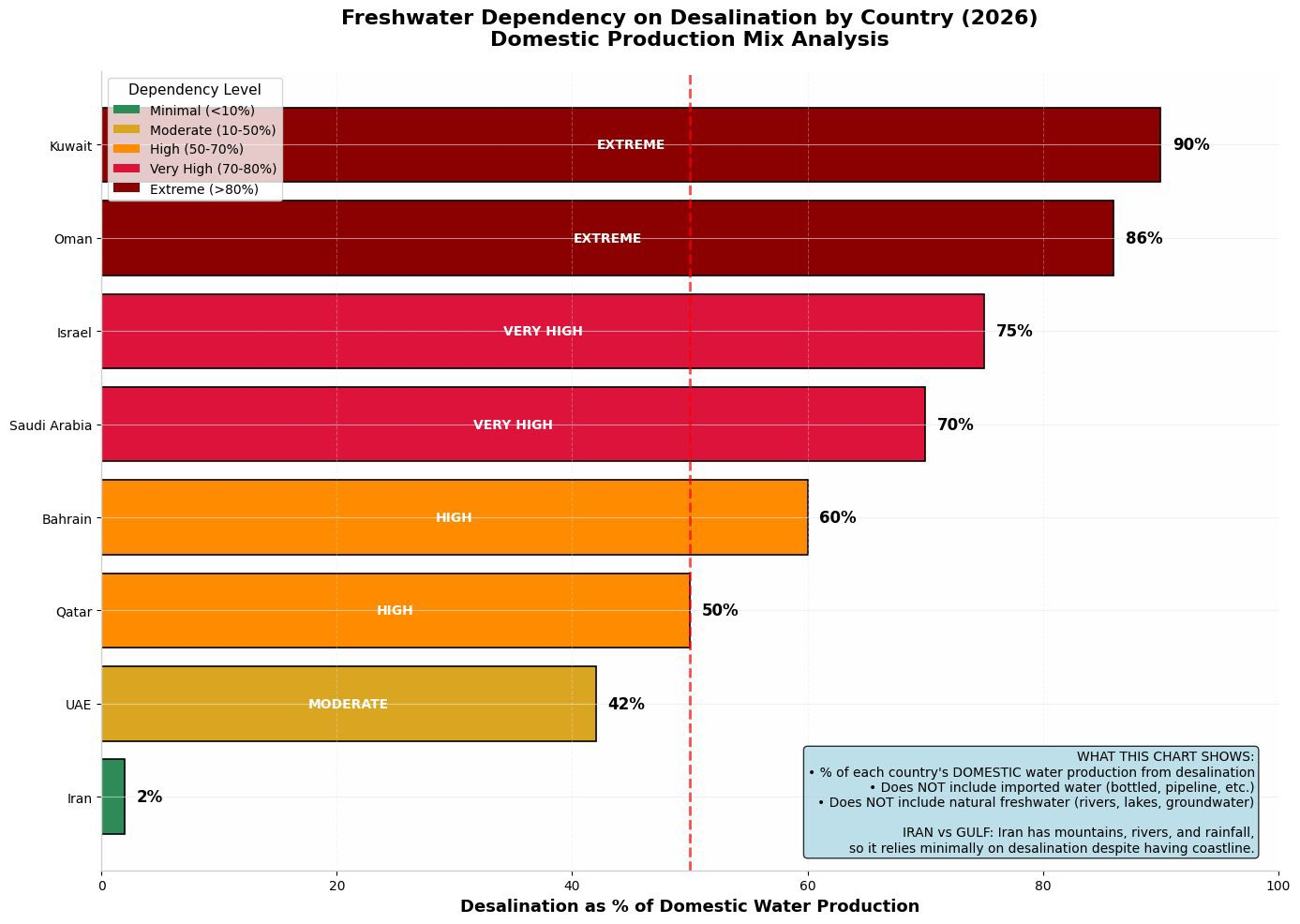
@RosenvoldGeo
With some of the largest aluminum plants in the Middle East, global customers are in a full scramble to find new sources…
Aluminum buyers in the US are rushing to secure alternative supplies from Asia as the war on Iran disrupts a major foreign source — a development that threatens to hike the cost of the metal used in auto parts, appliances and beverage cans.
An effective halt on shipments through the Strait of Hormuz has already prompted two top producers in the region, Qatar and Bahrain, to suspend deliveries to customers. The US relies heavily on imports, with the Middle East supplying nearly a fifth of its aluminum last year, according to government data.
Andy Massey of Bonnell Aluminum said the company, which molds aluminum into shapes that can be used in products including cars and construction materials, is looking to source the metal from markets such as India and Australia. The Georgia-based manufacturer may even tap the domestic market for near-term deliveries if there’s metal that isn’t tied up in annual contracts.
“We’re all scrambling to figure out what’s happening on the ground” in the Middle East, said Massey, Bonnell’s vice president of metals, procurement and transportation. “I need to find alternative supplies over the next two days — fast — and make sure we don’t overpay.”
Sulfur is also a very important commodity that is produced in the Gulf region…
92% of the world's sulfur comes from refining oil and gas. Close the Strait of Hormuz and you don't just lose 20 million barrels of crude per day. You lose the feedstock for sulfuric acid, the single most produced chemical on Earth. Sulfuric acid is how we extract copper. It's how we extract cobalt. Without it, you can't make transformers, EV batteries, or the substrates inside every data center on the planet. One chemical, made from one feedstock, shipped through one chokepoint.
@Gaurab
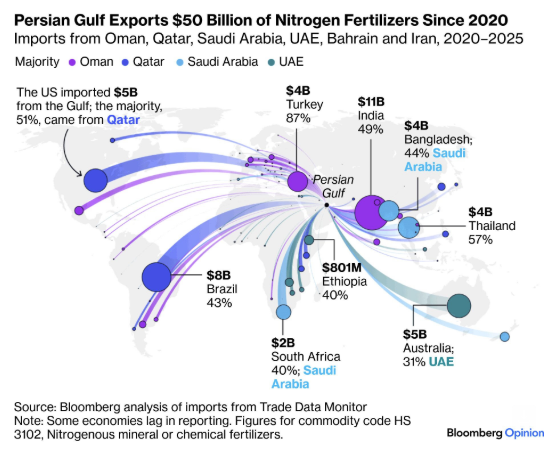
And so is nitrogen fertilizer which touches nearly half of all global farming…
The Iran situation is stalling access to the country’s low-cost urea and ammonia facilities, vital for agricultural fertilizers, which account for about 5% and 11% of global trade in fertilizers, respectively. This assumes much of their infrastructure survives the bombardment. So far, urea prices have shot up by about 25% since the outbreak of war, taking the commodity to levels not seen since Russia’s invasion of Ukraine, which disrupted both grains and fertilizer exports through the Black Sea region.
How does the latest supply crunch compare with the constraints experienced four years ago? Roughly 45% of global urea trade is sourced from producers with manufacturing sites in the Persian Gulf and shipped to major import regions, including India, Europe and Brazil, via the Strait of Hormuz. The disruption has created a mad rush for the critical nutrients. The commodity is benefiting from an additional lift from rising prices of natural gas, a crucial element in fertilizer production:
How seriously should the ongoing global fertilizer choke point be taken? Very seriously indeed. Bloomberg Intelligence notes that crop yields are tightly correlated (0.63) with increasing fertilizer consumption. Invariably, farmers’ inability to access, whether necessitated by increased costs or unavailability, points to only one thing — it’s only a matter of time before global food prices reflect the scarcity.
Higher oil and fertilizer prices have a direct impact on wheat and soybean prices as this year to date chart shows…
This is inflationary for all consumers. Not much of a positive for farmers since they have to buy the gasoline and fertilizer to produce the grain.
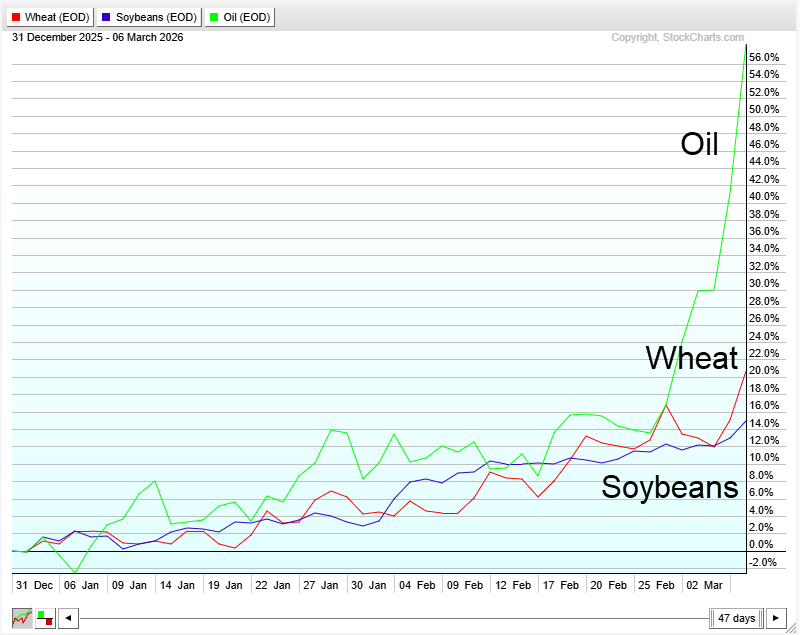
StockCharts
Canada wins the gold medal for energy independence…
Asia on the other hand will have problems if oil stays above $100 for any amount of time.
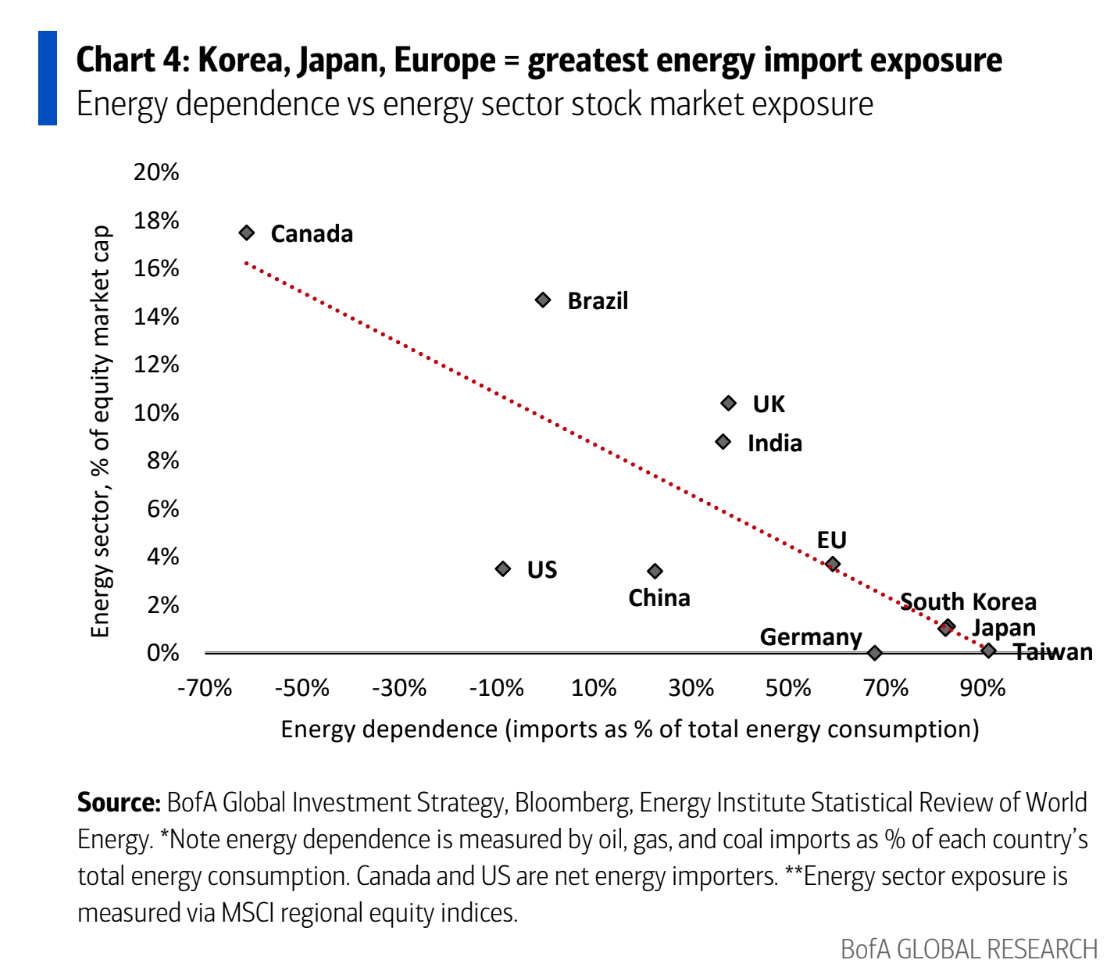
BofA Global
Not the best timing for a weak jobs report…
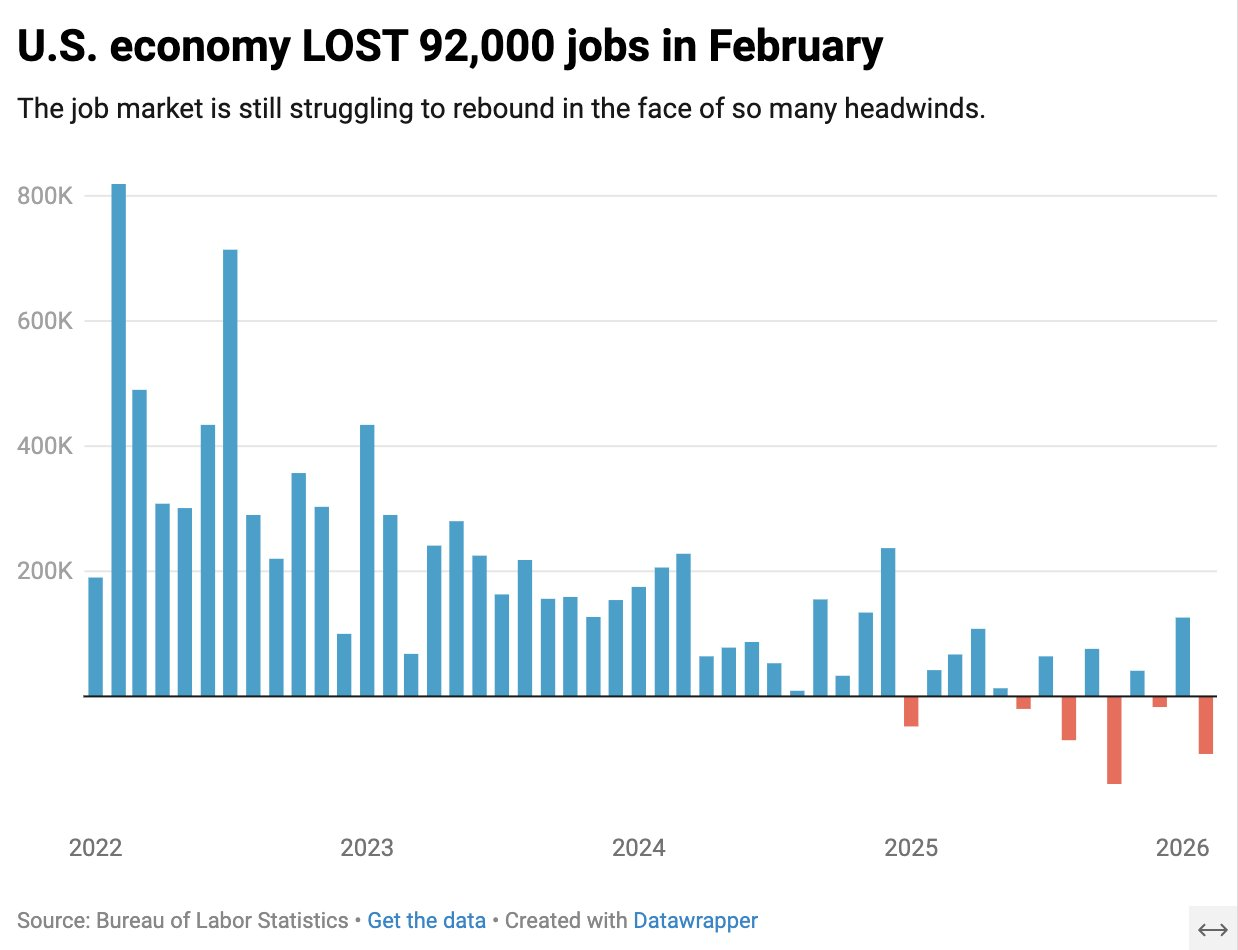
A dismal February jobs report. The U.S. economy LOST 92,000 jobs in February and the unemployment rate ticked back up to 4.4%. Even healthcare shed 28,000 jobs in February. December was also revised down to -17,000. January was revised to 126k.
Unemployment rate: 4.4% —> highest since December (and one of the higher rates in past few years)
Wage growth: 3.8% (well above 2.4% inflation)
@byHeatherLong
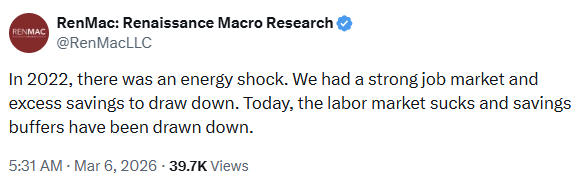
Neil Dutta has unpleasant thoughts…
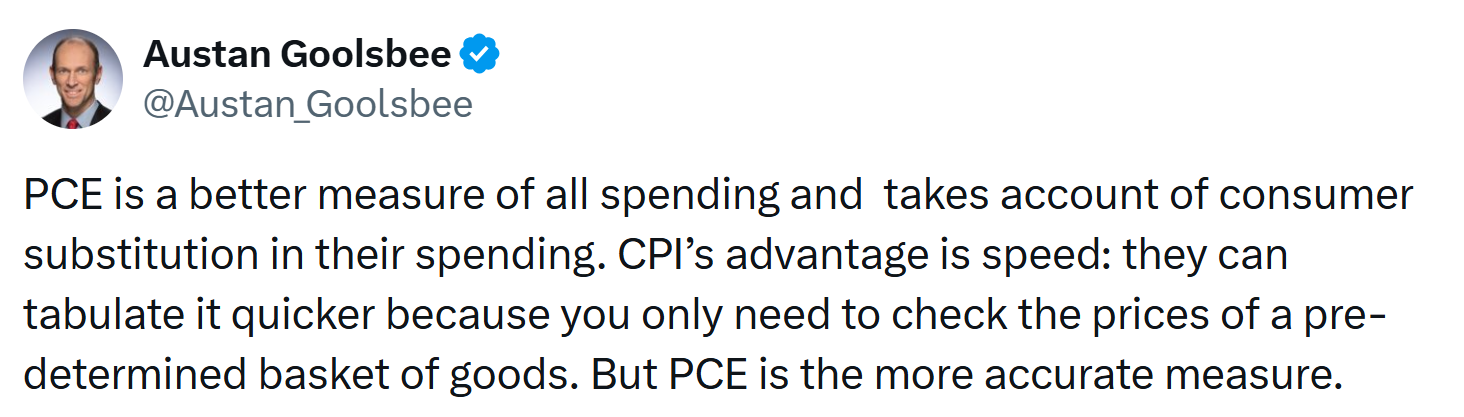
This week the PCE drops on Friday. Here a FOMC member explains why PCE > CPI…
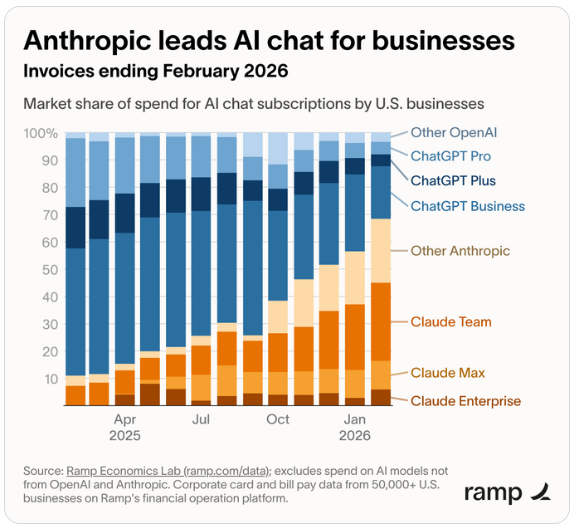
The battle for AI supremacy continues with financial numbers. First was the Anthropic release…
“The artificial intelligence company recently surpassed $19 billion in run-rate revenue, up from $9 billion at the end of 2025 and roughly $14 billion a few weeks ago, said the people, who spoke on condition of anonymity as the information is not public. The growth in run rate was driven by strong adoption of Anthropic’s AI models and products including its coding tool, Claude Code, the people said.”
And then the OpenAI release…
“OpenAI topped $25 billion in annualized revenue as of the end of last month, according to a person familiar with the figure. That’s a 17% increase from the $21.4 billion in annualized revenue the company was generating at the end of the year, according to the person and a second person with knowledge of the figures. OpenAI is still generating more revenue than its younger rival Anthropic, though the difference between the archrivals has been narrowing: Anthropic’s annualized revenue recently topped $19 billion, up nearly three times from the end of last year, and up 36% from just two weeks ago. OpenAI calculates annualized revenue by multiplying the last four weeks’ revenue by 12. If OpenAI calculated the metric based on revenue spikes just in the last week, OpenAI’s annualized revenue would be roughly $30 billion, one of the people said.”
Bottom line is that both companies are growing very fast, but Claude seems to be picking up the pace…
@arakharazian
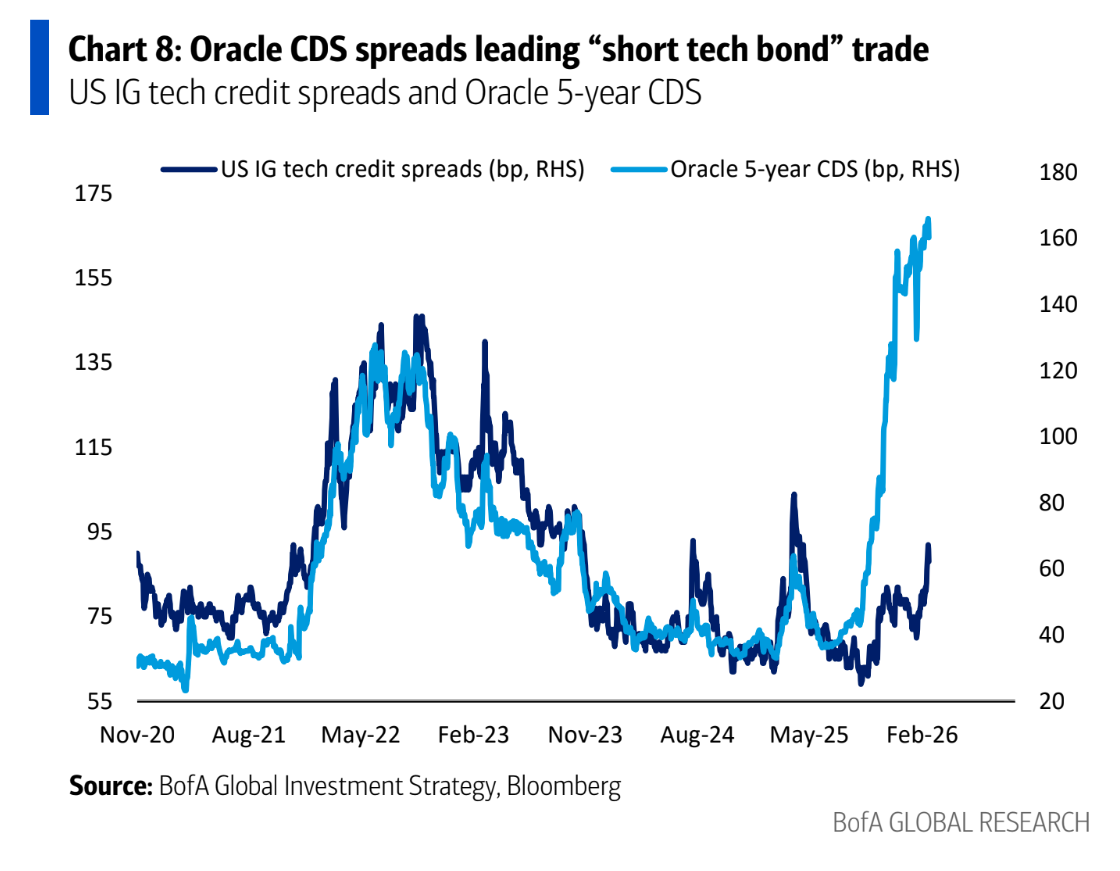
Oracle reports earnings this week…
RPO at $523b after rising $70b on the last release. Where will it be now?
And what plans might they have to address the explosion in their credit spreads?
BofA Global
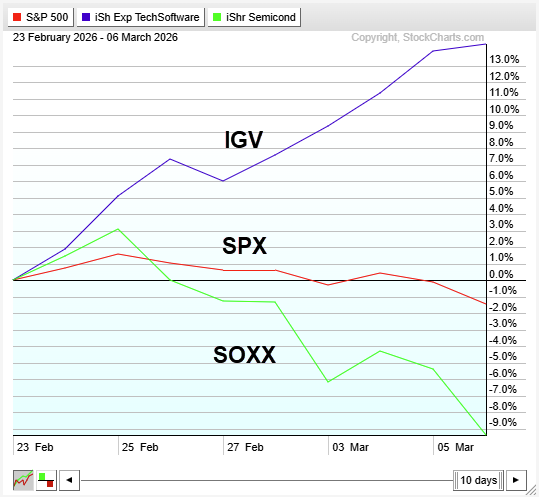
Software companies remain on the defensive versus the threat of AI…
This comment from Bill McDermott at ServiceNow was perfect and joins a significant personal stock repurchase.
"The stock market seems to think we don't know how to do basic math if they think that our pricing of a subscription seat versus AI tokens isn't going to yield a material uplift as we deliver more value for customers".
@TechFundies
Also good…
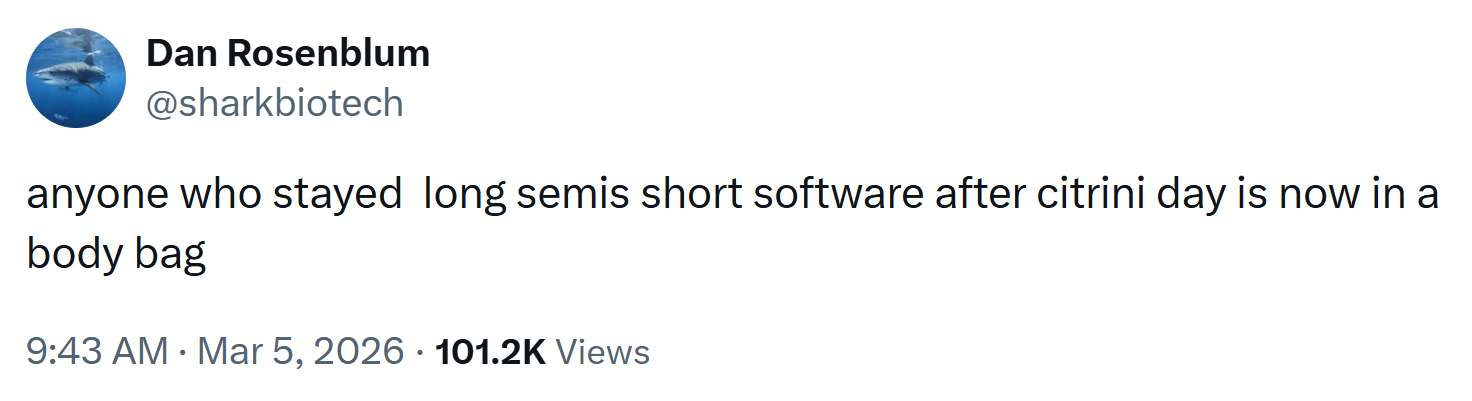
A look at Software stocks versus Semiconductor stocks since the Citrini Research paper dropped…
StockCharts
Not just ServiceNow buying their stock, but Berkshire Hathaway and its CEO activated their repurchases…
Berkshire Hathaway’s Greg Abel directed the conglomerate to buy back its own shares this week for the first time in nearly two years, a departure from predecessor Warren Buffett’s recent decisions to avoid repurchases.
Abel, who succeeded Buffett as CEO in January, also said in a regulatory filing that he personally bought about $15 million in Berkshire shares and plans to purchase more annually.
“I’m committed to doing this every year,” Abel said during an interview televised on CNBC. “My entire salary, as long as I’m CEO. We’ll file our 10-K, I’ll write the letter, and after the 48-hour cooling-off period, I’ll purchase.”
Abel told CNBC he used his after-tax dollars to buy Berkshire stock. In January, the company said Abel would receive an annual salary of $25 million.
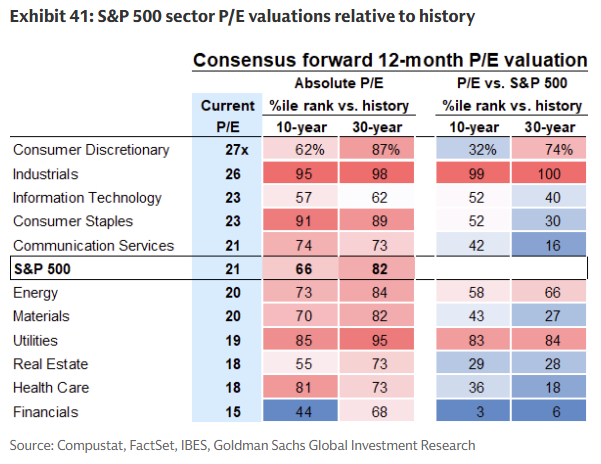
If you own an industrial business right now, what are you waiting for?
Looking at the forward P/E valuations across the US sectors makes me want to open an M&A advisory business for Industrial Companies. Can it get any better than this?
Goldman Sachs
Speaking of M&A, February volumes were off the chart as I showed you in the WRB each week…
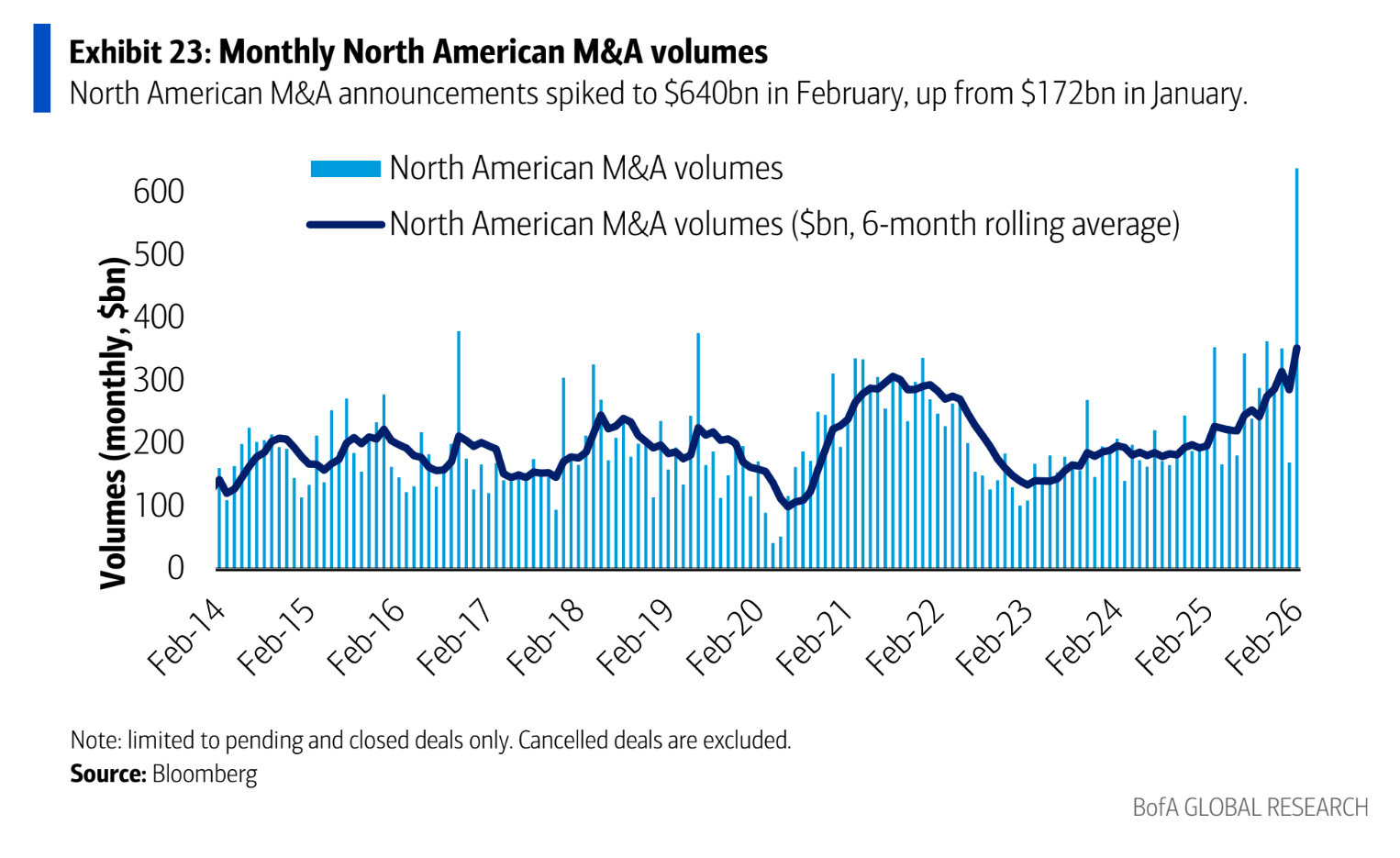
BofA Global
This week's M&A listing is a bit shorter as the war and surrounding market volatility has cooled the transaction environment…
- Thoma Bravo has agreed a deal to acquire third-party logistics provider WWEX Group Inc. and merge it with an existing portfolio company. The private equity firm plans to combine WWEX with Auctane Inc., an e-commerce shipping software maker, according to a statement Tuesday that confirmed a Bloomberg News report. Thoma Bravo is buying WWEX from a consortium including CVC Capital Partners Plc, Providence Equity Partners, Ridgemont Equity Partners and PSG. Financial details were not disclosed. The deal values WWEX, which includes the Worldwide Express brand, at almost $5 billion, people familiar with the matter said. The combined WWEX-Auctane business will be worth as much as $12 billion, they said, asking not to be identified because the information is private.
- Banijay Group agreed to combine its entertainment arm with All3Media in a deal that will create a media and entertainment group valued at roughly $5 billion, with brands such as “Peaky Blinders,” “Big Brother” and “The Traitors” under one roof. The French content-production and gambling group said it was merging Banijay Entertainment with U.K.-based All3Media. RedBird IMI, a joint venture between U.A.E-based International Media Investments and U.S. private-equity firm RedBird Capital Partners that currently owns All3Media, will retain a 50% stake in the new company. The deal gives the combined entity an enterprise value of about $8 billion and an equity value of around $5 billion and would create the world’s largest independent entertainment company.
- Select Medical Holdings Corp. has agreed to be acquired by a consortium that includes company leaders and private equity investor Welsh, Carson, Anderson & Stowe (WCAS), in a deal that would take the rehabilitation and critical illness care operator private. Select Medical operates one of the largest networks of critical illness recovery hospitals, rehabilitation hospitals and outpatient rehabilitation clinics in the United States. As of December 31, 2025, the company reported 104 critical illness recovery hospitals, 38 rehabilitation hospitals and 1,917 outpatient rehabilitation clinics across 39 states and the District of Columbia. The Mechanicsburg, Pennsylvania-based company said the group will purchase all outstanding shares not already held by the consortium for $16.50 per share in cash, valuing the transaction at roughly $3.9 billion in enterprise value.
- The non-profit foundation owned Servier agreed to acquire Day One Biopharmaceuticals (DAWN) for $2.5 billion in a push to expand its rare oncology portfolio. Servier will pay $21.50 a share in cash, representing a 68% premium to Day One’s closing price. The company said the deal will make it a leader in pediatric low-grade glioma, a brain tumor, and expand its pipeline for drugs targeting adult and pediatric cancers with high unmet needs.
- Shell (SHEL.ln) agreed to sell Jiffy Lube to Monomoy Capital Partners in a $1.3 billion deal, more than 23 years after the automotive service chain became part of Shell via the purchase of Pennzoil-Quaker State. The sale includes the Jiffy Lube brand, franchisee Premium Velocity Auto and a network of stores owned and operated by independent franchisees, Shell said. Jiffy Lube has more than 2,000 locations.
- Ziff Davis (ZD) has agreed to sell its Connectivity division, which houses Ookla's Speedtest app and Downdetector outage tracker, to Accenture (ACN) for $1.2 billion in cash. The sale, which also includes Ekahau and RootMetrics, will allow Ziff Davis to focus on enthusiast websites like IGN and Mashable, as well as Everyday Health.
- Agilent Technologies (A) entered into a definitive agreement to acquire Biocare Medical, a global leader in clinical pathology, from an investor group led by Excellere Partners and GHO Capital Partners LLP, in an all-cash transaction valued at $950 million. Biocare is a high-growth global pathology antibody leader, serving customers with a complementary portfolio of immunohistochemistry (IHC), in situ hybridization (ISH) and fluorescence in situ hybridization (FISH) solutions designed to support improved patient health outcomes across oncology and broader clinical pathology. With more than 300 specialized antibodies and a proven R&D capability, Biocare has achieved annual double-digit revenue and profit growth since 2021 and generated over $90 million in revenue in 2025.
Various News Sources
Learn more about the Hamilton Lane Strategies
DISCLOSURES
The information presented here is for informational purposes only, and this document is not to be construed as an offer to sell, or the solicitation of an offer to buy, securities. Some investments are not suitable for all investors, and there can be no assurance that any investment strategy will be successful. The hyperlinks included in this message provide direct access to other Internet resources, including Web sites. While we believe this information to be from reliable sources, Hamilton Lane is not responsible for the accuracy or content of information contained in these sites. Although we make every effort to ensure these links are accurate, up to date and relevant, we cannot take responsibility for pages maintained by external providers. The views expressed by these external providers on their own Web pages or on external sites they link to are not necessarily those of Hamilton Lane.